
Whirlpool Dishwasher Not Draining: Common Causes
Whirlpool dishwasher not draining? Check the filter, hose, and sink connection before the pump. Learn which checks matter most and when to call for repair.
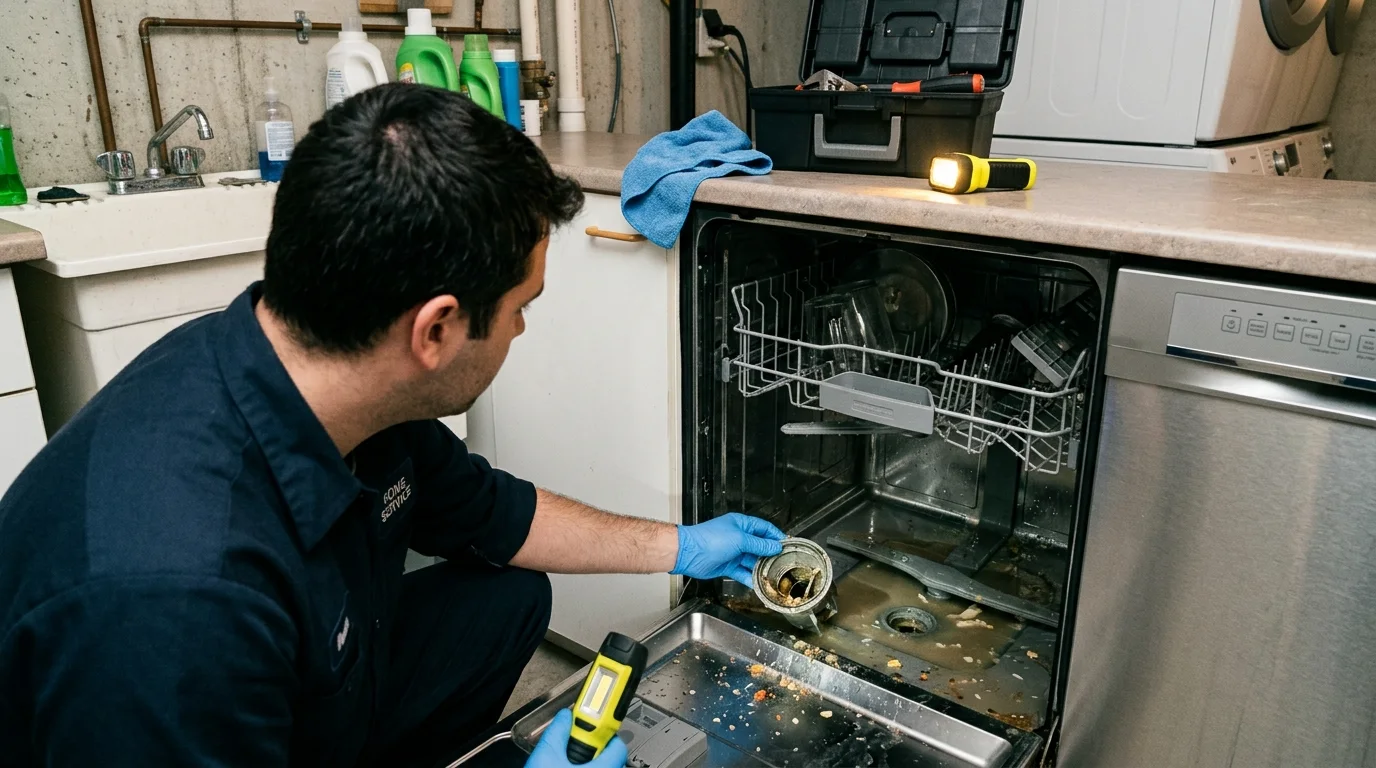
A Whirlpool dishwasher not draining does not always mean the drain pump has failed. The first distinction is whether there is only a small amount of water in the filter or sump area, or whether a larger amount of water is standing in the tub after the cycle. Whirlpool’s current guidance points owners toward the filter, drain hose, air gap or disposer connection, and the drain-pump path before deeper repair decisions.
Whirlpool Dishwasher Not Draining: Is the Water Actually Abnormal?
Some Whirlpool models can retain a small amount of water in the filter area as part of normal operation. Whirlpool’s current product-help information specifically discusses water remaining in the filter area and emphasizes that the filter assemblies need to be installed correctly.
That is different from a dishwasher with water covering the bottom of the tub, water that never leaves after a completed cycle, or dirty water that returns after the dishwasher has already drained.
For a related next step, read dishwasher repair Toronto.
Whirlpool Canada’s current dishwasher not draining guidance covers the filter, drain pump, disposer, air gap, and drain hose as areas to consider.
Use Timing to Separate the Main Problems
Water is present only around the filter area, but the tub is otherwise empty. Check the model documentation before treating that as a failure. A small residual amount can be normal on some designs.
The tub stays full after the cycle ends. The drain path may be blocked, the pump may not be operating correctly, or the dishwasher may not be reaching the proper drain command.
The dishwasher drains and then water returns. Think downstream. Hose routing, a clogged disposer or sink drain, an air-gap problem where one is installed, or another backflow condition may be responsible.
The problem began after a new disposer or plumbing work. Installation becomes a strong clue. A disposer connection that was not prepared correctly can create a drain blockage even though the dishwasher itself is functioning.
The dishwasher hums or buzzes during drain. That narrows attention toward the pump and drain path but does not tell you whether the pump is failed, obstructed, or working against a blockage farther downstream.
Stop-Use Conditions
Drainage troubleshooting should stop if there is evidence of a safety problem.
- Water is escaping onto the floor or into cabinetry. Stop the dishwasher and control the leak before it causes more damage.
- There is a burning smell, smoke, or visible electrical damage. Disconnect power if safe and arrange service.
- The breaker trips repeatedly. Do not use repeated resets as a troubleshooting method.
- The pump area makes severe grinding or impact noise. Broken glass or another hard object may be interfering with a moving part.
- The dishwasher will not latch or controls behave unpredictably. Do not bypass the door or safety system.
Common Whirlpool Dishwasher Drainage Causes
Filter Restriction or Incorrect Filter Installation
Food particles, paper labels, grease, and other debris can collect in the filter. Whirlpool recommends removing and cleaning the filter according to the product instructions. A restricted filter can reduce drainage and contribute to residue or odour.
Reinstallation matters too. Whirlpool’s product-help guidance warns that filters should be installed and locked in place correctly. A filter that is loose or incorrectly seated can create performance problems and should not be ignored.
Drain Hose Restriction
A hose can kink behind the dishwasher, collapse where it passes through a cabinet, or collect debris internally. The problem may appear suddenly after the appliance has been moved or gradually as buildup reduces the opening.
A recently remodelled kitchen deserves extra attention because hose routing can change when cabinetry, flooring, or plumbing is altered.
Air Gap, Disposer, or Sink Drain
Where an air gap is installed, debris can block the path and prevent normal discharge. A disposer or sink connection can also restrict flow. Whirlpool specifically identifies the air gap and garbage-disposal connection as areas to check in a dishwasher that will not drain.
If the sink or disposer is already backing up, the dishwasher is not the only appliance affected by the restriction. Fixing the downstream drain may restore dishwasher drainage without any internal repair.
Drain Pump or Pump Outlet
The drain pump has to move water through the outlet and hose. Debris can interfere with the pump area, the motor can fail, or the outlet can be restricted. Those conditions can create very similar symptoms from the user’s point of view.
Whirlpool’s consumer guidance discusses the pump as one possible cause, but a pump should not be condemned solely because water remains in the tub. A blocked hose or disposer can make a healthy pump look ineffective.
Control or Cycle Issue
If the dishwasher never reaches the drain stage, the cause may be outside the water path itself. A control problem, door signal, interrupted cycle, or wiring issue can prevent the pump from being energized at the expected time.
This becomes more plausible when the machine also stops at other points in the cycle, resets unexpectedly, or shows a model-specific error condition.
Safe Checks Before Requesting Service
Stay with visible, model-approved maintenance areas.
- Confirm the cycle finished. Use the normal cancel or drain function if the cycle was interrupted.
- Inspect and clean the filter. Follow the model instructions and reinstall all pieces securely.
- Look at the visible drain hose. Check for kinks, compression, or obvious routing problems.
- Check the sink, disposer, and air gap if present. A slow sink or blocked downstream connection can stop dishwasher discharge.
- Listen during the drain stage. Note whether the pump sounds normal, hums without flow, grinds, or remains silent.
- Observe whether water leaves and returns. That timing is an important backflow clue.
- Record error codes or unusual light patterns. Use the Whirlpool documentation for the exact model rather than a generic code list.
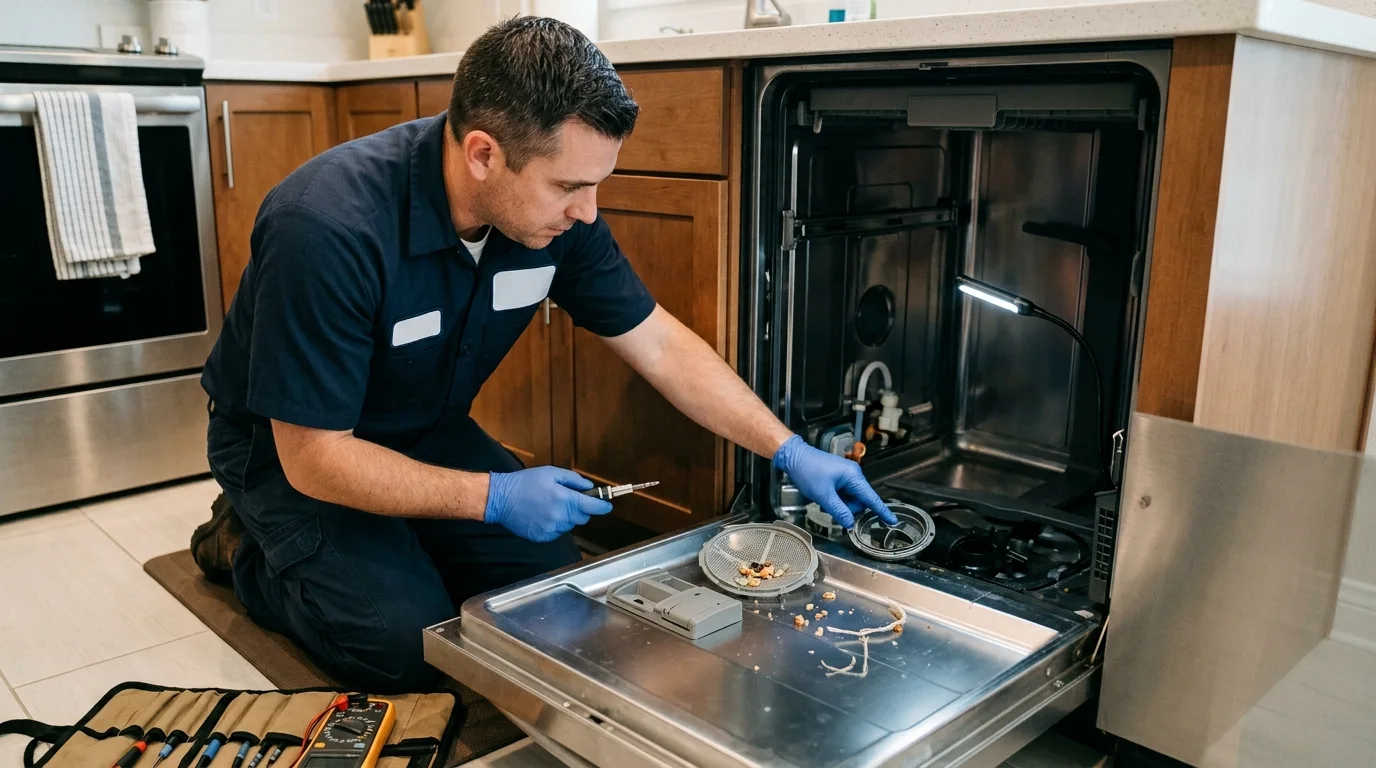
Do not remove the pump, open electrical panels, or reach into moving or energized components as part of a basic homeowner check.
Why “Clean the Filter” Is Not a Complete Diagnosis
Filter cleaning is a good first maintenance step because it is accessible and directly related to the drain path. It is not a guarantee that the rest of the system is clear.
If the filter is clean and water still remains, the next question is whether water is moving at all. Strong discharge followed by backflow points downstream. Little or no discharge with pump noise points toward a restriction or pump problem. Silence during an expected drain stage raises control, wiring, or pump-command questions.
That progression keeps troubleshooting evidence-based. Each observation narrows the next area instead of turning the first visible issue into the final answer.
What a Technician May Inspect or Test
A technician can check the drain system as one continuous path. That includes the sump, filter seating, pump inlet, drain pump, pump outlet, drain hose, air gap or disposer connection, and household drain condition.
If the path is clear, electrical testing can determine whether the pump is receiving the correct command and supply. Wiring and control outputs may be tested according to the model’s service information.
The technician can also distinguish a pump that runs but cannot move water from a pump that is never energized. Those are different failures even though both can leave the same amount of water in the tub.
Residual Water Versus Standing Water
The phrase “water left in the dishwasher” can describe very different amounts. A small amount contained in the sump or filter area can be normal on some Whirlpool designs because that area is part of the hydraulic system. Water spread across the tub floor after a finished cycle is a stronger drainage complaint.
The distinction matters because removing every visible drop is not the goal. The goal is normal drainage for the specific model. If the machine cleans normally, empties the tub, and leaves only the amount described as normal in the owner documentation, there may be no drain failure to repair.
On the other hand, if the water level is high enough to cover the filter area broadly, contains food debris from the wash cycle, or rises again after initially draining, continue the diagnosis. Those patterns are more consistent with a restriction, pump issue, or backflow condition.
Use One Controlled Drain Attempt After Cleaning
After the filter and accessible drain connection have been checked, one controlled cancel or drain attempt can show whether anything changed. Listen for the pump and watch the sink side if it is visible. The result helps decide whether the restriction was removed or whether the problem lies farther along the path.
If flow improves substantially after filter cleaning, the filter was at least part of the problem. If there is no change, do not keep repeating cycles. The next restriction may be in the hose, disposer, air gap, pump outlet, or pump itself.
If the water clears and then comes back, the pump may have completed its job. Focus on the downstream connection and backflow path rather than treating the returning water as proof of pump failure.
Information That Makes a Service Visit More Efficient
Before service, note the water level, whether the sink drains normally, whether the disposer was recently replaced, and whether the drain hose was moved. Record any code or unusual light pattern, along with the exact stage of the cycle when it appears.
Also describe the sound. A steady drain sound with no flow, a harsh grinding sound, and complete silence are three different observations. None proves one failed part, but each helps the technician decide what to test first.
If the Dishwasher Is Newly Installed
A Whirlpool dishwasher that has never drained correctly deserves an installation-first check. Confirm that the visible drain hose is not pinched, that the sink or disposer connection is open, and that the hose route matches the installation instructions for the model. A newly created restriction is more plausible than several unrelated internal components failing at once.
If the dishwasher drained normally for months or years before the problem appeared, the evidence shifts toward a developing blockage, debris in the pump path, a failed component, or a control issue. That history should be part of the diagnosis.
Do Not Judge the Pump From One Sound
A dishwasher pump can sound different as the water level falls, and a blocked path can make a working motor sound strained. Treat the sound as one observation alongside water movement. A steady sound with strong discharge, a hum with almost no flow, and silence during the expected drain stage point to different next checks.
This is also why replacing a pump based only on a hum can miss the real restriction. The hose, disposer, air gap, or outlet path may still be the reason the water cannot leave.
Repair or Replace Context
Drainage problems vary too much for an age-only replacement rule. A clogged path or installation issue is not the same decision as a major control repair on a dishwasher with several other faults.
Wait for the confirmed diagnosis, then compare the repair with the appliance’s overall condition and the realistic replacement option. That avoids replacing a dishwasher because of a maintenance issue and avoids authorizing a major repair before the failed system is known.
When to Request Appliance Repair
If the Whirlpool dishwasher still leaves abnormal standing water after the filter, visible hose, and downstream drain connection have been checked, professional assessment is the sensible next step. The same applies to leakage, repeated electrical symptoms, abnormal pump noise, or a drain failure that requires access below or behind the installed appliance.
To arrange an assessment, Request Appliance Repair. Before the visit, note whether the tub is completely full or only has water near the filter, whether the pump makes sound, whether the sink drains normally, and whether the problem started after installation or plumbing work.
Need Appliance Repair?
Share the appliance, brand, address, symptoms and optional photos online. A contractor can review the request and contact you about availability and next steps.
Start Your Repair Request