
Washer Shaking Violently: Causes and Repair Clues
Washer shaking violently during spin? Check load balance, shipping bolts, levelling and floor contact before assuming the suspension has failed.
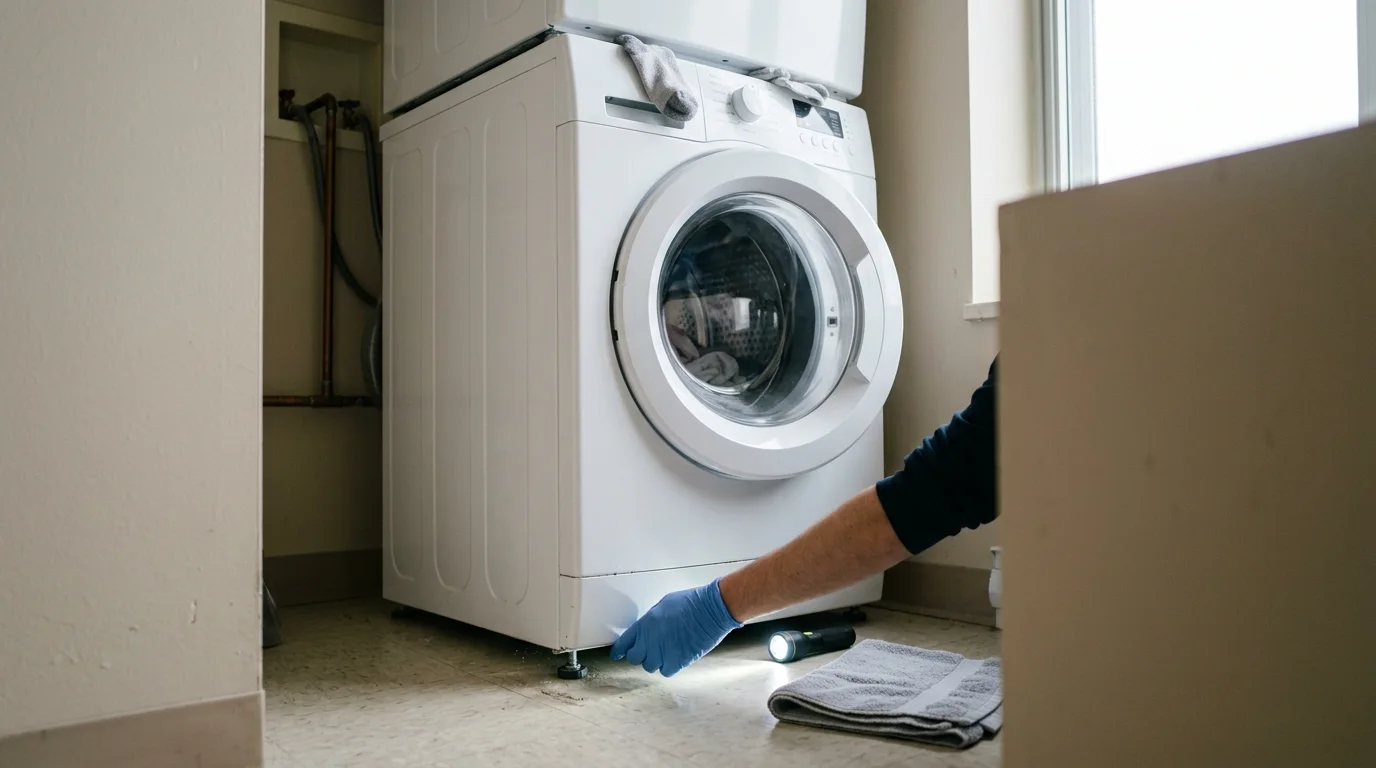
Before troubleshooting a washer shaking violently, stop the cycle if the machine is walking, striking the wall, or moving far enough to pull on hoses or the power cord. Then check the load, the washer’s level, the floor, and, on a recently installed front-loader, whether the shipping bolts were removed. If those basics are correct and the shaking continues, the suspension or another internal support component may need professional inspection.
Washer Shaking Violently: What to Check First
A washer is supposed to move during spin, and a brief thump while a load redistributes is not automatically a fault. Violent movement is different. If the cabinet is walking across the floor, banging repeatedly, or twisting hard enough that the hoses are being stretched, pause the machine rather than letting the spin cycle continue.
Current guidance from Samsung, Whirlpool and LG all puts the first checks in the same general group: shipping hardware, load balance, levelling and installation stability. Those checks matter because they can create dramatic vibration without any failed internal part.
The useful diagnostic question is not simply, “How loud is it?” Instead, note when the shaking starts and what load is in the drum. A washer that only struggles with one blanket tells a different story from one that shakes violently during every spin, even when empty or lightly loaded.
Stop-Use Warning Signs
Some vibration complaints are inconvenient. Others can damage the appliance or the room around it. Stop the washer and arrange an assessment if you see any of the following:
- The machine walks far enough to strain the fill hoses, drain hose, plug or cord.
- The drum or tub appears to strike the cabinet repeatedly.
- You hear sharp metal-on-metal grinding, scraping, or a new heavy knock that continues with a balanced load.
- The washer tilts, a foot is visibly off the floor, or the cabinet rocks significantly when you press opposite corners.
- Water is leaking while the machine moves.
- There is a burning smell, smoke, electrical arcing, or repeated breaker tripping.
Do not hold the washer in place with your body while it spins. Do not wedge random objects under the machine as a permanent fix. A moving washer can shift suddenly, and an unstable support can make the problem worse.
Step 1: Rule Out a Load-Balance Problem
Start with the simplest variable: what is inside the drum. A single bath mat, blanket, heavy hoodie, or other absorbent item can collect on one side of the basket. At low speed the load may look normal, then become severely unbalanced as the washer accelerates.
Pause the cycle, wait for the drum to stop and the door or lid to unlock, then redistribute the laundry. If there is one heavy item, add compatible items only if that matches the manufacturer’s loading guidance. If the drum is tightly packed, remove some items so the load can move and redistribute.
Then restart a spin or rinse-and-spin cycle that is appropriate for the machine. If the washer becomes stable with a balanced load, the machine may be operating normally. If the same violent movement returns with several ordinary loads, continue to the installation checks.
Common mistake: assuming that a washer which shakes only with bulky items must have failed suspension parts. Bulky loads can create extreme imbalance even in a mechanically healthy washer.
Step 2: Check Whether the Washer Rocks on the Floor
With the washer off, place your hands on opposite top corners and press gently. Repeat on the other diagonal. The cabinet should feel planted. If it rocks, one or more feet may not be making firm contact with the floor.
LG’s current vibration guidance recommends this same diagonal-corner check, followed by leg adjustment when movement is present. Whirlpool also identifies levelling and firm foot contact as core vibration checks.
Use the installation instructions for your model when adjusting the feet. A bubble level can help, but the practical goal is also firm contact at all four corners. After adjustment, secure the lock nuts if the design uses them. An apparently level cabinet can still vibrate if one foot is loose against the floor.
Step 3: Look at the Floor and Installation
A washer can be level and still transfer excessive vibration into a flexible floor. This is especially noticeable on upper floors, older wood structures, raised platforms, or flooring that flexes under the machine.
Stand beside the washer during a controlled, balanced spin and observe the floor from a safe distance. If the entire floor visibly moves or the vibration is felt strongly in nearby rooms, the installation surface may be contributing. Do not assume anti-vibration pads will correct a structural or levelling problem. They can change the way vibration is transmitted, but they do not repair a loose foot, shipping bolt, worn suspension part, or weak floor.
Also make sure the washer is not contacting a wall, dryer, shelf, drain pan edge, or cabinet. Sometimes the washer itself is only vibrating moderately, but contact with a nearby surface turns that vibration into a loud banging noise.
Step 4: Check Shipping Bolts on a Recently Installed Front-Loader
Front-load washers use shipping hardware to keep the tub from moving freely during transport. That hardware has to be removed during installation. Samsung and Whirlpool both warn that installed shipping bolts can cause forceful vibration.
If the washer is new, was recently moved, or was reinstalled after storage, confirm the shipping bolts were removed according to the installation manual. Do not simply remove unfamiliar hardware from the back of an older machine unless you have identified it from the model instructions.
A recently installed front-loader that has shaken violently from the first load deserves this check before anyone starts ordering suspension or drive parts.
What the Shaking Pattern Can Tell You
Only bulky loads cause the problem. Load distribution is the first suspect. The washer may be functioning normally but unable to balance that particular load.
Every high-speed spin causes the cabinet to walk. Check foot contact, levelling, the floor and shipping hardware. If those are correct, internal support components become more relevant.
The basket looks off-centre when the machine is empty. That can point toward a suspension or support problem, but visual position alone does not identify a failed part.
There is a deep knock at the same point on every rotation. A rotating or support component may be involved. Check first for an item trapped around the basket or a loose external object, then stop if the noise continues.
The washer was quiet for years and suddenly became violent. That timing makes an installation problem less likely unless the machine was moved. A worn or damaged support, suspension, bearing, tub, or drive component becomes more plausible.
Common Cause Groups Beyond the Basic Checks
Suspension and Tub Support
Washers use model-specific suspension systems to control tub movement. Depending on the design, that can include rods, springs, dampers, shocks and other supports. These parts are supposed to let the tub move while preventing uncontrolled motion.
When the suspension no longer controls that movement properly, the basket can bounce or swing much farther than normal. The visible shaking is evidence that the tub is not being controlled, but it does not tell you which support part is worn without inspection.
Basket, Bearing or Tub Problems
Abnormal play in the basket, a damaged support structure, bearing wear, or another tub-related problem can create vibration that remains even after the machine is level and the load is balanced. These faults often come with other clues such as grinding, scraping, rumbling, visible basket movement, or a change in how the drum feels when turned by hand with the washer off.
A noisy bearing cannot be diagnosed from “shaking” alone. The location, sound, basket play and model design all matter.
Drive-System or Motor-Related Problems
Some washers can vibrate because a drive component is loose, damaged or operating unevenly. The exact parts vary widely between direct-drive and belt-driven designs. A technician may inspect the drive only after the simpler installation and load causes have been excluded.
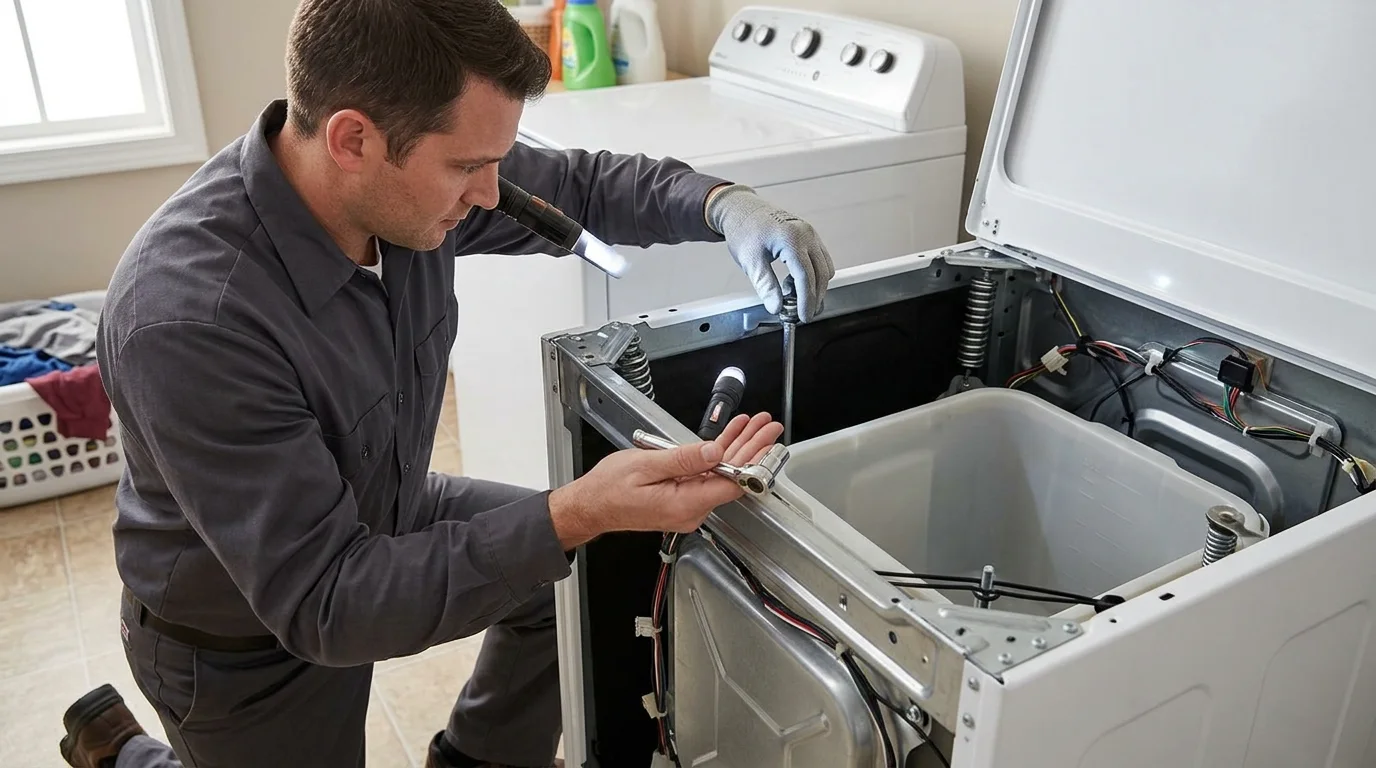
Safe Checks a Homeowner Can Make
Keep the checks external and observational. You can safely gather a surprising amount of information without removing panels.
- Run a normal balanced load. Note whether the shaking happens only during high-speed spin.
- Redistribute the load. Confirm the problem is not limited to one bulky or uneven item.
- Rock the cabinet while the machine is off. All feet should feel planted.
- Check level and floor stability. Follow the installation manual for leg adjustment.
- Confirm shipping bolts were removed if the front-loader was recently installed or moved.
- Look for external contact. Make sure the cabinet is not striking a wall, dryer, drain pan or shelf.
- Observe the empty basket. With power off, look for obvious leaning, unusual looseness or rubbing. Do not disassemble the machine.
After each correction, test with a modest balanced load rather than immediately using the heaviest load in the house. The purpose of the test is to see whether the machine can reach spin speed without abnormal movement.
Mistakes That Can Hide the Real Problem
Adding more weight to the top of the washer. This may temporarily change the noise, but it does not stabilize the tub or correct the cause.
Using random shims without levelling the machine. A temporary wedge can slip and can leave the cabinet twisted.
Replacing suspension parts before checking installation. A new washer with shipping bolts still installed does not need a suspension diagnosis first.
Testing again and again while the machine walks. Repeated violent spin cycles can strain hoses, wiring and surrounding surfaces. Once the movement is clearly abnormal, more testing adds little.
What a Technician May Inspect or Test
A professional assessment usually begins by reproducing the symptom with a controlled load and confirming the installation. That matters because an internal repair will not correct an uneven floor or an unbalanced load.
Once those variables are ruled out, the technician can inspect the tub-support and suspension system for wear, damage, looseness or asymmetry. The basket may be checked for abnormal play and smooth rotation. Drive components, motor mounting, pulleys or related parts may be inspected where applicable to the model.
The point of the inspection is to separate where the movement is visible from where the fault originated. A cabinet banging against the wall does not prove a cabinet problem. It may simply be the final effect of an uncontrolled tub inside the machine.
What to Check After You Make a Correction
Do not judge the repair from the first few seconds of spin. Watch the washer through the transition from tumbling or agitation into higher speed. The basket should redistribute the load without the entire cabinet walking.
Check that the feet still feel firm after the cycle. Look behind the appliance for any hose movement or contact marks. If the washer now stays stable with ordinary loads but still struggles with one oversized item, that is useful evidence that the machine itself may be sound.
If the machine still shakes violently with a balanced load on a stable, level installation, the remaining possibilities are much more likely to require internal inspection.
Washer Shaking Violently: Frequently Asked Questions
Can one heavy towel make a washer shake badly?
Yes. A single absorbent item can become much heavier with water and collect on one side of the basket. Redistribute the load and test again before assuming a mechanical fault.
Can a level washer still vibrate?
Yes. A foot may not be firmly contacting the floor, the floor itself may flex, or an internal support component may be worn.
Do shipping bolts matter after installation?
They matter on front-load models that use them. If they were never removed, the tub cannot move as designed and severe vibration can result.
Does violent shaking prove the suspension is bad?
No. Load balance, levelling, shipping hardware and floor stability can produce similar symptoms. Suspension becomes more likely after those factors are ruled out.
Should I keep using the washer if it walks?
If it moves enough to strain hoses, wiring or surrounding surfaces, stop using it until the cause is corrected.
Why does the washer shake only during spin?
Spin is when the basket reaches its highest speed, so small balance or support problems become much more obvious.
Can a flexible floor cause the problem?
Yes. Manufacturer installation guidance recognizes floor stability as an important part of vibration control. The washer still needs to be level and mechanically sound.
When to Request Appliance Repair
If the washer still shakes violently after you have balanced the load, confirmed all feet are firm, checked the installation surface and verified any required shipping hardware was removed, professional diagnosis is sensible. Service is also appropriate for new grinding, repeated heavy knocking, visible basket looseness, leaking during spin, or movement that threatens hoses or the power connection.
For broader service information, see washer repair Toronto. If you are ready to have the machine assessed, Request Appliance Repair. Tell the technician whether the problem happens with every load, only at high spin, or only with bulky items. That pattern can be more useful than a video of one unusually bad cycle.
Need Appliance Repair?
Share the appliance, brand, address, symptoms and optional photos online. A contractor can review the request and contact you about availability and next steps.
Start Your Repair Request