
Dishwasher Not Drying Dishes: Common Causes
Dishwasher not drying dishes? Check rinse aid, cycle settings, load materials and drying-system behaviour before assuming a heater has failed.
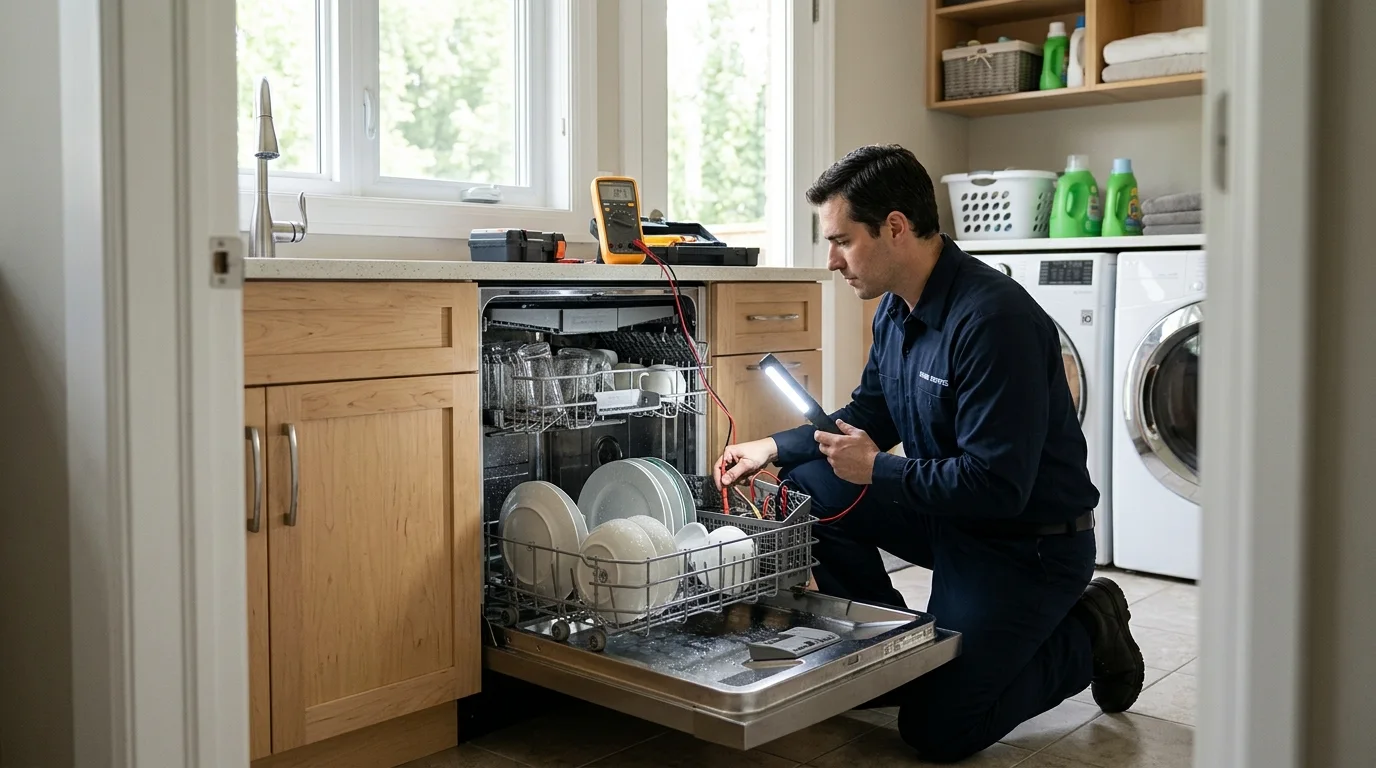
If a dishwasher not drying dishes leaves everything wet, first check the selected dry option, rinse-aid level, loading and whether the final rinse is getting hot. Plastic items often stay wetter than glass or ceramic, so the material pattern matters. If the dishwasher used to dry well and suddenly stopped, a heating, venting, fan, sensor or control problem may need professional diagnosis.
Dishwasher Not Drying Dishes: Start With the Drying Method
Not every dishwasher dries in the same way. Some use a visible heating element, some rely more on condensation and the heat stored in the dishes, and some add fans, automatic door opening or other drying features. That is why “the dishes are wet” is not enough to identify a failed heater.
Whirlpool’s current dishwasher drying guidance tells owners to check dry settings, loading and rinse aid. Bosch also emphasizes rinse aid, loading space and model-specific drying options. Those checks belong at the front of the diagnosis because they can change drying performance even when the appliance is mechanically healthy.
Before changing anything, compare the materials. Are glass and ceramic mostly dry while plastic containers hold droplets? Is the entire tub cold and wet, including metal items? Does the dishwasher finish hot but leave water pooled on concave surfaces? Each pattern points in a different direction.
Step 1: Confirm the Selected Cycle Includes the Drying You Expect
Start with the control panel. Air Dry, Fan Dry, Eco, Quick or other reduced-energy options may not use the same amount of heat or drying time as a heated or extended-dry selection.
Use the owner’s manual to confirm what the selected cycle is designed to do. Do not assume a button labelled “Dry” works the same way across brands.
If the dishwasher has a Heated Dry, Extra Dry, Sanitize or similar option that the manufacturer says improves drying, enable it for a test load. If performance improves immediately, the machine may have been operating as selected rather than failing.
Step 2: Check the Rinse-Aid Dispenser
Rinse aid helps water spread into a thin sheet instead of clinging as droplets. That can improve both drying and spotting performance.
Whirlpool and Bosch both specifically recommend rinse aid when dishes remain wet. Check whether the dispenser is empty and whether the setting is appropriate for the model and water conditions.
Do not pour rinse aid into the detergent cup or overfill the dispenser. Follow the owner’s manual. If the dishwasher has been run without rinse aid for a long time, refill it and compare several normal loads rather than judging only one unusual load.
Step 3: Look at How the Dishes Hold Water
Loading affects drying because water has to drain away before evaporation can finish the job. Bowls, mugs and containers with flat bottoms can collect small pools if they are loaded level.
Angle cups and bowls so water can run off. Leave space between items so warm air or steam can move. Avoid nesting utensils tightly together.
Unload the lower rack first. If you pull the upper rack out first, water trapped on cups and plastic items can drip onto otherwise dry dishes below.
Common mistake: calling the dishwasher “not drying” when the main problem is water physically pooled in the shape of the item. No drying system can easily remove a spoonful of water sitting in the bottom of an upside-down container.
Step 4: Compare Plastics With Glass, Ceramic and Metal
Plastic does not retain heat the same way as dense materials such as glass, ceramic and metal. In dishwashers that depend heavily on retained heat and condensation, plastic items can remain noticeably wetter even when the rest of the load is acceptably dry.
If only plastics are wet, the dishwasher may be operating normally. Use the model’s enhanced drying option and rinse aid if supported, and load plastics so water can drain rather than pool.
If every material is cold and wet, especially when the machine previously finished warm, the heating or drying system deserves more attention.
Step 5: Check Whether the Final Part of the Cycle Gets Warm
You do not need to reach into a live dishwasher or touch a heating element. Instead, note whether the interior feels warm and steamy when the cycle has completed and it is safe to open the door.
A completely cold finish can be a clue that the machine did not produce or retain the expected heat. Depending on the design, that can involve the water temperature entering the machine, a heating element or heat-pump system, a temperature sensor, a fan, a vent, wiring or the control.
The clue does not identify one failed part. The drying design for the exact model has to be considered.
Step 6: Check for Water That Never Drained Away
A dishwasher can seem like it has a drying problem when the more important issue is drainage. Standing water in the sump or an abnormal amount of water left in the tub can keep humidity high after the cycle ends.
If there is visible standing water, address that as a drain complaint. Check the removable filter, drain path and any model-approved maintenance steps rather than trying to solve the problem with extra drying time.
A dishwasher that does not drain normally may need a different diagnosis from one that drains completely but leaves droplets on otherwise clean dishes.
Common Cause Groups
Cycle or Option Selection
The machine may simply be using a low-heat or no-heat drying mode. Confirm the control settings before treating the result as a failure.
Low or Empty Rinse Aid
Without rinse aid, water can cling more strongly to dish surfaces. Manufacturer guidance from Whirlpool and Bosch both treats rinse aid as a major part of normal drying performance.
Loading and Material Type
Items that trap water and plastics that store less heat can remain wet even when the dishwasher is functioning normally. The material and shape pattern matters.
Heating-System Problem
If the dishwasher finishes unusually cold and every type of dish is wet, the heating system may need diagnosis. The relevant parts depend on whether the model uses a conventional heater, heat pump, condensation design or another system.
Fan, Vent or Door-Opening System
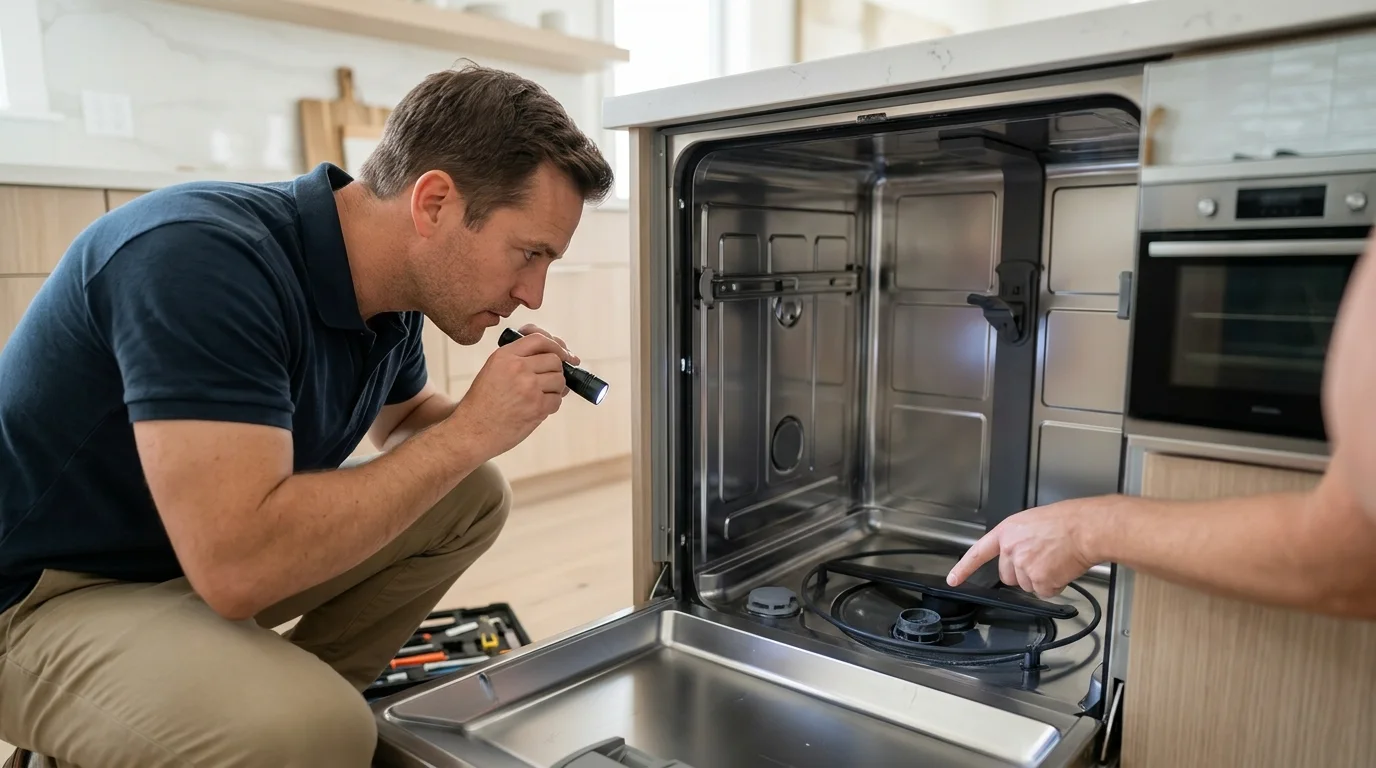
Some dishwashers use a fan, vent or automatic door-opening feature to help move moist air away from the load. If a model relies on one of those systems and it stops operating, drying performance can fall even though washing is still normal.
Sensor or Control Problem
Temperature sensors and controls decide when heat or other drying functions should operate. A sensor or control fault can therefore create a drying complaint without an obvious broken heater.
Safe Checks a Homeowner Can Make
- Confirm the dry option. Use a cycle and drying selection designed for better drying performance.
- Check and refill rinse aid. Follow the model instructions and do not overfill.
- Reload cups and bowls at an angle. Let water drain instead of pool.
- Give dishes space. Avoid tight nesting that traps water.
- Compare materials. Note whether only plastics are wet or the whole load is affected.
- Check for standing water. A drain problem can keep the tub humid.
- Notice the end-of-cycle warmth. A cold interior can be useful diagnostic information.
- Record any error code. Do not assume it names the failed part without checking the model documentation.
After making one change, run a normal representative load. Do not change the detergent, cycle, rinse aid and loading all at once if you want to know which factor made the difference.
Common Mistakes to Avoid
Assuming wet plastic proves a heating failure. Plastics often dry differently from glass and ceramic.
Skipping rinse aid because detergent already contains drying additives. Manufacturer guidance may still recommend using the dedicated rinse-aid dispenser for better performance.
Overfilling the rinse-aid dispenser. Follow the model instructions and wipe up spills.
Opening the dishwasher very early and judging the result immediately. Some drying systems continue working after the wash portion ends.
Blocking a vent or automatic-door mechanism with dishes. Loading can interfere with airflow or door movement on some designs.
Treating standing water as a drying-only issue. Drainage should be corrected first if the tub is retaining water abnormally.
What a Technician May Inspect or Test
A technician starts by confirming how the specific dishwasher is designed to dry. That avoids applying a conventional heating-element diagnosis to a model that uses a different system.
The technician may check end-of-cycle temperature, heating operation, temperature sensors, wiring, control outputs, rinse-aid dispensing, venting, fans, door-opening mechanisms and drainage depending on the model.
If the dishwasher washes normally but finishes cold, the heating branch becomes more important. If it finishes hot but moisture remains trapped, airflow, venting, loading and rinse-aid performance deserve more attention.
The useful diagnosis separates where the moisture is visible from which system failed to remove it. Wet dishes are evidence. They are not a parts diagnosis.
What to Check After You Make a Correction
Run a typical mixed load with the corrected settings. At the end, compare glass, ceramic, metal and plastic separately. Check whether the tub is warm, whether rinse aid was dispensed, and whether water is pooling because of item shape.
If improved loading and rinse aid solve most of the problem but plastics remain damp, that may be normal for the design. If the entire load remains cold and wet, or drying performance changed suddenly after years of normal operation, service becomes more reasonable.
If Drying Performance Suddenly Changed
A sudden change deserves more attention than a dishwasher that has always left some plastics damp. If the machine used to finish hot and dry but now ends cold, note whether any error code appeared, whether the cycle time changed, and whether the wash performance also changed.
If washing is still strong but drying alone has failed, that narrows the problem toward the drying-specific systems. If both washing and drying became poor at the same time, water supply, temperature, control or another shared system may be involved.
Drying Problems After a Detergent or Water-Condition Change
If drying changed around the same time you switched detergent, changed rinse-aid settings, moved to a home with different water hardness, or started using a different cycle, test those variables before assuming an internal component failed. Water chemistry can change how droplets cling to glassware and plastic, while a different detergent or rinse-aid dose can change the amount of film or sheeting left on the surface.
Do not compensate by adding excessive detergent or rinse aid. Return to the appliance and product instructions, make one adjustment at a time, and compare similar loads. If the dishwasher still ends cold and wet despite correct settings, the problem is less likely to be explained by product choice alone.
When the Dishwasher Dries the Bottom Rack Better Than the Top
Rack-specific drying can be caused by the way items are loaded, where water pools, or how warm air and steam move through the tub. Check whether cups and bowls on the upper rack are collecting water in recessed bases. Also make sure tall items are not interfering with any vent, fan outlet or automatic-door mechanism used by the model.
If one rack remains consistently much wetter even with comparable materials and correct loading, mention that pattern during service. It may help narrow airflow or heat-distribution issues without assuming one specific component has failed.
Dishwasher Not Drying Dishes: Frequently Asked Questions
Why are only plastic dishes wet?
Plastic stores less heat than glass, ceramic and metal, so it often remains wetter in condensation-based or heat-assisted drying systems.
Does rinse aid really help drying?
Yes. Whirlpool and Bosch both state that rinse aid helps water sheet or slide off dish surfaces and improves drying performance.
Does wet dishware mean the heating element is bad?
No. Cycle selection, rinse aid, loading, material type, drainage, venting and different drying designs can create similar results.
Should the dishwasher feel warm at the end?
Many models do, but the exact behaviour depends on the drying system and selected cycle. A sudden change from the machine’s normal end-of-cycle temperature is useful evidence.
Can a drain problem make dishes stay wet?
Yes. Abnormal standing water can keep humidity high and should be diagnosed as a drainage issue first.
When to Request Appliance Repair
Request professional assessment if the dishwasher used to dry normally and now finishes cold and wet, the correct dry options and rinse aid do not help, a fan or vent system appears not to operate, the tub retains standing water, or error codes keep returning.
For broader service information, see dishwasher repair Toronto. To arrange an assessment, Request Appliance Repair. Before the visit, note whether plastics alone are wet, whether the entire tub finishes cold, whether rinse aid is being used and whether the dishwasher drains completely. Those details help separate a normal drying limitation from a repair fault.
Need Appliance Repair?
Share the appliance, brand, address, symptoms and optional photos online. A contractor can review the request and contact you about availability and next steps.
Start Your Repair Request