
Freezer Icing Up: Defrost and Airflow Causes
Freezer icing up? Frost location can separate warm-air entry from airflow or defrost problems. Learn safe checks before removing any panels.
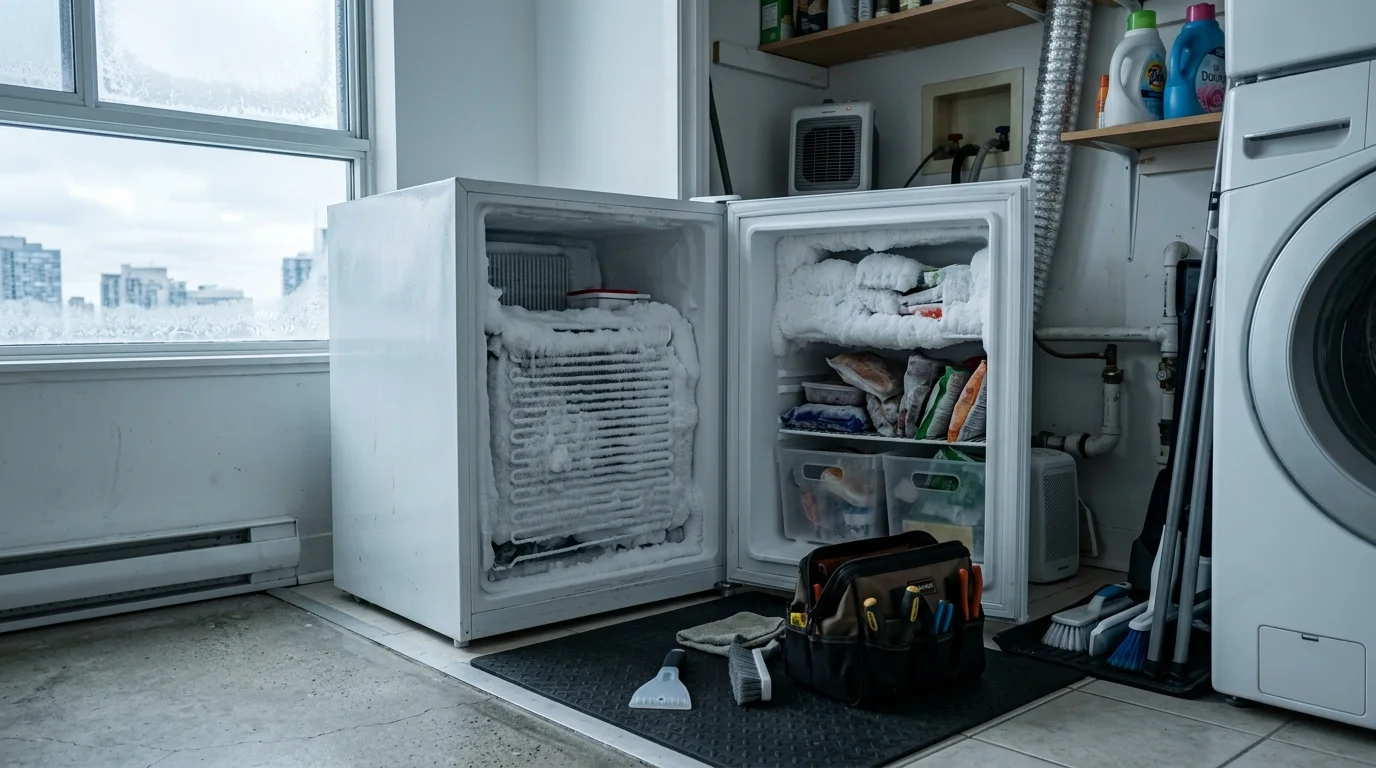
The most common mistake when a freezer icing up is to assume the defrost heater has failed and start chipping ice away. Frost can come from warm moist air entering through a door gap, blocked airflow, loading habits, or a defrost-system problem. First note where the frost is forming. If heavy ice needs to be removed, defrost the appliance safely rather than using a knife or other sharp tool.
Freezer Icing Up: Start With the Frost Pattern
Frost is frozen moisture. The diagnostic question is how that moisture reached the cold surface and why it stayed there. Samsung’s current support explains that warm air entering through door or sealing problems can create frost. Whirlpool also identifies humidity, door opening, warm food, poor sealing, and airflow as common contributors.
That makes frost location useful evidence. A light layer near a door opening tells a different story from a dense frost blanket across the rear evaporator cover.
Step 1: Look at Where the Ice or Frost Is Forming
Frost concentrated near the door edge
Warm-air entry should be high on the list. Check whether a package, drawer, or ice bin is preventing full closure. Inspect the gasket for debris, folding, or damage. Repeated door openings can also create localized frost without any failed defrost component.
Frost scattered over food and shelves
This can fit frequent door opening, warm or uncovered food, high humidity, or a door that is not sealing consistently. It can also happen when airflow is poor and moisture is not being managed normally.
Heavy frost or snow-like ice across the rear interior panel
This pattern makes evaporator airflow and the defrost system more important. On a frost-free freezer, ice can build around the evaporator if the defrost cycle is not removing it correctly. The fan then has difficulty moving air through the coil area.
That pattern still does not identify whether the heater, sensor, wiring, control, drain, or another component is the cause. The technician needs to test the defrost sequence.
Ice on the freezer floor or around a drain area
A drain-path problem can allow defrost water to refreeze where it should not. This may appear as a sheet of ice on the freezer floor, sometimes with water leaking into a lower compartment or onto the kitchen floor.
Frost concentrated around an ice-maker compartment
Check for an ice chute flap, bucket, or door that is not sealing correctly where applicable. Warm air entering a small ice compartment can create a localized frost problem even when the main freezer defrost system is working.
Step 2: Check the Door and Airflow Before Blaming Defrost Parts
Close the door slowly and make sure nothing interferes. Clean the gasket contact surfaces. If the cabinet has adjustable bins or drawers, confirm they are fully seated. A door can look closed while a package or bin holds one corner slightly open.
Then check the visible air vents. Overpacked food can block cold-air circulation and create temperature and moisture problems. Leave space around supply and return areas identified in the owner manual.
Step 3: Defrost Heavy Ice Safely
If frost is heavy enough to block vents, drawers, or fan airflow, a complete defrost can restore the freezer to a clean starting point. Whirlpool’s current freezer defrost guidance recommends turning the appliance off or unplugging it, protecting the floor from meltwater, and letting the ice melt rather than scraping with sharp tools.
- Move frozen food to a suitable cold-storage location before defrosting.
- Disconnect power according to the appliance instructions.
- Use towels or a basin to control meltwater.
- Leave the door open and allow ice to melt naturally.
- Do not use knives, screwdrivers, chisels, or other sharp tools to pry ice from the liner.
- Dry the compartment before restoring power.
- Allow the freezer to return to its proper temperature before restocking food.
A full defrost is also a diagnostic reset. If frost stays away after door sealing and airflow are corrected, the cause may have been usage or air entry. If a dense frost pattern returns quickly under normal use, an internal defrost or airflow problem becomes more plausible.
Common Cause Groups
Warm-air entry through the door
Every door opening lets some room air in. A door left ajar, a damaged gasket, an obstructing package, or a misaligned bin can turn that normal exchange into continuous moisture entry. The colder surfaces inside the freezer collect the moisture as frost.
Blocked vents or poor interior airflow
Frost itself can block airflow, and poor loading can make the problem worse. When air cannot circulate through the evaporator and compartment, temperatures become uneven. Some areas may frost heavily while other food begins to soften.
Defrost-system fault
Frost-free designs periodically manage evaporator frost. Depending on the model, the system can involve a heater, temperature sensor or thermostat, control logic, wiring, and drainage. Failure anywhere in that chain can allow frost to accumulate.
The visible frost identifies the system to investigate, not the failed part. Replacing a heater because the back wall is frosted can miss a sensor, wiring, or control problem.
Defrost-drain problem
Meltwater needs to leave the evaporator area. A frozen or blocked drain can create refrozen water on the freezer floor or repeated ice buildup near the drain path. The technician may need to clear the blockage and determine why it formed.
Temperature and loading conditions
Placing warm food in the freezer, repeated long door openings, very humid conditions, or overpacking can add moisture and interfere with airflow. These conditions may create frost even when the appliance has no failed component.
Safe Checks a Homeowner Can Make
- Check whether the door closes completely without packages or bins interfering.
- Clean visible gasket surfaces and inspect for obvious damage.
- Move food away from visible vents and fan openings.
- Note exactly where frost is heaviest before defrosting it.
- Check the temperature setting against the owner manual rather than turning it randomly colder.
- Use a complete safe defrost if heavy ice blocks airflow and the model instructions allow it.
- After defrosting, watch how quickly and where frost returns.
What the Frost Does Not Prove
A frosted rear wall does not prove the heater is open. Frost near a door does not prove the gasket must be replaced. Ice on the freezer floor does not prove the drain tube is permanently blocked. These patterns narrow the investigation, but the final cause depends on sealing, airflow, defrost operation, drainage, and controls working together.
What a Technician May Inspect or Test
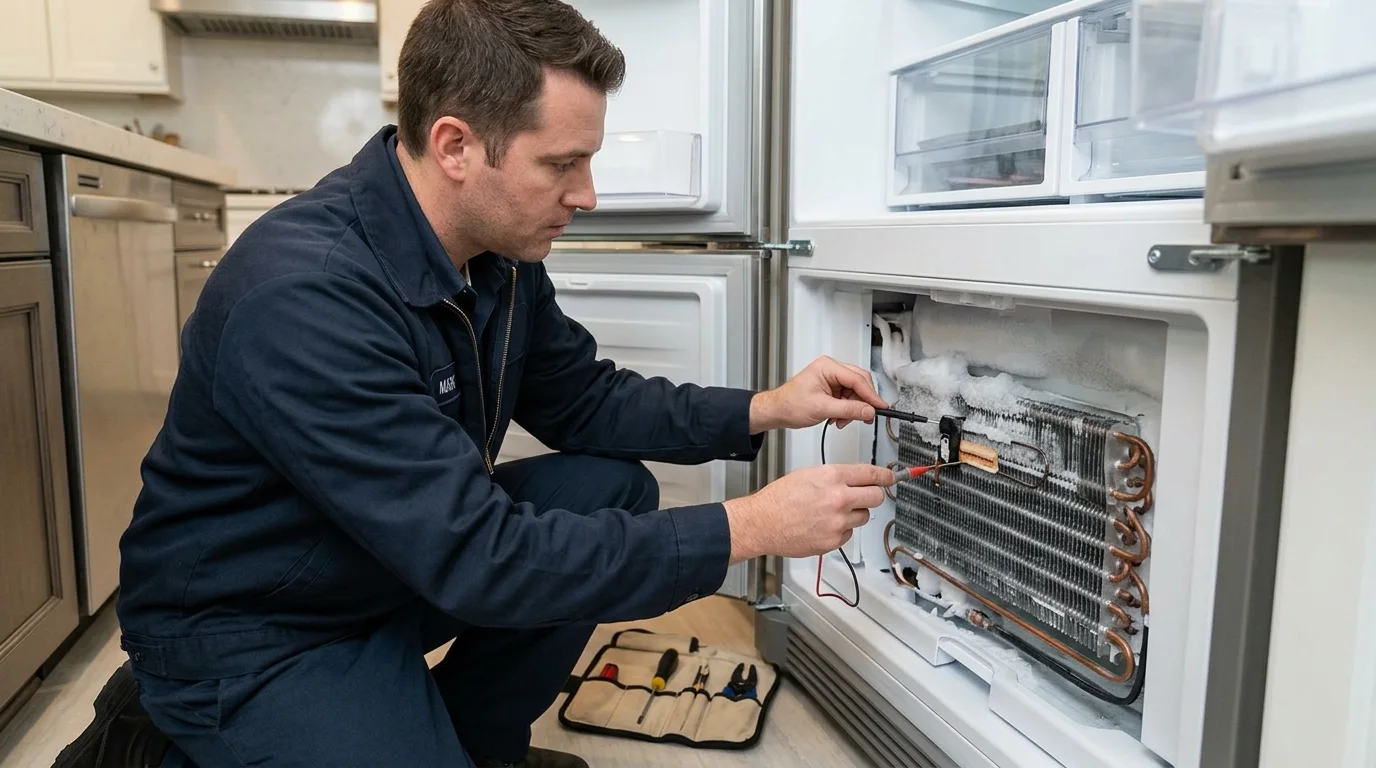
If frost returns after a complete defrost under normal loading and door use, a technician can inspect the evaporator frost pattern and verify fan operation. The defrost heater, sensor or thermostat, wiring, and control command can be tested using model-specific service information.
The drain path can be checked separately if ice forms on the freezer floor or water appears beneath the appliance. Door alignment and gasket contact may also be tested if the frost pattern is concentrated near the opening.
If cooling is poor even after airflow is restored, the diagnosis may expand beyond defrost to fan, sensor, compressor, or sealed-system performance. Frost alone should not force that conclusion.
Common Mistakes to Avoid
Do not chip ice from the liner with sharp tools. A puncture can damage the liner or refrigeration system and turn a frost problem into a much larger repair. Do not repeatedly use high heat against plastic liners or wiring. Do not refreeze food based only on how hard it feels without considering actual temperature and thaw history.
Also avoid calling every frost-free freezer “broken” after one door was left ajar. Clear the frost safely, correct the door or loading issue, and see whether the same frost pattern returns under normal use.
What to Check After a Full Defrost
Restore power, allow the freezer to reach the proper temperature, and keep vents clear. Check door closure each time the freezer is used. Over the next operating period, watch the same area where frost was heaviest before.
If the freezer remains clear and temperature is stable, the original cause may have been warm-air entry or loading. If a dense rear-panel frost pattern returns while the door is sealing and vents are open, that recurrence is strong evidence for professional defrost-system diagnosis.
What a Complete Defrost Can Tell You
A complete defrost is not only a way to remove ice. On a frost-free freezer, it can create a useful diagnostic starting point. Once all obstructing frost has melted and the appliance has been returned to normal operation, watch how the pattern rebuilds.
If the freezer returns to normal temperature and remains clear, the original icing may have been driven by a door left ajar, a sealing problem that was corrected, unusually humid air entry, or blocked airflow that has since been fixed. If a dense frost pattern begins returning quickly in the same area, an underlying defrost, airflow, drainage, sensor, or control problem becomes more plausible.
Do not treat the temporary improvement after defrosting as proof that the repair is complete. Melting ice can temporarily restore airflow even when the reason that ice formed is still present. The recurrence pattern is the clue.
Door Frost and Back-Wall Frost Tell Different Stories
Frost concentrated near the door opening is often consistent with moisture entering from the room. Look for packages holding the door open, a gasket that is dirty or folded, or frost that is heaviest where the seal is weakest. Widespread snowy frost on food can also fit repeated warm-air entry.
A heavy, more uniform frost layer hidden behind or building across the evaporator-cover area on a frost-free design raises a different question. The system may be cooling, but the frost is not being cleared normally or air is not moving through the evaporator area as intended. That pattern still does not tell you whether the heater, sensor, wiring, control, or another part is responsible.
Protect Food While You Diagnose the Ice Problem
Heavy frost can reduce usable space and interfere with airflow, but food decisions should be based on actual temperature and thaw history rather than frost appearance. Keep frozen food at the model-recommended storage temperature and move vulnerable food to another properly operating freezer if the compartment cannot maintain safe freezing conditions during diagnosis or defrosting.
When a full manual defrost is needed, plan where the food will go before turning the appliance off. That prevents a maintenance step from becoming a food-loss problem.
If frost returns, photograph the pattern before removing it again. A clear image of where frost begins, how quickly it spreads, and whether vents become buried can be more useful than a description after the freezer has already been defrosted. It gives the technician evidence of the original pattern without requiring you to keep operating a poorly performing freezer just to reproduce it.
Freezer Icing Up: Frequently Asked Questions
Does frost mean the defrost heater is bad?
No. Frost can come from door sealing, humidity, loading, blocked airflow, drainage, or a defrost-system fault. Testing is needed to identify the component.
Why is frost heaviest near the freezer door?
That pattern often makes warm-air entry more relevant. Check closure, the gasket, bins, and packages that may be keeping the door slightly open.
Why is the back wall covered in frost?
Heavy rear-panel frost can be consistent with ice around the evaporator and restricted airflow. On frost-free models, recurring buildup may require defrost-system testing.
Can overpacking cause freezer ice buildup?
It can contribute by blocking airflow and making temperature and moisture distribution uneven. Keep visible vents and fan paths clear.
Can I scrape freezer ice with a knife?
No. Manufacturer guidance warns against sharp tools because they can damage the freezer. Let the ice melt during a safe defrost instead.
Why does the ice come back after I defrost the freezer?
If door sealing and airflow are normal and heavy frost returns quickly, an underlying defrost, drain, fan, sensor, or control issue may need diagnosis.
Should I repair or replace a freezer that keeps icing up?
Make that decision after the fault is confirmed. A door or defrost repair is a different comparison from a freezer with multiple cooling-system problems.
When to Request Appliance Repair
Request professional assessment when heavy frost returns after a complete safe defrost, the freezer cannot maintain temperature, a fan is contacting ice, the door will not seal correctly, water or ice repeatedly collects around the drain path, or internal defrost testing would be required.
For broader service information, see freezer repair Toronto. If the confirmed repair becomes substantial, the site’s repair-or-replace guide can help frame the decision. To submit the freezer details, Request Appliance Repair.
Need Appliance Repair?
Share the appliance, brand, address, symptoms and optional photos online. A contractor can review the request and contact you about availability and next steps.
Start Your Repair Request