
Gas Stove Keeps Clicking: Causes When No Leak Is Suspected
Gas stove keeps clicking with no gas smell? Check moisture, burner-cap alignment and ignition clues, plus when Ontario gas service is required.
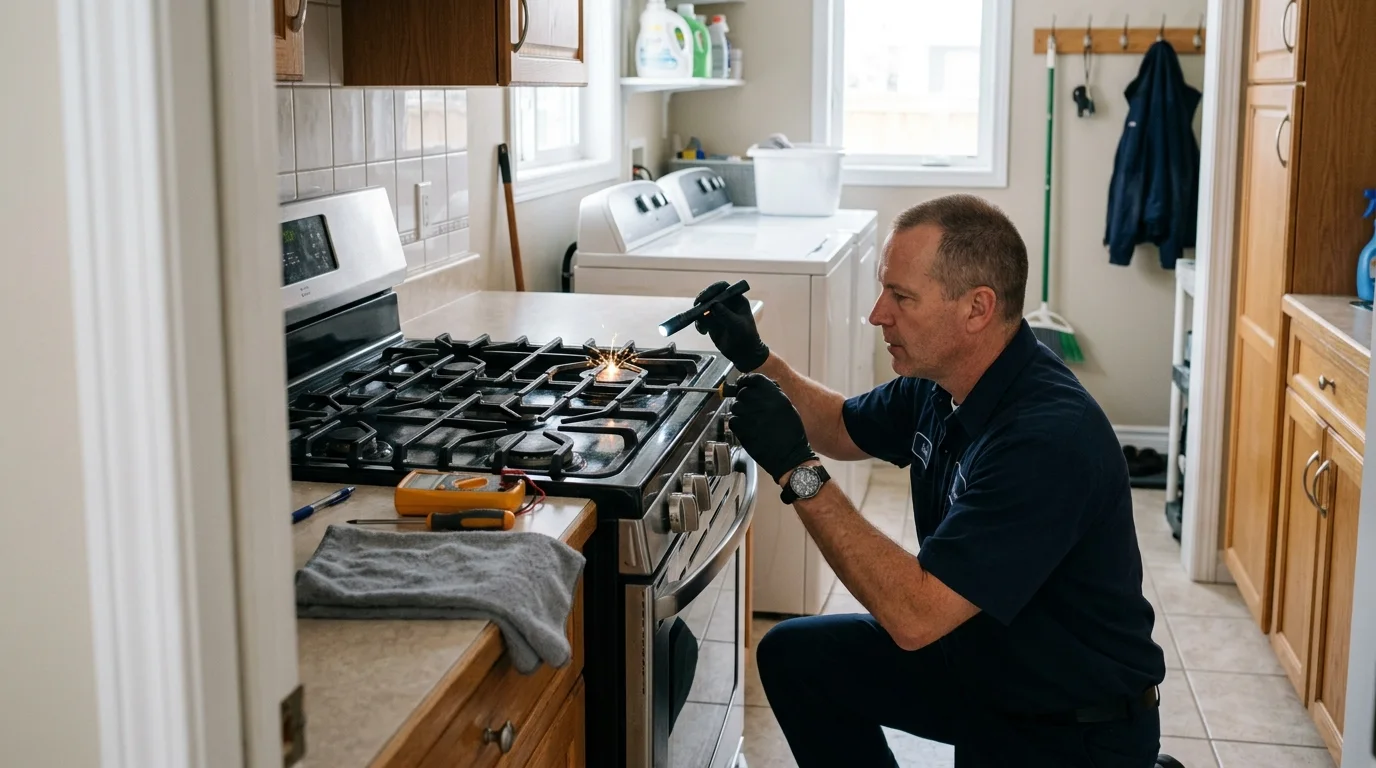
If your gas stove keeps clicking and there is no gas smell, common explanations include moisture from cleaning, a misaligned burner cap, spill residue, or an ignition-system fault involving a switch, spark module, wiring, or related components. Clicking alone does not confirm or rule out a gas leak, and it does not identify one specific failed part.
If you smell rotten eggs or sulphur, hear gas escaping, or otherwise suspect an active gas leak, do not troubleshoot the stove. Leave the area immediately and follow current Enbridge Gas Ontario emergency guidance from a safe location.
Gas Stove Keeps Clicking: First Separate a Safety Emergency From an Ignition Problem
A spark-ignition stove normally clicks while a burner is being lit. The abnormal patterns are different: clicking that continues after the flame is established, clicking when all controls appear off, clicking that began after cleaning or a spill, or one burner that repeatedly sparks but does not light normally.
The title of this guide assumes no leak is suspected. That assumption must be rechecked before any observation. If there is gas odour, hissing, a damaged gas connection, or another leak sign, the normal troubleshooting path stops. Enbridge says to leave immediately and call from a safe distance. Do not operate switches, appliances, or electronics near the suspected leak.
Why Clicking Happens During Normal Ignition
Turning a gas burner to its ignition position activates an electrical spark. The spark jumps at the igniter while gas flows at the burner. Once the flame is established, the ignition sequence should behave as the design intends. Some systems spark only during lighting. Others use flame-sensing strategies that may spark again if flame stability is disrupted.
That means a few clicks while lighting a burner can be normal. The useful question is what happens next. Does clicking stop once the flame is stable? Does it continue only on one burner? Does it happen after the burner was cleaned? Does a downdraft or strong airflow disturb the flame on a model that uses flame sensing? Those details matter more than the sound alone.
Clicking After Cleaning or a Spill
Moisture is one of the most useful non-emergency clues because it creates a clear timeline. Whirlpool’s current gas cooktop guidance notes that burners may click if they are damp from cleaning or spillover and advises allowing the product to dry thoroughly.
If the stove worked normally, was cleaned, and then began clicking while there is no gas odour, moisture around the burner or control area is more plausible than a coincidental major failure. Turn the affected controls off and allow the area to dry. Do not pour more liquid into openings, remove gas fittings, or use high heat around controls.
If clicking continues after the accessible surfaces are fully dry, or it returns repeatedly without cleaning or spills, the diagnosis moves beyond simple moisture.
Safe Observations Without Gas-System Disassembly
With the appliance off and no gas odour present, look at the removable burner cap only as the owner manual allows. A cap that was removed for cleaning and not placed back correctly can affect ignition. Do not loosen gas fittings, adjust valves, alter orifices, bend igniters, or remove panels.
Observe whether the clicking comes from one burner position or seems to involve several igniters. Note whether it starts only when a knob is turned, continues after the flame lights, or occurs with controls off. If the clicking began after a spill, note which control area got wet.
Also note flame behaviour from a normal operating distance if the area is safe. A burner that lights normally and then clicks is different from one that repeatedly fails to ignite. Do not keep attempting ignition if a burner fails to light normally.
The Same Clicking Sound Can Represent Different Ignition States
Clicking before flame appears means the ignition system is trying to light the burner. Clicking that continues after a stable flame is established means the system is still sparking when the user expected it to stop. Clicking with every control off is a third condition. These should not be treated as interchangeable symptoms.
If only one burner is affected, the local burner cap, igniter area, moisture, switch, or wiring path may be more relevant. If several igniters spark together, that may be normal for some designs during ignition, while continuous sparking with controls off points toward a different control or switch condition. The owner manual for the specific range matters.
Use Cleaning History as a Diagnostic Clue
Cleaning history can dramatically change the probability of a simple explanation. If the stove was operating normally, the burner area was washed, and clicking began immediately afterward, moisture is a strong clue. Whirlpool specifically recognizes damp burner areas after cleaning or spillover as a cause of clicking.
Letting accessible surfaces dry is not the same as opening the appliance. Keep knobs in the off position, avoid introducing more liquid, and do not remove control-panel parts or wiring. If the symptom disappears after thorough drying and normal owner-approved reassembly, the timeline supports a moisture-related cause.
If the symptom does not change after drying, or if it appears without any cleaning event, move beyond the simple moisture explanation.
One Burner Versus Every Burner
A single affected burner can point toward something local to that burner area, such as cap placement, moisture, contamination, or an individual ignition path. Clicking that appears to involve several burners may fit a shared spark-control design or a system-level switch or module condition.
Do not pull wiring connectors or swap igniters to test the theory. The observation is enough. Tell the technician whether one burner or several are involved, whether the flame lights normally, and whether the clicking continues after the knob leaves the ignition position.
Flame Behaviour Is Evidence, Not Permission to Adjust the Burner
If the area is safe and no leak is suspected, you may notice whether the burner lights promptly and whether the flame appears stable during normal operation. A flame that repeatedly goes out or fails to establish is different from a stable flame accompanied by continued clicking.
Do not use that observation as a reason to adjust air shutters, valves, regulators, or gas pressure. Those are not homeowner troubleshooting steps. Abnormal flame behaviour belongs in the service description and should be evaluated by an appropriately qualified person.
Why a Clicking Stove Can Become an Electrical Diagnosis
The spark is electrical even though the appliance burns gas. Moisture, switches, spark modules, wiring, grounding, and igniter insulation can all affect when or where the spark occurs. That is why continued clicking with no leak signs may ultimately be an electrical ignition-system problem rather than a gas-supply problem.
The distinction still does not make internal testing a DIY task. Gas appliances combine regulated fuel components with energized ignition circuits. A qualified technician can isolate which side of the system is misbehaving without bypassing safety devices.
Do Not Use Odour as the Only Leak Test
The absence of a rotten-egg smell is reassuring only in a limited sense. It is not a professional leak test and it does not certify the appliance safe. If you hear hissing, see a damaged gas connection, or otherwise suspect gas is escaping, use the emergency path even if the odour is uncertain.
The safe role of this article is to explain non-emergency clicking patterns when no leak is suspected. It cannot remotely rule out a leak.
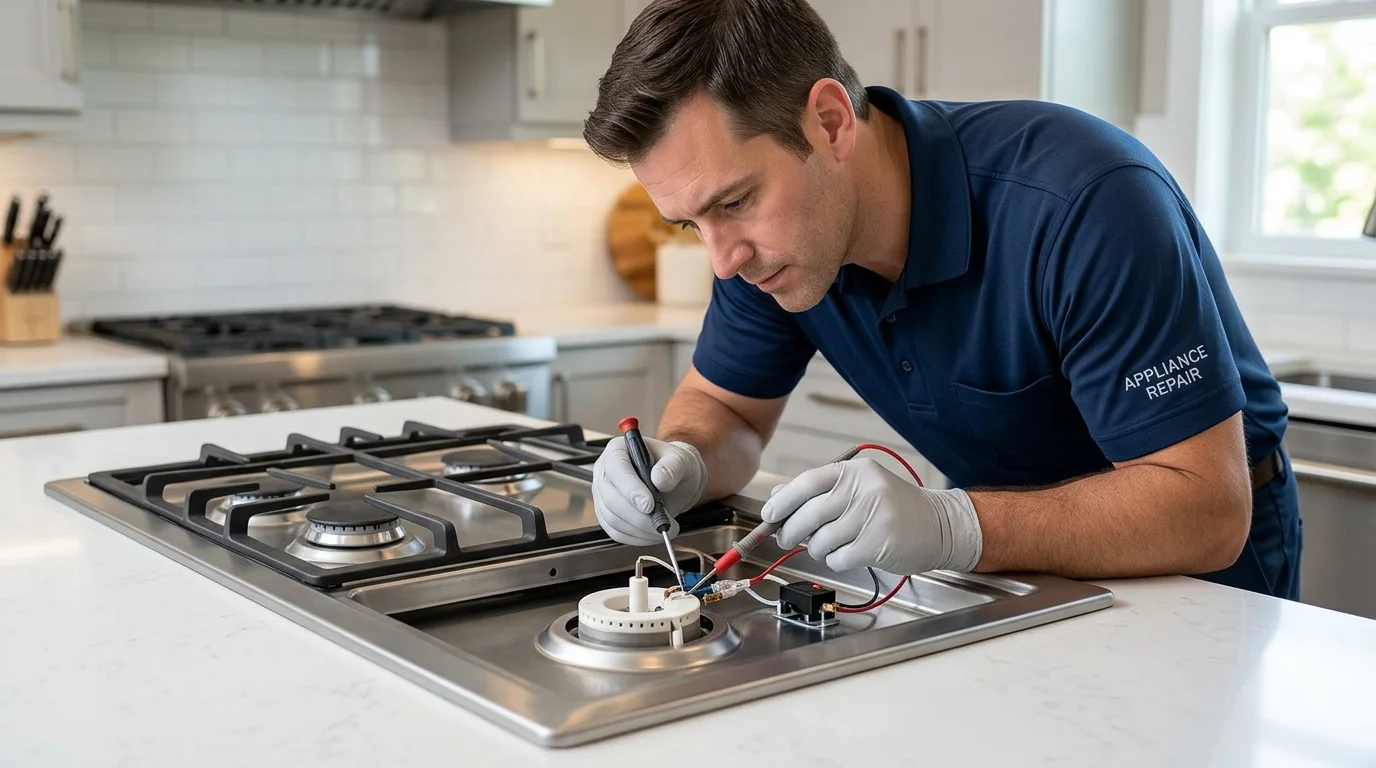
Common Cause Groups When No Leak Is Suspected
Moisture or residue around the ignition area
Cleaning solution, boil-over residue, or moisture can interfere with spark behaviour. Drying and normal cleaning according to the owner instructions may resolve this cause without repair.
Burner cap or head alignment
On designs with removable caps, an incorrectly seated cap can change the way gas reaches the ignition area. Follow the owner manual for normal reassembly. Do not modify burner openings or gas-delivery components.
Ignition switch or electrical spark-control issue
A switch associated with a burner control can signal for sparking when it should not. Spark modules, wiring, connectors, and insulation can also create repeated or misdirected sparking. These are service-level electrical checks.
Flame-sensing or airflow interaction
Some gas cooktops use flame-sensing ignition. Strong airflow can disturb the flame near the igniter and cause repeated sparking as the system tries to maintain ignition. This is model-specific, so the owner manual and manufacturer guidance matter.
Burner ignition condition
A dirty or obstructed burner area can affect ignition, but cleaning must stay within the user-maintenance steps approved for the appliance. Do not probe gas orifices, alter burner ports with metal tools, or disassemble the gas train.
What Clicking Does Not Prove
Clicking does not prove there is a gas leak. A spark can occur with no leak. It also does not prove the spark module, igniter, switch, or valve is defective. Several ignition conditions sound nearly identical from across the kitchen.
At the same time, the absence of a gas smell does not give permission to dismantle a gas appliance. Leak detection and gas-system work have safety and regulatory boundaries. The article can help you describe the symptom. It cannot certify the appliance safe or identify a gas-system defect remotely.
Ontario Safety and Qualified Gas-Appliance Work
In Ontario, fuels work is regulated. TSSA states that registered fuels contractors are the businesses legally authorized to perform fuels-related work, and gas-appliance diagnosis must be done by TSSA-certified technicians working for those contractors. For GTA homeowners, this matters: ask any technician you hire whether their employer holds TSSA fuels-contractor registration before work begins on the gas side of any appliance.
That distinction matters for a clicking stove. Drying an externally wet burner area or reseating a removable cap exactly as the owner manual permits is different from opening the appliance, testing gas pressure, adjusting valves, replacing gas components, or altering ignition wiring associated with regulated service.
What a Qualified Technician May Diagnose
After confirming the area is safe, a qualified technician can reproduce the symptom and determine whether the spark command matches the control position. Depending on the model, that can involve the burner cap and head condition, igniter position, ignition switches, spark module, wiring, grounding, flame-sensing behaviour, and gas-burner operation.
The technician can also determine whether clicking is a symptom of poor ignition rather than the primary failure. For example, the spark system may be working exactly as commanded while the burner does not establish a stable flame. That is why replacing a spark module before checking the full ignition sequence can waste time and money.
What to Tell the Gas Technician
Once the area is confirmed safe and there is no suspected leak, describe the clicking as precisely as possible. Note whether it begins before flame, continues after flame, occurs with controls off, affects one burner or several, and whether the burner lights normally. Mention recent cleaning, a boil-over, or any moisture around the control area.
Do not recreate an unsafe symptom for a recording. If the clicking is intermittent, a short recording made during normal safe operation can help, but stop immediately if gas odour, hissing, abnormal flame behaviour, or another safety concern appears.
This information lets a qualified technician test the ignition sequence instead of starting with a guessed spark part. It also preserves the correct boundary between an appliance ignition fault and an emergency gas-safety situation.
When to Request Repair
If clicking continues after the stove is dry and correctly reassembled according to the owner instructions, if it occurs with controls off, if a burner does not light normally, or if the symptom repeatedly returns, professional assessment is sensible. If gas odour appears at any point, stop and use the emergency path instead of the repair-request path.
For information about the regulated service silo, see gas appliance repair Toronto. General cooktop service information is also available through stove repair Toronto. Once the area is safe, you can Request Appliance Repair and describe when the clicking occurs and whether it followed cleaning or a spill.
A Useful Symptom Note for Service
Write down whether one or several igniters click, whether the burner lights, whether clicking stops after the flame is stable, whether the controls are off when clicking occurs, and whether cleaning or a spill happened shortly before the symptom began. Do not attempt to create the symptom repeatedly if ignition is unreliable.
Those observations give a qualified technician a safer starting point than “stove clicking.” They also reduce the temptation to treat one noise as a guaranteed failed part.
Gas Stove Keeps Clicking: Practical Takeaway
When a gas stove keeps clicking with no leak signs, work through the basics first: drying history, burner-cap alignment per the owner manual, and whether the burner lights normally. Do not open the gas system or attempt ignition repairs. If gas odour appears at any point, leave immediately and call from outside. For persistent clicking that survives the basic checks, a TSSA-registered technician is the right next step.
Need Appliance Repair?
Share the appliance, brand, address, symptoms and optional photos online. A contractor can review the request and contact you about availability and next steps.
Start Your Repair Request