
Air Conditioner Leaking Water: What the Location Can Tell You
Air conditioner leaking water? The location can narrow the cause. Learn what to check safely, warning signs to watch for and when to shut the system off.
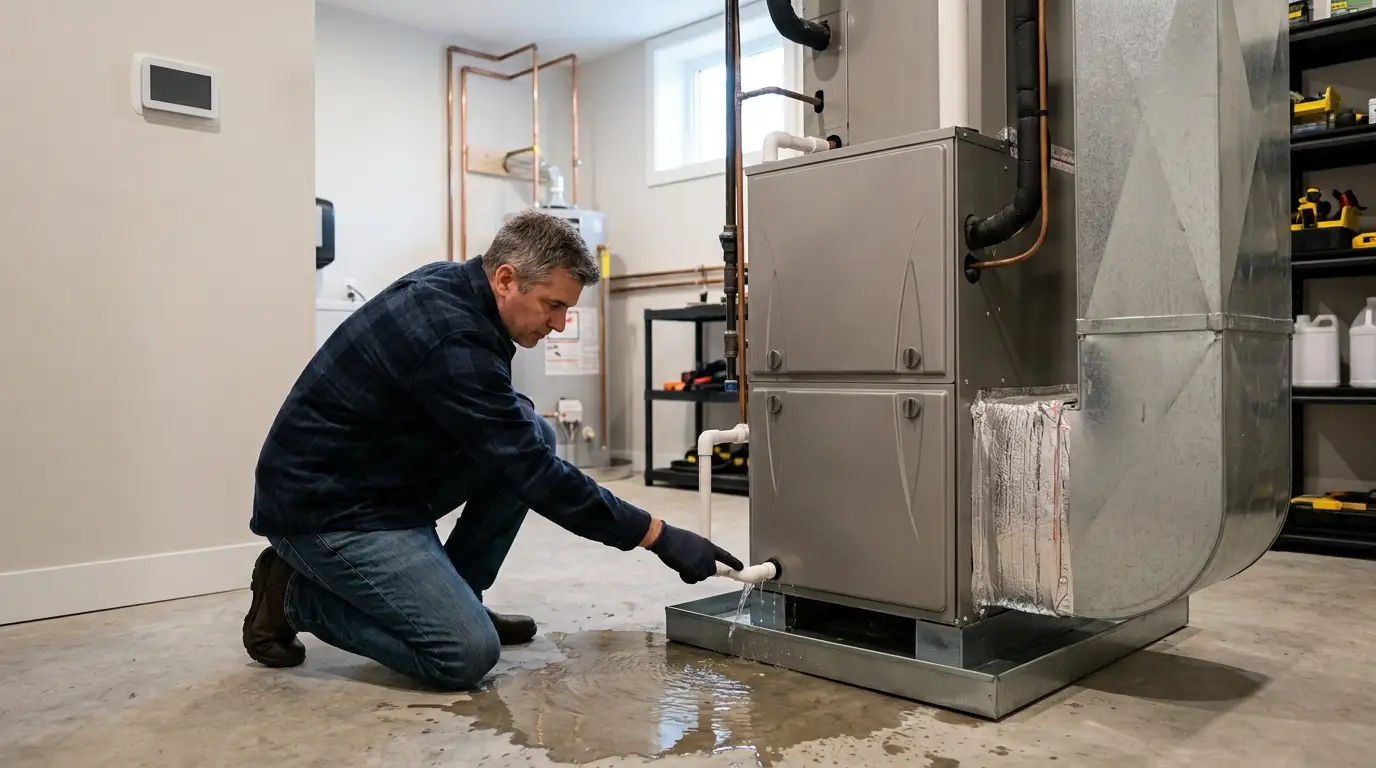
When an air conditioner leaking water is discovered, the location of the water provides an important clue, but it does not identify the failed part by itself. Water under the indoor air handler suggests a drainage or coil problem. Water around a ceiling vent may have travelled from equipment, ductwork, or the roof. Water at an outdoor drain outlet can be completely normal during cooling.
The safest way to narrow the problem is to combine the leak location with timing and other symptoms. Note whether the system was running, whether the water appeared after rain, whether cooling became weaker, and whether you can see ice. Stop the system if water is reaching electrical components, damaging a ceiling or floor, or continuing to spread. The following location-first guide can help you understand what the pattern may mean before deciding whether a professional inspection is needed.
What Normal Air Conditioner Condensation Looks Like
Cooling an indoor space naturally removes moisture from the air. In a central air conditioner or a ducted heat pump, warm indoor air passes over the cold evaporator coil. Moisture condenses on that coil, collects in a drain pan, and leaves through a condensate drain system. The water is normally directed to an approved drain location rather than allowed to collect around the equipment.
For a related next step, read dishwasher leaking.
A small amount of water leaving an outdoor condensate termination during the cooling season may be normal. Some systems discharge condensate near the outdoor equipment, while others use a plumbing connection, floor drain, condensate pump, or another designated outlet. The exact arrangement varies by installation.
Indoor water is different. A puddle beneath the air handler, dripping from a ceiling, or water running down a wall usually means the condensate is not reaching its intended destination or that another source is being mistaken for air conditioner water. Trane’s troubleshooting guidance also distinguishes normal condensate disposal from an indoor leak and recommends addressing water that is collecting around the equipment.
Air Conditioner Leaking Water Near the Indoor Unit
Water below the indoor air handler, furnace cabinet, or evaporator-coil compartment commonly points to a condensate management problem. The most frequent possibilities include a restricted drain, an overflowing or damaged pan, a disconnected drain connection, a failed condensate pump, or ice on the evaporator coil that is melting faster than the drainage system can handle.
A clogged condensate drain is especially likely when the system cools normally at first, then begins leaking after it has run for some time. Dust, biological growth, and debris can restrict the drain path. As the pan fills, water may spill over the edge or follow an unexpected route through the equipment cabinet.
A damaged or rusted drain pan can create a similar symptom even when the drain itself is open. The visible water may appear below the pan, inside the cabinet, or on an adjacent surface. Because the pan may be difficult to see without removing access panels, do not dismantle the equipment to investigate.
Systems installed below or above the living area may also use a condensate pump. If the pump cannot lift water to the drain, the pan or reservoir can overflow. A pump problem may be more noticeable when the air conditioner has been operating for a long period or when humidity is high.
Carrier identifies clogged condensate drains, damaged drain pans, and frozen evaporator coils among the common causes of water around an indoor air conditioning system. These causes can overlap, which is why the location narrows the investigation but does not confirm the repair.
Water From a Ceiling Vent
Water dripping from a ceiling vent does not necessarily mean the vent itself is leaking. The actual source may be an air handler in the attic, a backed-up condensate drain, a frozen coil, sweating ductwork, a roof penetration, or plumbing above the ceiling. Water can travel along framing, insulation, duct surfaces, or the outside of a pipe before appearing at the grille.
A ceiling vent leak that begins while the air conditioner is running is more consistent with a cooling or drainage issue, especially if the system is also cooling poorly or producing visible ice. A leak that appears after rain, even when the system has been off, raises more concern about roof or exterior water intrusion. Water that appears regardless of weather or cooling may require the surrounding plumbing and building envelope to be considered as well.
Ceiling leaks deserve prompt attention because drywall, insulation, flooring, and electrical components can be damaged before the source is obvious. Turn off the air conditioner if the water is active or spreading, protect nearby belongings if it is safe to do so, and avoid reaching into a wet ceiling opening. If water is near a light fixture, wiring, or other electrical equipment, keep clear and arrange appropriate assistance.
Water Around a Wall-Mounted Ductless Unit
A wall-mounted ductless indoor unit normally sends condensate through a drain hose. Water below the unit, along the wall, or at the end of the drain hose can result from a restricted hose, poor drainage slope, a loose connection, a damaged drain pan, or a condensate pump problem on installations that use one.
Humidity can also create surface condensation on a cold component or poorly insulated section. That possibility becomes more relevant when the water is a light film or occasional droplets rather than a growing puddle. However, repeated dripping, wall staining, musty odour, weak cooling, or water that continues after the system is shut off should not be dismissed as ordinary humidity.
Some ductless installations have model-specific drainage arrangements and operating considerations. LG’s support guidance notes that drain-hose connections, drain-pump issues, condensation, and rainwater intrusion can all matter depending on the unit and installation. Check the model’s owner instructions for any accessible filter or drain observations, but do not open sealed sections or handle refrigerant lines.
Water at the Condensate Drain Outlet
Water at a designated condensate drain outlet is often a sign that the system is removing humidity as intended. During cooling, a central air conditioner can produce a steady discharge, particularly in humid weather. The correct interpretation depends on whether the water is leaving through the intended outlet and whether the indoor equipment remains dry.
A concern arises when the outlet is dry but water is appearing indoors, when the outlet backs up, or when water is emerging from a connection, wall, ceiling, or other unintended location. A blocked drain may cause the water to collect at the indoor pan instead of reaching the termination. A failed pump can create the same result on systems that rely on pumped drainage.
Do not assume that every outdoor puddle is a leak. The outdoor unit itself may also have water around it from rain, melting frost, defrost operation on a heat pump, or nearby grading. The timing and exact source matter more than the presence of water alone.
Water Around the Outdoor Air Conditioner
Water around an outdoor cooling unit is not automatically a fault. Rain can collect around the cabinet, and normal condensate may discharge nearby. On a heat pump, water may also be produced during a defrost cycle in heating mode. These situations differ from water leaking inside the home or from a pipe that should be carrying condensate elsewhere.
Look for the point where the water originates without touching electrical components or opening the outdoor cabinet. Note whether the system is cooling, heating, or off, and whether the water appears only after rain. A large amount of water from an unexpected connection, water entering the home, or water accompanied by poor operation warrants professional assessment.
If you see oil-like residue, damaged refrigerant tubing, unusual hissing, or a major change in cooling performance, stop trying to diagnose the system yourself. Refrigerant circuits require equipment-specific testing and should not be opened or recharged as a homeowner procedure.
Use Timing and Other Symptoms to Narrow the Source
Location is useful evidence, but timing often makes the pattern clearer. These combinations can help separate several common causes:
- Leak after extended cooling: A drain restriction, pan overflow, or condensate pump problem becomes more plausible when water appears only after the system has run long enough to produce substantial condensation.
- Ice followed by water: A frozen evaporator coil can release meltwater when the system stops or the ice begins to thaw. Restricted airflow from a dirty filter can contribute to icing, but ice does not prove that the filter is the only cause.
- Weak cooling and indoor water: A frozen coil, airflow problem, drainage fault, or another equipment issue may be involved. The system needs testing before a specific component is blamed.
- Water during or after rain: Rain intrusion, roof or flashing problems, poorly sealed penetrations, or piping issues may be more likely than a cooling condensate fault, particularly when the air conditioner was not running.
- Water only at an outdoor drain termination: This may be normal condensate discharge if the system is operating in cooling mode and the water is leaving from the intended outlet.
- Water with a musty smell or staining: Ongoing moisture may be affecting insulation, drywall, flooring, or nearby materials. The leak source and any resulting damage should be assessed promptly.
A dirty filter can restrict airflow and contribute to evaporator-coil icing. If the filter is accessible and the owner instructions permit replacement, install the correct type and size. Do not treat a filter change as a complete diagnosis when the system is frozen, leaking repeatedly, cooling poorly, or installed in an inaccessible area. Filter needs vary with the filter type, system design, household conditions, and operating environment.
What You Can Check Safely
Safe observation is useful because it gives a technician better information without exposing you to electrical, refrigerant, or structural hazards. Before inspecting anything, keep hands away from wet electrical parts, exposed wiring, moving equipment, and refrigerant tubing.
- Identify the first visible location of the water, not only the point where it finally reaches the floor.
- Record whether the leak occurs during cooling, after the system stops, during rain, or while the equipment is off.
- Look for visible ice on accessible exterior surfaces without removing panels or trying to chip the ice away.
- Check whether cooling has become weak or whether airflow from the vents has reduced.
- Inspect an accessible air filter and replace it only with the correct filter when the equipment instructions allow that check.
- Observe whether water is leaving the designated condensate outlet during cooling.
- Take photographs of the water path, ice, ceiling stain, drain outlet, or equipment area for comparison and service communication.
Do not open sealed equipment, disconnect drain piping, pour chemicals into an unknown drain, use compressed air without knowing where the water will go, handle refrigerant, or reach into an attic, ceiling, or cabinet that has become wet. A seemingly simple blockage can be connected to a damaged pan, pump, coil, installation defect, or electrical hazard.
When to Turn the Air Conditioner Off
Turn the system off and arrange an assessment when water is actively leaking indoors, the leak is reaching electrical components, a ceiling is sagging or staining, flooring is becoming wet, or the system has visible ice and is no longer cooling properly. Continuing to run the equipment can create more condensate, spread water, or allow an underlying fault to worsen.
Water near a light fixture, outlet, wiring, control board, or other electrical component requires extra caution. Do not touch wet electrical equipment or enter a wet area to reach a switch. Use the safest accessible control only when doing so does not bring you near water or exposed electricity, and seek appropriate help when the electrical risk is unclear.
An active gas odour, burning smell, smoke, sparking, repeated breaker trips, or unusual electrical noise is not an ordinary condensate problem. Leave the area when necessary and follow the appropriate emergency or utility guidance. Do not continue troubleshooting the air conditioner.
When Professional Diagnosis Is the Right Next Step
Professional diagnosis is appropriate when the leak returns after a basic filter check, the drain path is inaccessible, the evaporator coil freezes, cooling performance has changed, the equipment is above a ceiling or inside an attic, or the source cannot be distinguished from plumbing or roof water. A technician can inspect the pan, drain, pump, airflow, coil condition, controls, ductwork, and installation without relying on the visible drip point alone.
The inspection should establish whether the problem is a blocked or damaged drainage component, a frozen coil caused by restricted airflow or another fault, duct condensation, rain intrusion, or a non-air-conditioner water source. Symptoms may narrow the cause group, but they do not prove that a compressor, coil, refrigerant circuit, or control component has failed.
On an older system, a recurring leak may also justify a broader repair, installation, or replacement review. That does not mean replacement is automatically the best answer. The decision depends on the equipment’s condition, the confirmed repair, ongoing operating performance, installation constraints, and the owner’s priorities. A diagnosis should come before comparing those options.
For additional manufacturer guidance about common causes and initial observations, see Trane’s guidance on an air conditioner leaking water. Manufacturer instructions are useful for general orientation, but the equipment model and installation determine the appropriate service procedure.
Frequently Asked Questions
What does an air conditioner leaking water usually indicate?
It usually indicates that condensate is not draining correctly, a pan or connection has a problem, or ice has formed and is melting. Water may also come from sweating ductwork, rain intrusion, or a plumbing or roof source. The location and timing help narrow the possibilities, but neither one confirms a specific failed part.
Is water under the indoor air conditioner dangerous?
It can become hazardous if it reaches electrical components or causes damage to flooring, drywall, insulation, or ceilings. Turn the system off when the leak is active or spreading, and do not touch wet wiring, controls, or equipment. A recurring indoor puddle should be assessed even if the air conditioner still seems to cool.
Why is water dripping from an air conditioning vent?
The source may be an overflowing drain pan, frozen coil, backed-up condensate line, sweating ductwork, attic equipment, roof water, or plumbing above the ceiling. Because water can travel before it reaches the vent, inspect only from a safe visible position and arrange diagnosis if the ceiling is wet or stained.
Can a dirty filter cause an air conditioner to leak water?
A dirty filter can restrict airflow, and restricted airflow can contribute to an evaporator coil freezing. When the ice melts, the resulting water may overflow the normal drainage arrangement. Replace an accessible filter with the correct type if permitted by the equipment instructions, but have the system checked if ice, weak cooling, or repeated leaking continues.
Is water dripping from the outdoor air conditioner normal?
It may be normal when water is leaving a designated condensate outlet during cooling. Rain, melting frost, and heat-pump defrost operation can also create water outdoors. Water inside the home, water from an unintended connection, or water paired with poor performance is not something to dismiss without checking the source.
Why does the air conditioner leak only when it rains?
Rain-only water raises the possibility of roof intrusion, flashing or seal problems, a poorly protected pipe penetration, or water entering around the equipment. The source may not be the air conditioner at all. Document where the water first appears and arrange an inspection that considers both the HVAC installation and the building envelope.
Can I keep running an air conditioner that is leaking?
Do not keep running it when water is actively entering the home, reaching electrical parts, damaging a ceiling or floor, or appearing with visible ice and weak cooling. Continued operation may create more condensate and increase damage. A small amount of normal water at a designated outdoor drain outlet is a different situation, provided the indoor system remains dry and operates normally.
Does a water leak mean the air conditioner needs to be replaced?
No. A blocked drain, accessible filter issue, pan problem, pump fault, or duct condensation may be repairable. Replacement becomes a separate decision when diagnosis identifies major equipment deterioration, repeated failures, poor performance, or installation limitations. The confirmed cause and condition of the system matter more than the leak alone.
Use the leak’s location, timing, and accompanying symptoms as evidence, not as a shortcut to a parts diagnosis. Protect the home from active water damage, make only safe accessible observations, and arrange professional assessment when the source is persistent, hidden, electrically risky, or connected with ice or weak cooling.
Need Appliance Repair?
Share the appliance, brand, address, symptoms and optional photos online. A contractor can review the request and contact you about availability and next steps.
Start Your Repair Request