
Furnace Repair or Replacement: How to Decide
Furnace Repair Vs Replacement guide: learn the key details, compare options, check verified sources, and make a safer decision before you act.
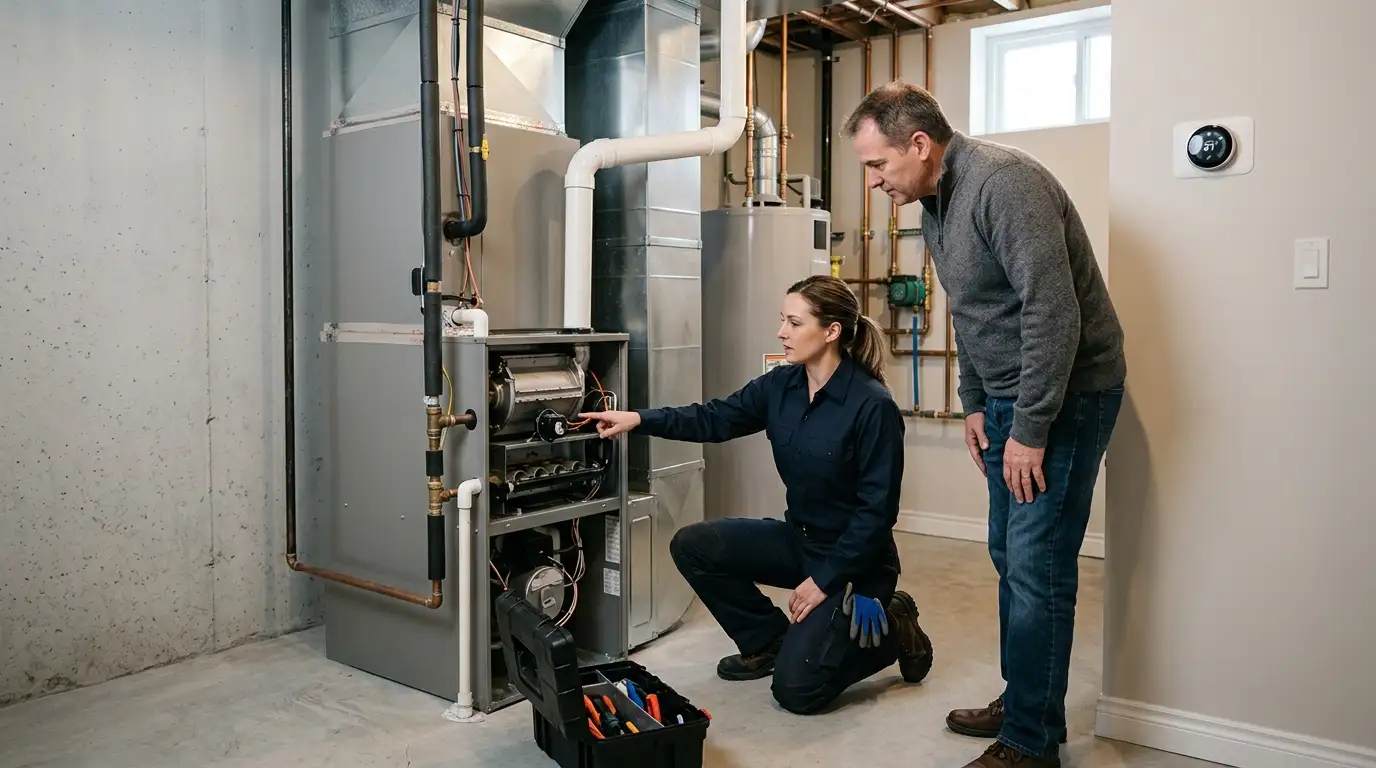
Choosing between furnace repair vs replacement is rarely as simple as asking how old the furnace is. A 15-year-old furnace may still be worth repairing if the problem is limited, the system has been reliable and the repair is reasonably priced. A newer furnace may deserve replacement consideration if it has a serious safety concern, repeated failures, poor comfort or an installation problem that cannot be corrected economically.
The soundest decision starts with a proper diagnosis. Then compare the repair scope, the furnace’s age and history, its safety and operating condition, the comfort it provides, and the quality and cost of a replacement proposal. Age and repair-cost percentages are useful screening tools, but neither one proves that replacement is the right answer.
Repair or Replace? Start with the Diagnosis
A furnace symptom identifies a problem with operation, not necessarily a failed part. A furnace that stops heating could have an issue with airflow, ignition, a safety control, the thermostat, the electrical supply, the venting system, or another component. Uneven temperatures may relate to ductwork, insulation, zoning, equipment capacity or airflow rather than the furnace itself.
For a related next step, read furnace repair Mississauga.
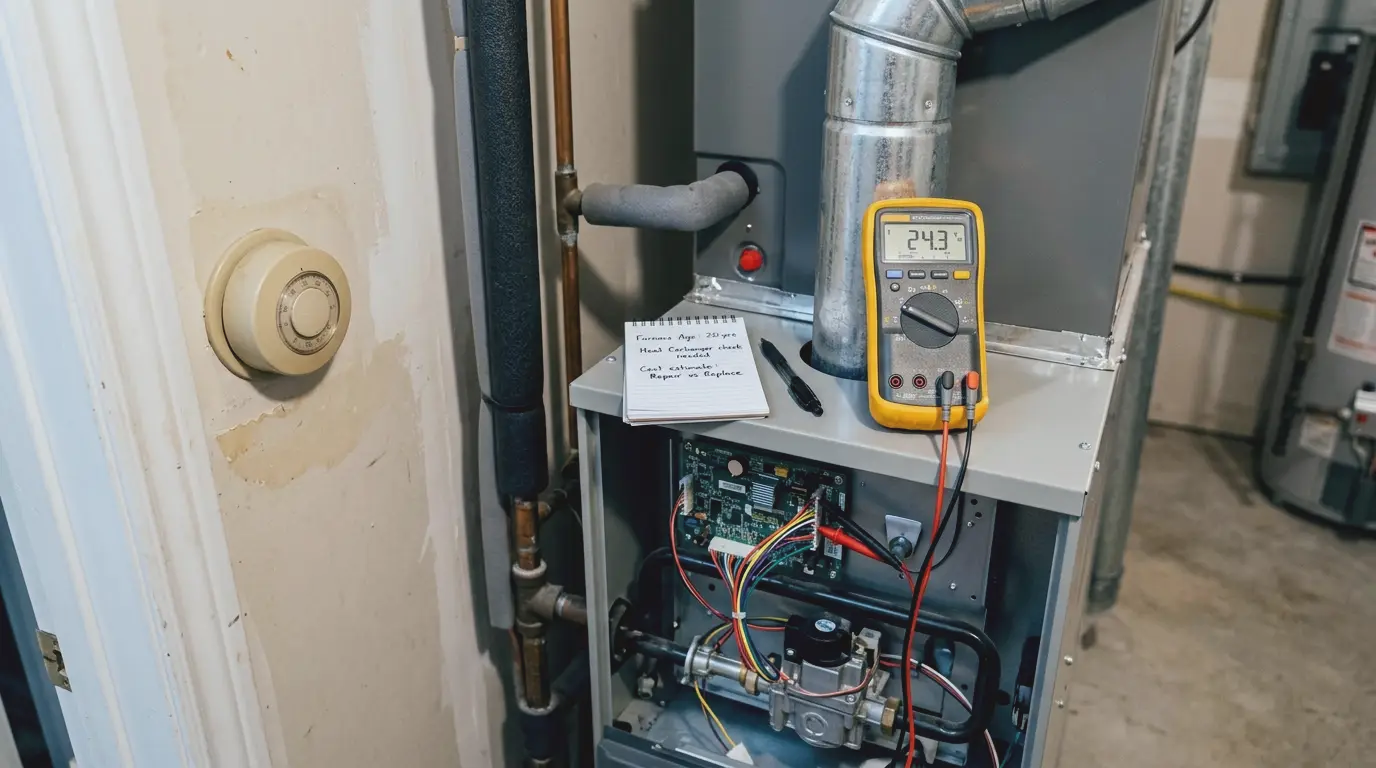
That distinction matters because replacing a furnace without understanding the original failure can leave the underlying comfort or airflow problem unresolved. Conversely, repairing a major component without considering the condition of the rest of an older system can lead to another service call soon afterward.
Before approving either option, ask for a clear explanation of:
- What the technician observed and tested
- Which component or condition is causing the current symptom
- Whether the diagnosis is confirmed or still requires further testing
- What could happen if the repair is delayed
- Whether the proposed repair addresses the cause or only a symptom
- What parts, labour and related work are included in the estimate
A qualified technician should be able to explain why the evidence supports the recommendation. A symptom alone should not be presented as proof of a cracked heat exchanger, carbon monoxide problem or another serious component failure.
When Repair Usually Makes Sense
Repair is often reasonable when the furnace is not near the end of its expected service life, the failure is isolated, and the rest of the system is in sound condition. A repair may also be the practical choice when the furnace has provided consistent comfort and the proposed work is substantially less expensive than a properly installed replacement.
Common factors that support repair include:
- The furnace is relatively young or has a documented history of dependable operation
- The diagnosis identifies a repairable, isolated failure
- There are no unresolved combustion, venting, electrical or carbon monoxide concerns
- The heat exchanger and other major components are in acceptable condition
- The system heats the home evenly enough for the household’s needs
- Replacement would require work that is not currently practical or necessary
- The repair estimate is reasonable in relation to the furnace’s remaining useful life
For example, a furnace that is several years old and needs a failed control or blower-related component may be a good repair candidate if testing shows that the heat exchanger, venting, airflow and safety controls are operating properly. The right question is not simply whether one part has failed. It is whether the repair restores a system that is otherwise safe, suitable and reliable.
When Replacement Deserves Serious Consideration
Replacement becomes a stronger possibility when several warning signs point in the same direction. A furnace that is more than approximately 15 years old is entering the planning range commonly associated with replacement, although some systems last longer and some require attention sooner. Hydro One identifies age, frequent repairs, rising energy use, unusual noise, uneven heating and major-part repairs as reasons to consider replacement.
Replacement may deserve deeper evaluation when:
- The furnace is old and has developed multiple unrelated problems
- Repair bills are becoming frequent or difficult to predict
- A major component has failed and other components show significant wear
- The system is unreliable during cold weather
- Rooms remain uncomfortable despite reasonable maintenance and airflow checks
- Energy use has increased without a clear change in household habits
- The furnace is noisy, cycles abnormally or repeatedly trips a safety control
- The repair would approach a substantial portion of a properly scoped replacement
- The current system is incorrectly sized or cannot meet the home’s heating needs
- The homeowner expects to remain in the property long enough for a new system’s service life and operating characteristics to matter
These factors do not make replacement automatic. They indicate that the decision should include the condition of the entire heating system rather than the price of one part.
Use the 15-Year and 50% Benchmarks Carefully
Two common screening questions are whether the furnace is more than 15 years old and whether the proposed repair costs around half as much as replacement. Both can help organize the decision, but neither is a rule that applies to every home.
| Factor | What it may suggest | Why it is not decisive by itself |
|---|---|---|
| Furnace age | An older system may have more wear and fewer attractive repair opportunities. | Maintenance, operating hours, installation quality and component condition vary widely. |
| Repair cost | A lower-cost repair may be sensible, while a high-cost repair may justify comparing replacement. | The estimate must be compared with the furnace’s condition, reliability and expected remaining life. |
| Repair history | Repeated failures can signal declining reliability. | Several small repairs do not always outweigh one isolated, well-understood failure. |
| Efficiency | A new furnace may use fuel more efficiently than an older model. | Actual results depend on sizing, installation, ductwork, controls, maintenance and operating patterns. |
| Comfort | Persistent uneven heating may support a broader system evaluation. | The cause may be airflow, insulation, ductwork or zoning rather than furnace age. |
Hydro One presents repairs below roughly 50 percent of replacement cost as more suitable for repair, while a repair at or above that level on an older furnace may favour replacement. Treat that comparison as a starting point for questions. It does not account for every future repair, installation issue, financing arrangement, fuel cost or comfort concern.
Safety Comes Before the Financial Calculation
Some conditions should override the normal repair-versus-replacement cost discussion. If you smell gas, leave the building and contact the appropriate emergency service or gas utility according to local guidance. Do not search for the leak, operate switches, relight the furnace or attempt an internal repair.
If a carbon monoxide alarm sounds, leave the building and seek emergency assistance. Do not assume that silencing the alarm or restarting the furnace resolves the danger. Burning odours, visible scorching, sparking, repeated breaker trips, damaged venting or unusual combustion sounds also require the furnace to be taken seriously and assessed by an appropriately qualified professional.
Annual inspection of natural gas appliances by a certified HVAC contractor can help identify concerns involving combustion, safety controls, gas pressure, venting and carbon monoxide. Enbridge Gas provides appliance-safety guidance that supports professional inspection and conservative handling of gas-related concerns.
Do not remove safety controls, bypass limit switches, open combustion components or attempt high-voltage furnace work as a homeowner. A low-cost repair is not a good value if the condition makes continued operation unsafe.
Why a Major-Part Diagnosis Needs Explanation
Heat exchangers, ignition systems, control boards, blower motors and inducer assemblies can represent very different repair decisions. The cost, availability and importance of each component vary by furnace model and installation. A recommendation should identify the part or condition involved and explain how it was tested.
A heat exchanger concern deserves especially careful communication. Cracks, combustion problems and carbon monoxide risks cannot be confirmed from a vague symptom such as a strange smell, a noisy cycle or a furnace that shuts down. The homeowner should receive a clear description of the evidence, the safety implications and whether the furnace should remain out of service while further assessment occurs.
The same principle applies to a control board or blower motor. A component may be defective, but a technician should also consider whether a power-supply issue, restricted airflow, overheating, wiring fault or another condition contributed to the failure. Replacing a part without addressing the reason it failed can shorten the life of the repair.
Consider Reliability, Not Just Today’s Bill
A repair estimate is one immediate number. Replacement is a larger immediate decision that may offer newer equipment, but it also introduces installation costs and the need to confirm that the proposed system is appropriate for the home. Compare the expected value of each option over the period you expect to own or occupy the property.
For repair, consider:
- How long the repaired component is reasonably expected to serve
- Whether other major components have already required replacement
- How often the furnace has needed service during recent heating seasons
- Whether parts for the existing model remain available
- Whether the furnace has been reliable when outdoor temperatures are low
- Whether the repair restores acceptable comfort and operating efficiency
For replacement, consider:
- The total installed scope, not only the furnace cabinet or equipment price
- Removal and disposal of the old equipment
- Venting, gas, electrical, drainage, thermostat and ductwork requirements
- Whether the proposed capacity is appropriate for the home
- Expected efficiency and how it is measured
- Maintenance access and serviceability
- What is included in the written proposal and what is excluded
Natural Resources Canada explains AFUE, or annual fuel utilization efficiency, as the proportion of fuel input converted into useful heat over the heating season. A higher rating can be relevant when comparing equipment, but the rating alone does not guarantee a specific reduction in household energy use.
Comfort Problems May Point Beyond the Furnace
Replacing equipment may not solve rooms that are too cold, short cycling, weak airflow or temperature swings if the underlying issue is elsewhere. Before choosing a new furnace, ask whether the system has been evaluated for duct restrictions, dirty filters, closed or blocked registers, return-air limitations, insulation, air leakage, thermostat location and zoning needs.
Capacity matters as well. A furnace that is too large may cycle frequently instead of running long enough to distribute heat evenly. A furnace that is too small may struggle to maintain temperature in cold weather. The replacement proposal should explain how the recommended capacity was selected rather than simply matching the size of the old furnace.
Installation quality also affects performance. A highly efficient furnace that is poorly sized, incorrectly configured or mismatched to the duct system may deliver less comfort than expected. Ask how the installer will confirm airflow, venting, drainage, controls and system operation after installation.
Compare Written Options on Equal Terms
When the decision is uncertain, request a written repair option and a written replacement option that describe comparable information. This makes it easier to distinguish a true cost difference from missing scope.
A useful repair estimate should identify:
- The diagnosed fault and the testing that supports it
- The exact component or work proposed
- Parts and labour included in the estimate
- Related inspection or correction that may be needed
- What performance or operating condition the repair is intended to restore
- Any limitations or risks that remain after the repair
A useful replacement proposal should identify:
- Equipment make, model family, capacity and efficiency rating
- Installation, removal and disposal scope
- Required venting, gas, electrical, drainage or ductwork changes
- Thermostat and control compatibility
- Commissioning and operating checks after installation
- All included and excluded work
- Applicable terms that are current and documented
Do not compare a complete installed replacement with a repair estimate that excludes necessary related work. Similarly, do not approve a replacement based only on a product label or an attractive efficiency number without understanding the installation plan.
Check Current Efficiency and Program Information
Efficiency standards and incentive programs can change. New residential gas furnaces may be subject to current minimum efficiency requirements, with exceptions for certain product categories. Natural Resources Canada provides current regulatory information, while local utility or government sources should be checked separately for any active incentive, eligibility rule or application deadline.
Avoid making the decision around an assumed rebate or a promised payback period. Fuel rates, weather, household usage, home heat loss, equipment sizing and installation quality all affect the result. A replacement can improve efficiency and reliability without producing a predictable savings amount for every household.
For Ontario homeowners, Hydro One’s guidance on whether to repair or replace a furnace is a useful starting point for comparing age, repair scope, energy use and operating symptoms. Confirm current program details and equipment requirements before relying on them in a financial calculation.
A Practical Decision Process
Once the diagnosis and written options are available, work through the decision in this order:
- Resolve safety concerns. Do not continue normal operation when there is a gas odour, carbon monoxide alarm, suspected combustion problem, electrical danger or unsafe venting.
- Confirm the diagnosis. Understand what failed, how it was tested and whether another condition may have caused the symptom.
- Assess the whole furnace. Review age, repair history, heat exchanger condition, controls, blower operation, venting, airflow and reliability.
- Check the home comfort problem. Determine whether ductwork, insulation, sizing, thermostat placement or airflow could be responsible.
- Compare complete costs. Include related work and the likely consequences of postponing either option.
- Consider your ownership horizon. A homeowner planning to move soon may weigh the options differently from someone expecting to remain for many heating seasons.
- Choose the option you can evaluate clearly. A recommendation that cannot be explained in writing deserves more questions before approval.
This process keeps furnace repair vs replacement focused on evidence rather than pressure. A repair is not automatically wasteful because the furnace is older, and replacement is not automatically excessive because one component failed.
Questions to Ask Before Approving the Work
Use the appointment to clarify the decision rather than asking only for a price. Helpful questions include:
- What test confirmed the failure?
- What other causes were ruled out?
- Is the furnace safe to operate until the work is completed?
- What condition are the heat exchanger, venting and safety controls in?
- What repairs has this furnace needed recently?
- Would the proposed replacement address the comfort issue, or does the duct system need attention too?
- How was the replacement capacity selected?
- What work is included in the replacement estimate?
- What information should be retained for future service?
The Bottom Line
Choose repair when the furnace is safe, the diagnosis is clear, the failure is limited and the system remains suitable for the home. Give replacement serious consideration when an older furnace has repeated failures, major wear, poor comfort, rising energy use or a repair that represents a large share of a complete replacement.
The approximately 15-year service-life guideline and the roughly 50 percent repair-cost comparison can help frame the discussion, but they should not replace technical diagnosis. Safety comes first, and comfort, sizing, airflow and installation quality matter as much as the equipment’s age or efficiency label.
Before approving either path, obtain an explanation that connects the symptom to the proposed work and compare complete written options. That gives you a more reliable basis for deciding whether to restore the furnace you have or invest in a properly evaluated replacement.
Need Appliance Repair?
Share the appliance, brand, address, symptoms and optional photos online. A contractor can review the request and contact you about availability and next steps.
Start Your Repair Request