
Heat Pump vs. Furnace: Efficiency, Comfort and Backup Heat
Compare a heat pump vs furnace for an Ontario home by efficiency, comfort, cold-weather output, backup heat, ductwork and electrical capacity.
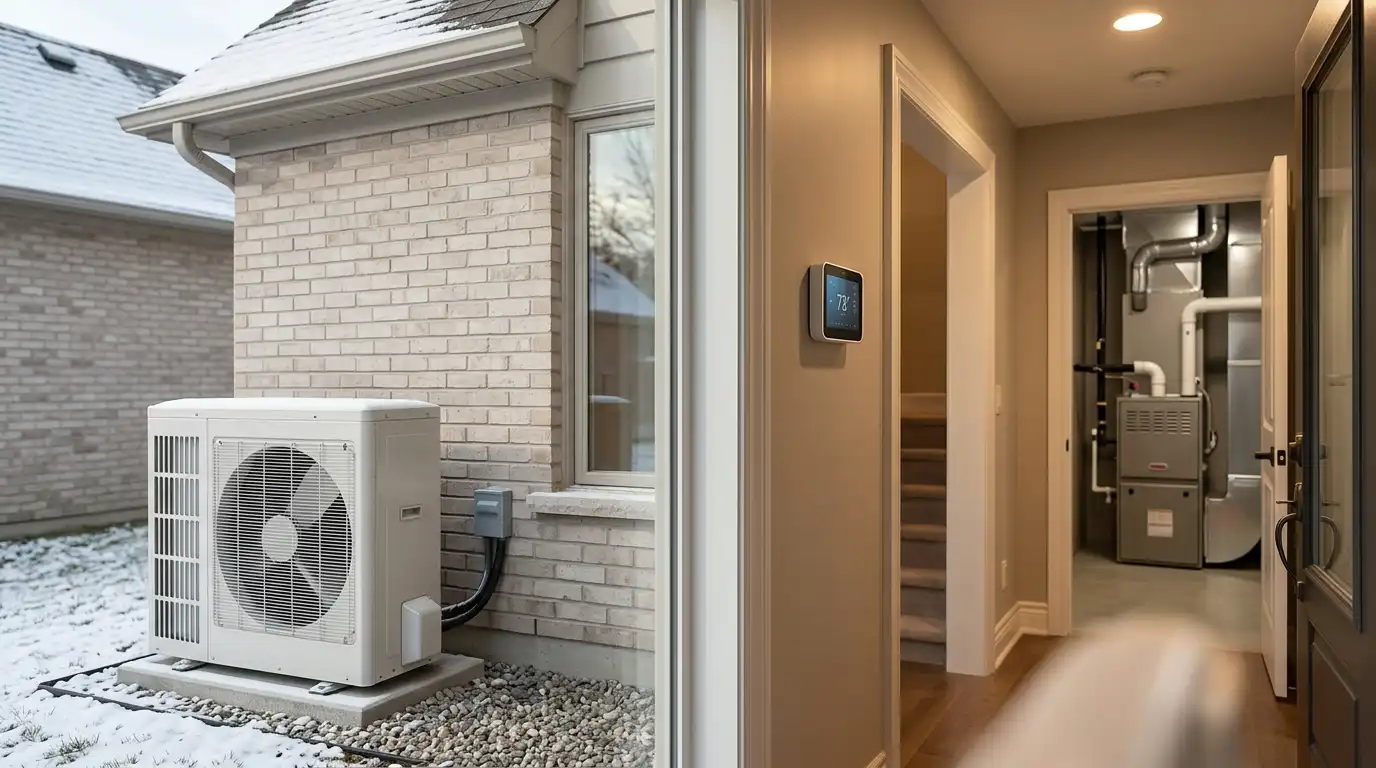
Choosing between a heat pump vs furnace is not simply a choice between electric and gas heating. The two systems move and deliver heat differently, and the better fit depends on the home, ductwork, insulation, electrical capacity, energy rates, cooling needs and backup strategy. A heat pump can provide heating and air conditioning from one system, while a furnace produces heat for the home and usually works with a separate central air conditioner.
For many Ontario homeowners, the most useful comparison is not which system wins in every situation. It is how each option performs in the specific home, how it handles cold weather, what kind of comfort it provides, and what happens when outdoor temperatures fall below the heat pump’s most efficient operating range.
How a Heat Pump and Furnace Produce Heat
A furnace generates heat. In a gas furnace, burners heat a heat exchanger and the blower distributes warmed air through the ductwork. An electric resistance furnace uses electrical resistance to create heat before the blower sends that air through the home. In both cases, the system raises the temperature of the air directly.
For a related next step, read heat pump installation Mississauga.
A heat pump works more like a refrigerator operating in reverse. It uses a refrigeration cycle to move available heat from one place to another. In heating mode, an air-source heat pump extracts heat from outdoor air and transfers it indoors. The process still works during cold weather, although the amount of heat available and the system’s capacity and efficiency generally decline as outdoor temperatures fall.
That difference matters because a heat pump is not judged only by the temperature of the air coming from a vent. Its advantage comes from moving heat with electrical energy rather than creating all of that heat through combustion or resistance. Seasonal efficiency can therefore be very high, but actual operating-cost results depend on electricity prices, fuel prices, equipment performance, climate, controls and the home’s heat loss.
Natural Resources Canada explains that cold-climate air-source heat pumps are designed for Canadian conditions and can operate at outdoor temperatures well below freezing. The same guidance also notes that supplemental heat may be needed during colder conditions and that proper sizing is important. The official Natural Resources Canada heat pump guidance is a useful starting point for understanding the technology before comparing equipment for a particular home.
Heat Pump vs Furnace at a Glance
| Consideration | Heat Pump | Furnace |
|---|---|---|
| How it heats | Moves heat from outdoor air into the home | Generates heat through gas combustion or electrical resistance |
| Cooling | Usually provides both heating and air conditioning | Heating only, unless paired with separate cooling equipment |
| Cold-weather behaviour | Capacity and efficiency can decline as temperatures fall; backup may assist | Designed to provide its rated heating output when correctly sized and maintained |
| Air delivery | Often uses longer cycles and higher airflow with lower supply-air temperatures | Often delivers warmer air during shorter heating cycles |
| Operating cost | Depends on electricity rates, seasonal performance and home conditions | Depends on fuel type, fuel prices, furnace efficiency and home conditions |
| Installation planning | Requires attention to sizing, outdoor placement, refrigerant piping, drainage, airflow and controls | Requires attention to combustion, venting, gas or electrical supply, airflow and sizing |
This table is a starting point rather than a replacement for a heat-loss assessment. A highly efficient system can perform poorly if it is oversized, undersized, restricted by inadequate ductwork or controlled incorrectly.
Efficiency Is Not the Same as a Lower Bill
Heat pumps are often described as more efficient because they transfer heat instead of generating it directly. That is a meaningful technical advantage. It does not establish a universal operating-cost winner for every Ontario home.
Electricity and natural gas are priced differently, and those prices can change. A heat pump’s seasonal performance also depends on outdoor temperature, defrost cycles, indoor airflow, equipment selection and how often supplemental heat operates. A furnace’s operating cost depends on its fuel, efficiency, maintenance condition and the amount of heat the home requires.
Home performance can be just as important as equipment efficiency. Air leakage, insulation levels, windows, duct losses and thermostat settings all affect the amount of heat needed. If a home loses heat quickly, both systems have to run longer or deliver more energy. Improving the building envelope may change the equipment comparison more than a small difference between two nameplate efficiency ratings.
When comparing proposals, ask for more than a single efficiency number. The discussion should include the system’s expected capacity at relevant outdoor temperatures, the planned backup setting, the home’s calculated heat loss, the electricity and fuel assumptions used, and whether the comparison includes cooling. Avoid relying on a promised annual savings figure unless the assumptions are clear and current for the home.
Cold Weather Performance in Ontario
A cold-climate heat pump is designed to operate in conditions that would challenge a conventional air-source system. That does not mean every model provides the same capacity or efficiency at every temperature. The equipment’s performance depends on the specific model, installation, controls, outdoor conditions and the home’s heating demand.
As the outdoor temperature falls, the heat pump generally has to work harder to extract heat from the air. Its heating capacity can decline, and its efficiency may fall as well. During a defrost cycle, the system temporarily changes operation to clear frost from the outdoor coil. Supplemental heat may operate during some conditions, depending on the design.
A properly designed system does not treat a cold snap as an unexpected event. The installer should explain the balance point or control strategy, meaning the conditions under which the heat pump continues operating alone, receives assistance from backup heat or switches to another heat source. The correct setting varies with the equipment and home rather than following one universal temperature.
A furnace can provide a more consistent high-temperature heat source during very cold weather, but its performance still depends on fuel supply, venting, airflow, maintenance and correct sizing. A furnace is not automatically more reliable simply because it burns fuel. Ignition problems, blocked venting, a failed blower, a dirty filter or a safety-control fault can also interrupt operation.
The practical question is whether the complete heating system can meet the home’s load safely and comfortably through the expected range of conditions. That may mean a heat pump alone, a heat pump with electric resistance backup, a heat pump paired with a furnace, or a furnace retained as the primary or supplemental heat source.
Comfort Differences Homeowners Notice
Comfort is one of the most noticeable differences in a heat pump vs furnace comparison. A furnace often supplies air that feels substantially warmer than the room. It may run for a shorter period, then shut off after the thermostat reaches its setting.
A heat pump commonly supplies a larger volume of air at a lower temperature and runs for longer cycles. The air should still be warm enough to heat the home, but it may not feel as hot at the register. Longer cycles can distribute heat more evenly and reduce the sharp temperature swings associated with short furnace cycles. Some homeowners appreciate that steady pattern, while others prefer the quick burst of warm air from a furnace.
Heat pumps can also require airflow settings that differ from a furnace. Ductwork that was acceptable for a furnace may not automatically provide the intended airflow for a new heat pump. Undersized ducts, restrictive filters, poorly adjusted dampers or an imbalanced layout can create noise, weak airflow and uneven room temperatures.
The thermostat and controls influence comfort as much as the outdoor unit. A control strategy that switches to electric resistance heat too readily may increase energy use. A strategy that delays backup too long may allow indoor temperatures to drift or make recovery uncomfortable. Ask how the system handles defrost, thermostat setbacks, emergency heat and backup staging before installation.
Backup Heat Options
Backup heat is not a sign that a heat pump has failed. It is part of the design for systems that need additional capacity during particular conditions or provide resilience if the heat pump cannot meet the load by itself.
Electric Resistance Backup
Electric resistance elements are commonly installed in or near the indoor air handler. They can provide supplemental heat when outdoor conditions are especially cold, when the heat pump is defrosting or when the system needs to recover from a setback. The arrangement is relatively direct, but resistance heat generally uses more electricity per unit of delivered heat than a heat pump operating under favourable conditions.
The electrical requirements must be checked before selecting this approach. The home’s electrical service, panel capacity, wiring and load calculations may limit which backup arrangement is appropriate. These are design and installation matters for a qualified professional, not a reason to add a larger breaker or modify wiring as a homeowner.
Furnace Backup
A heat pump can be paired with a gas furnace in a dual-fuel or hybrid system. The heat pump handles milder conditions, and the controls bring on the furnace when the outdoor temperature, heating demand, energy assumptions or system limitations make that appropriate. This can provide a high-capacity heat source while preserving the heat pump’s cooling and shoulder-season heating functions.
A dual-fuel system needs compatible equipment and carefully configured controls. The furnace, heat pump, thermostat, ductwork and outdoor temperature sensor must work together. The changeover point should be based on system performance and the home’s requirements, not a generic number copied from another installation.
Another Supplemental Arrangement
Some homes use an existing approved heating system as supplemental heat rather than removing it immediately. Whether that is practical depends on equipment compatibility, controls, venting, ductwork, available space and the condition of the existing system. Keeping an old furnace in place does not automatically make it suitable as backup heat.
Why Existing Furnace Size Is Not a Heat Pump Size
Matching a new heat pump to the existing furnace’s nameplate is a common shortcut, but it can lead to a poor result. The furnace may have been oversized, selected using an outdated rule of thumb or installed after changes were made to insulation, windows or the home’s layout.
Heat pump selection should begin with a calculation of the building’s heat loss. That assessment considers the home’s size, construction, insulation, windows, air leakage, design temperatures and other factors. The heat pump’s capacity at relevant outdoor temperatures should then be compared with the calculated load.
Oversizing can cause control and comfort problems, particularly during cooling and milder heating conditions. Undersizing may increase reliance on backup heat and reduce the system’s ability to maintain the desired temperature during cold weather. The right design may not have the same capacity as the old furnace, and that difference is not automatically a defect.
Installation Questions to Resolve Before Choosing
A useful comparison should end with specific questions for the installer. Written answers make it easier to compare proposals that use different equipment and assumptions.
- What is the calculated heat loss of the home, and what outdoor design conditions were used?
- What heating capacity does the proposed heat pump provide at mild, freezing and colder outdoor temperatures?
- At what conditions will supplemental heat operate, and how will the controls decide?
- Is the system intended to replace both the furnace and central air conditioner, or will existing equipment remain?
- Can the existing ductwork deliver the required airflow without excessive noise or pressure?
- Does the indoor unit require electrical-service changes for resistance backup?
- Where will the outdoor unit be placed, and how will snow, drainage, access and defrost water be managed?
- How will the thermostat handle setbacks, emergency heat and a prolonged cold period?
- What maintenance will the heat pump, furnace and backup system require?
- Which performance assumptions were used in any operating-cost comparison?
Gas, electrical and refrigerant work should be handled by appropriately qualified professionals. A homeowner can describe comfort concerns, check that a filter is not visibly blocked and review the thermostat settings, but should not open sealed refrigeration circuits, alter gas components, bypass safety controls or modify high-current wiring.
Which Option Fits Different Home Situations?
Replacing Heating and Cooling Together
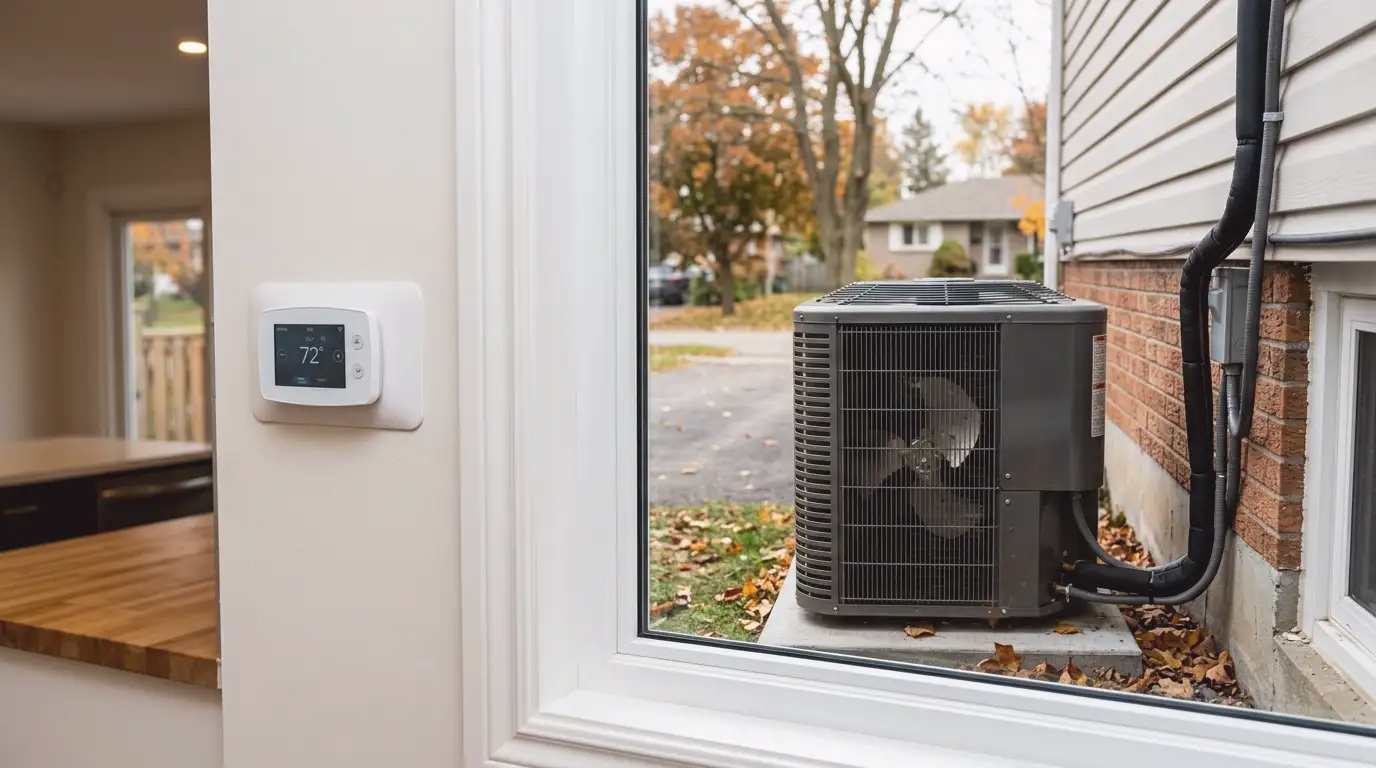
A heat pump may be worth close consideration when both the furnace and air conditioner are near replacement. One heat-pump system can provide heating and cooling, which may simplify the equipment layout. The decision still depends on cold-weather capacity, backup heat, electrical service, ductwork and the home’s calculated load.
Keeping a Newer Furnace
If the furnace is relatively new, correctly sized and in good condition, replacing it solely to install a heat pump may not be the most practical choice. A professional can assess whether a compatible heat pump can work with the existing system or whether the furnace should remain the primary heat source. Compatibility should be confirmed rather than assumed from similar-looking equipment.
Homes with Limited Electrical Capacity
A heat pump does not always require electric resistance backup, but the proposed design may still have electrical requirements that need review. Homes with older electrical service or limited panel capacity may need a different backup strategy or additional electrical planning. This should be identified before the equipment is ordered.
Homes with Uneven Temperatures
Uneven rooms are not automatically solved by changing the heat source. Air leakage, insulation, duct design, dampers, zoning and thermostat location may all contribute. A heat pump can expose existing airflow limitations because it often operates for longer periods and may require a different airflow profile. The comfort problem should be diagnosed as part of the system design.
Homes Focused on Fuel Flexibility
A dual-fuel arrangement may appeal to homeowners who want a heat pump for milder weather and a furnace for colder conditions. It adds equipment and control complexity, so the proposal should explain what each component does, how changeover occurs and what happens if one part of the system needs service.
Common Mistakes in the Comparison
The first mistake is treating an efficiency rating as a guaranteed utility-bill result. Ratings help compare equipment under defined conditions, but they do not account for every home’s insulation, duct losses, thermostat behaviour or local energy prices.
The second is assuming that a heat pump is either unsuitable for cold weather or completely independent of backup heat. Cold-climate systems are designed for Canadian conditions, but their exact performance varies. Some homes may use supplemental heat regularly during the coldest periods, while others may need it only occasionally.
The third is choosing capacity by copying the existing furnace. A load calculation and equipment performance data provide a more defensible basis for selection.
The fourth is overlooking cooling. A furnace does not cool the home, while a heat pump normally provides heating and air conditioning through the same refrigeration system. If the comparison ignores the cost, condition and expected life of the existing air conditioner, it may not represent the complete equipment decision.
The fifth is ignoring controls. A well-selected heat pump with poorly configured backup settings may deliver disappointing comfort or higher electricity use. Controls are part of the system, not an afterthought.
Frequently Asked Questions
Is a Heat Pump Better Than a Furnace in Ontario?
Neither system is automatically better for every Ontario home. A heat pump can provide efficient heating and cooling, including operation in cold Canadian conditions when the equipment is correctly selected. A furnace can provide a high-temperature heat source and may fit homes with particular fuel, electrical, ductwork or backup requirements. The right answer depends on heat loss, equipment capacity, controls, energy rates and the home’s comfort priorities.
Will a Heat Pump Work During an Ontario Cold Snap?
A cold-climate heat pump is designed to operate below freezing, but capacity and efficiency generally decline as outdoor temperatures fall. Supplemental heat may assist during colder conditions. The proposed equipment’s published performance and control strategy should be reviewed for the home’s actual requirements rather than relying on a general minimum-temperature claim.
Does a Heat Pump Always Cost Less to Operate?
No. Heat pumps can be highly efficient because they move heat, but the operating-cost result depends on electricity and fuel rates, seasonal performance, backup use, climate, home efficiency and controls. A current comparison should use the home’s heat-loss estimate and transparent local cost assumptions.
Will Heat-Pump Air Feel Colder Than Furnace Air?
It can feel less hot at the register because a heat pump often delivers a larger volume of moderately warm air over a longer cycle. That does not necessarily mean the home will be less comfortable. Even temperatures, correct airflow and properly configured controls matter more than the temperature of a short burst of air from one vent.
Can an Existing Furnace Stay with a New Heat Pump?
Sometimes. A dual-fuel or hybrid arrangement can use the heat pump in milder conditions and the furnace when backup heat is needed. Compatibility, furnace condition, ductwork, controls, venting and equipment capacity must be confirmed. An existing furnace’s size should not be used as the automatic size for the heat pump.
What Should Be Checked Before Installing a Heat Pump?
Request a heat-loss calculation, equipment capacity data at relevant temperatures, a ductwork and airflow assessment, an electrical-service review, an outdoor-placement plan and a clear backup-heat strategy. Ask how defrost, thermostat setbacks, emergency heat and cold-weather changeover will work. These details help distinguish a complete system design from a simple equipment swap.
Making the Decision
The best heat pump vs furnace decision starts with the home’s actual heating demand rather than with a universal claim about technology. A heat pump may be a strong fit when efficient heating and integrated cooling are priorities, the home can support the required airflow and electrical design, and the backup strategy is clearly planned. A furnace may remain practical when a high-temperature heat source, existing equipment condition, fuel arrangement or electrical limitation weighs heavily in the decision. A dual-fuel system can combine both approaches when the added complexity is justified.
Before approving work, compare the complete design: heat loss, capacity at cold temperatures, ductwork, controls, backup heat, cooling performance, electrical requirements and maintenance. That process gives you a more useful answer than comparing furnace and heat-pump labels alone, and it helps ensure the selected system is suited to the way the home actually operates.
Need Appliance Repair?
Share the appliance, brand, address, symptoms and optional photos online. A contractor can review the request and contact you about availability and next steps.
Start Your Repair Request