
Cold-Climate Heat Pump Performance: What Ontario Winters Change
Cold Climate Heat Pump Performance guide: learn the key details, compare options, check verified sources, and make a safer decision before you act.
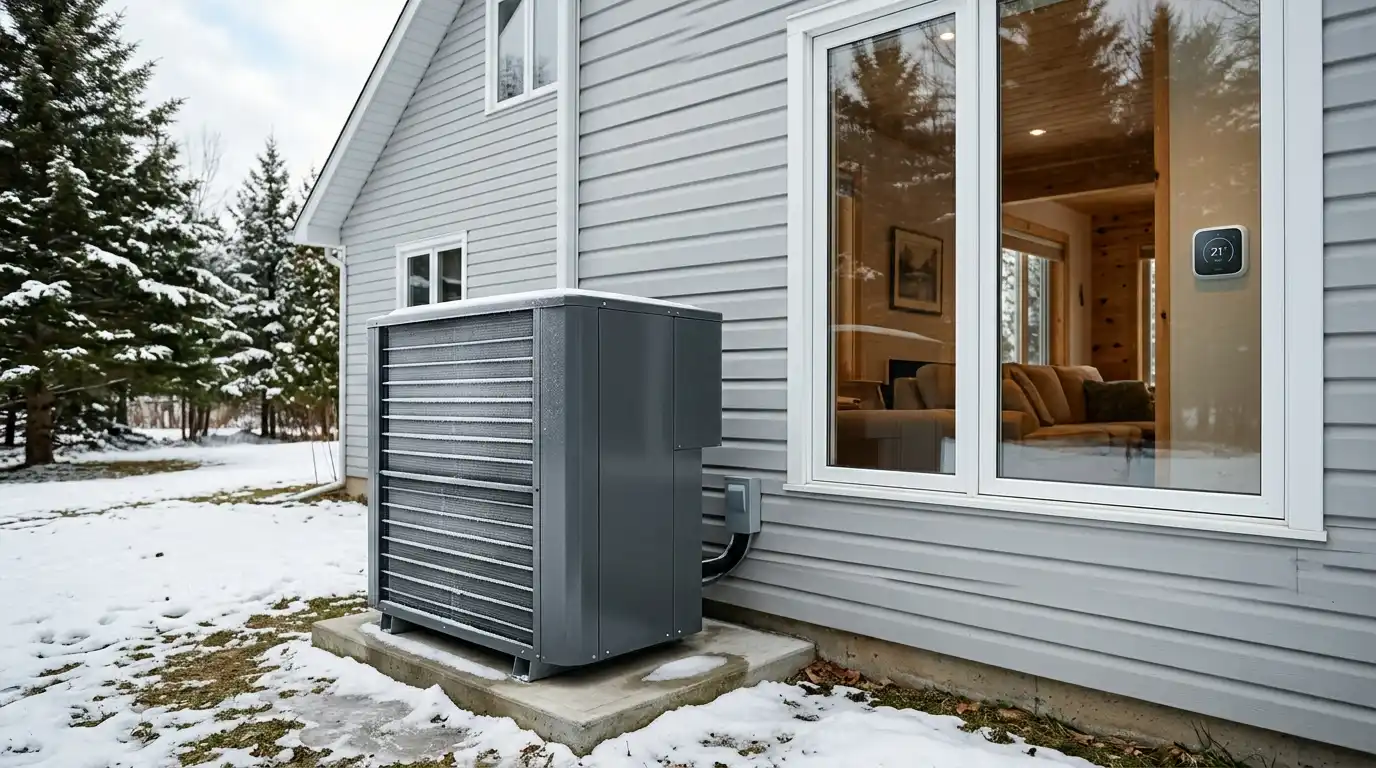
Cold climate heat pump performance can remain useful through Ontario winters, but the result depends on more than the temperature printed in a product brochure. A properly selected air-source heat pump can continue heating at low outdoor temperatures, yet its available capacity and efficiency usually decline as the weather gets colder. The home may also need supplemental heat during the coldest periods or while the system defrosts.
That does not make a heat pump unsuitable for Ontario. It means the equipment, building envelope, ductwork, controls, electrical service and backup plan need to be considered together. A model’s advertised minimum operating temperature is only one part of the decision. It does not prove that the unit can meet the full heating load of a particular house at that temperature.
The most useful question is not simply, “Can a heat pump work in an Ontario winter?” It is whether a specific system can deliver enough heat to a specific home at the outdoor design temperature, with a practical plan for colder conditions, defrost cycles and maintenance.
For a related next step, read heat pump installation Mississauga.
What Cold Weather Changes
An air-source heat pump moves heat from outdoor air into the home. Even very cold air contains thermal energy, but extracting that heat becomes more difficult as the outdoor temperature falls. The compressor works harder, the system’s heating capacity decreases, and the coefficient of performance may drop. In practical terms, the unit can still run while producing less heat per unit of electricity than it would on a milder day.
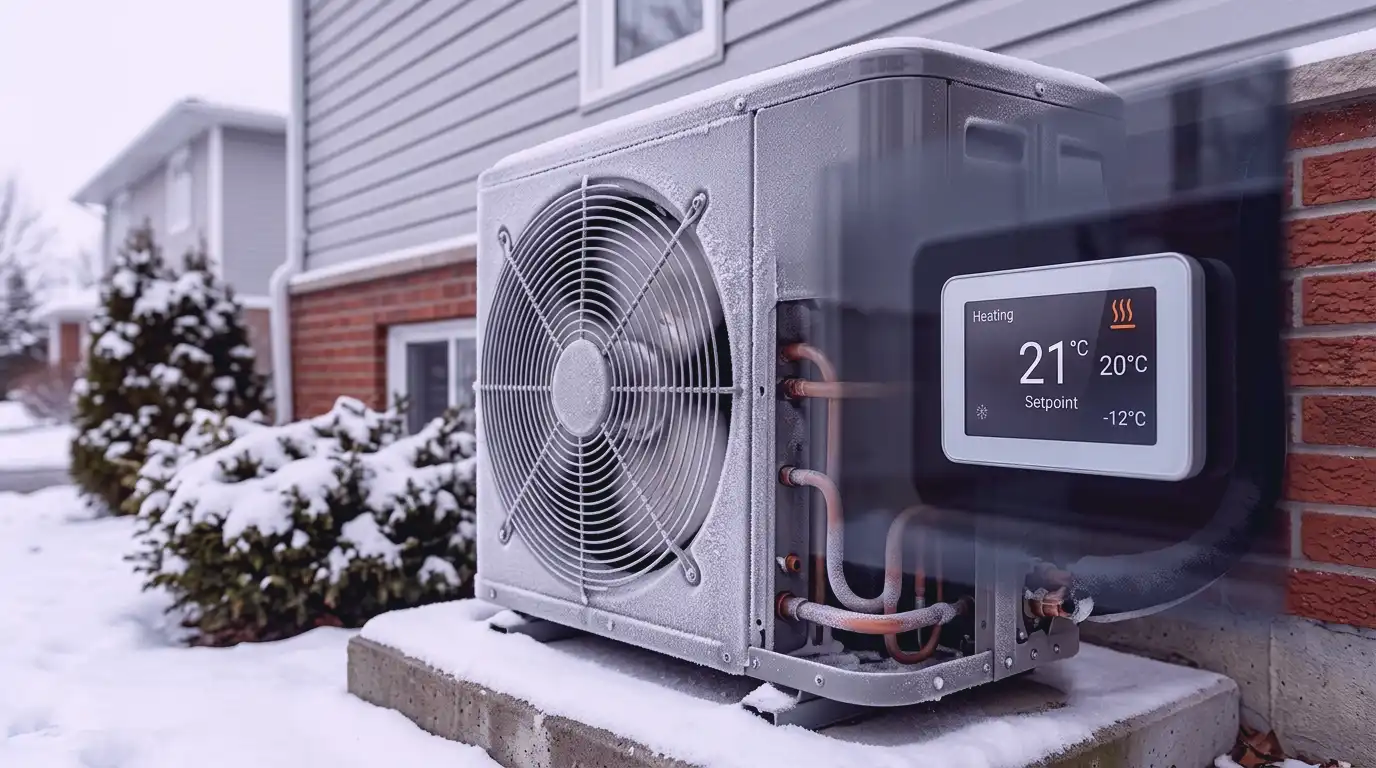
Cold-climate models are designed to handle these conditions better than equipment intended mainly for moderate weather. They may use variable-capacity compressors, enhanced heat exchangers and controls adapted for low-temperature operation. Those features improve the system’s cold-weather range, but they do not eliminate the effects of outdoor temperature.
Ontario homeowners should also expect the outdoor coil to accumulate frost in certain weather. The system periodically enters a defrost cycle to remove it. During defrost, the heat pump temporarily changes how it operates, and the home may receive less heating for a short period. A properly configured system accounts for this interruption through controls and, where needed, supplemental heat.
NRCan explains that cold-climate air-source heat pumps can operate in Canadian conditions while still losing capacity at very low temperatures. Its guidance also emphasizes the importance of supplemental heat, equipment sizing and the home’s heating requirements. NRCan’s heat pump guidance provides useful background on cold-climate equipment and the factors that affect its performance.
What the Rating Data Does and Does Not Prove
Manufacturers publish performance data at multiple outdoor temperatures. Look for heating capacity and efficiency at conditions that resemble the home’s design temperature, not only at a mild rating point. The exact data format varies by manufacturer and certification program, so comparing only one headline number can give an incomplete picture.
Several details deserve attention:
- Heating capacity at low temperatures: This indicates how much heat the system can deliver at a specified outdoor condition. Capacity at a mild temperature does not tell you what the unit can provide during a severe cold snap.
- Efficiency at low temperatures: A system may remain operational while using more electricity for each unit of heat delivered. Compare efficiency at relevant low-temperature points rather than relying on a seasonal average alone.
- Operating limit: This is the temperature range in which the manufacturer permits operation. It is not the same as the temperature at which the system can satisfy the entire home’s heating load.
- Capacity modulation: Variable-capacity equipment can adjust output over a range, which may improve comfort and reduce cycling. The actual benefit depends on controls, installation and the home’s load.
- Backup heat requirements: Electric resistance, a furnace or another approved supplemental source may be needed when the heat pump cannot provide enough output or during specific operating conditions.
A unit that is listed as operating near -30 C may not provide its full rated output at -30 C. It may also be suitable only for a home with a relatively low heat loss, or it may require backup heat to cover the difference. The data must be interpreted alongside a heat-loss calculation and the home’s distribution system.
Start with the Home’s Heating Load
The home’s heat loss is the amount of heat it needs to maintain the selected indoor temperature under a defined outdoor design condition. It is affected by floor area, insulation, windows, air leakage, ceiling height, foundation exposure and ventilation. Two houses with the same square footage can require very different equipment.
An oversized heat pump is not automatically a better choice. Excess capacity can contribute to short cycling, uneven operation and reduced comfort during milder weather. An undersized system may rely heavily on backup heat, struggle to recover from a temperature setback and fail to maintain the desired temperature during the coldest conditions.
Ask for the assumptions behind the load calculation. They should reflect the home’s construction and the relevant local design conditions rather than using a broad rule based only on floor area. The calculation should also distinguish between the total building load and the portion that the proposed heat pump is expected to cover.
Energy-efficiency improvements can change the answer. Air sealing, insulation work or replacement windows may reduce heat loss, while an addition, a finished basement or changes to ventilation may increase it. If those projects are planned, their timing should be discussed before equipment is selected.
Check Whether the Distribution System Can Deliver the Heat
For a centrally ducted system, the heat pump must be able to move enough air through the existing ductwork. Older ducts may have restricted sections, undersized returns, poorly sealed joints or inadequate insulation. A heat pump that has enough rated capacity can still perform poorly if the air cannot circulate through the home.
Restricted airflow can affect comfort, noise, operating pressure and equipment life. It can also make the system appear to have a capacity problem when the limitation is actually in the distribution system. The assessment should include supply and return paths, filter resistance, registers, dampers and the condition of accessible ductwork.
Ductless systems raise a different question. A wall-mounted indoor unit may heat a large portion of a home, but it may not distribute heat evenly into closed rooms, upper floors or separated additions. Multiple indoor units, open doorways or another heat source may be needed. A ductless heat pump should not be described as covering the entire house without considering the home’s layout and room-by-room requirements.
Ask how the proposed system will handle bedrooms, bathrooms, stairwells, finished basements and other areas that are not directly served by an indoor unit. Comfort in the main living area does not necessarily mean that every part of the home is adequately heated.
Electrical Capacity Matters
Heat pumps use electricity for the compressor, fans, controls and sometimes supplemental resistance heat. The electrical assessment should account for the outdoor unit, indoor equipment, backup heat and other major loads in the home. A proposed system may require a different circuit, electrical protection or service capacity than the existing equipment.
Do not assume that an existing furnace circuit or air-conditioning circuit is automatically suitable for a new heat pump. Equipment requirements vary by model and configuration. Electrical changes should be assessed and completed by an appropriately qualified professional where required.
Backup resistance heat deserves particular attention because it can draw substantially more electricity when energized. The system should have controls that use supplemental heat appropriately rather than treating it as the primary heat source whenever the temperature drops. The homeowner should understand when backup heat is expected to operate and how the system prioritizes it.
Backup Heat and the Balance Point
Every heat pump installation needs a clear answer to the question of what happens when the heat pump’s output no longer matches the home’s demand. This point is sometimes called the balance point, although the actual control strategy varies by system. It is influenced by the unit’s capacity curve, the home’s heat loss, indoor temperature settings, defrost operation and the available supplemental source.
Backup heat does not necessarily mean the heat pump stops working at one fixed outdoor temperature. A properly designed system may allow the heat pump to continue operating while supplemental heat covers part of the remaining load. Another configuration may use a furnace or other source under selected conditions. The controls should be set according to the equipment, the building and the homeowner’s priorities.
For centrally ducted homes, an electric resistance heater may be installed in the air handler, or a dual-fuel arrangement may use a furnace as supplemental heat. A ductless system may retain existing baseboard, boiler or other heating equipment in rooms that the heat pump does not fully serve. The appropriate arrangement depends on the home and the selected equipment.
Do not judge a proposal solely by whether it includes backup heat. The more important questions are how much of the load the heat pump is expected to cover, under what conditions backup activates, whether the electrical system can support it, and how comfort is maintained during a prolonged cold period.
Defrost Cycles, Snow and Ice
Frost can form on the outdoor coil when temperature and humidity conditions are suitable. If frost were allowed to remain, it would restrict airflow and interfere with heat transfer. The system therefore starts a defrost cycle when its controls determine that one is needed.
During defrost, the outdoor coil is warmed so accumulated frost can melt. The outdoor fan may stop, the system may make a noticeable sound, and the outdoor unit may release visible vapour. Indoor heat delivery can change briefly. These behaviours can be normal, but persistent ice or repeated defrosting may indicate a drainage, airflow, control or equipment issue.
The outdoor unit needs adequate clearance for air movement and service access. Snow should not be allowed to block the coil or fan discharge. Meltwater also needs a place to drain without creating a persistent ice hazard beneath or around the unit. Placement near a walkway, wall, window or foundation should be considered before installation is finalized.
Homeowners should avoid striking ice from the coil, pouring hot water into the unit or using sharp tools to remove frost. Those actions can damage fins, tubing or electrical components. If the unit remains heavily iced, stops moving air or cannot maintain indoor temperature, turn to the installer or a qualified service provider for assessment.
Outdoor Placement Affects Winter Operation
Placement is part of cold-weather design, not merely a visual decision. The unit needs sufficient clearance around the intake and discharge sides. It should be raised and supported in a way that accommodates snow, meltwater and local site conditions. The final arrangement must also allow technicians to reach the equipment safely.
Airflow can be disrupted if the unit is placed too close to a wall, under a location where snow falls from a roof, or beside an obstruction that redirects discharged air back toward the coil. A location that looks sheltered may create recirculation or drainage problems. At the same time, the unit should not be placed where normal operation creates an avoidable nuisance for nearby rooms or paths.
Discuss the expected snow depth, roof runoff, prevailing exposure and drainage route during the site assessment. A good location supports reliable airflow and service access throughout the season, including after a major snowfall.
What a Professional Assessment Should Cover
A useful installation or replacement assessment should connect the proposed equipment to the actual home. It should not stop at measuring the existing unit or matching a new model to the old nameplate.
Depending on the system, the assessment may include:
- A heat-loss calculation based on the home’s construction and local conditions.
- The proposed heat pump’s heating capacity and efficiency at relevant low temperatures.
- Whether the unit is intended to serve the whole home or only selected zones.
- Ductwork size, airflow, return-air paths and filter restrictions for a central system.
- Indoor unit locations and room coverage for a ductless system.
- Electrical service, circuit requirements and the effect of supplemental heat.
- Control settings, thermostat compatibility and the planned balance-point strategy.
- Outdoor clearance, snow exposure, defrost-water drainage and service access.
- Refrigerant piping, condensate management and other model-specific installation requirements.
- The condition and role of the existing heating system if it will remain as backup.
Refrigerant work, electrical modifications and invasive changes to heating equipment are not suitable for casual homeowner experimentation. They should be handled by appropriately qualified personnel in accordance with applicable requirements and the equipment manufacturer’s instructions.
Questions to Ask Before Choosing a System
Bring the discussion back to measurable performance rather than general claims about cold-climate operation. Ask for the proposed model number and the conditions used to evaluate it. Then ask:
- What heating capacity does this model provide at the home’s design temperature?
- How much capacity remains at colder conditions that may occur at the property?
- What portion of the annual or peak heating load is expected to be covered by the heat pump?
- When will supplemental heat operate, and what source will provide it?
- Can the existing electrical service support the equipment and backup heat?
- Can the current ducts deliver the required airflow, or are changes needed?
- How will rooms outside the main airflow pattern be heated?
- Where will defrost water go during freezing weather?
- How will snow clearance and service access be maintained?
- Which performance values come from the specific model rather than a general product family?
Be cautious when a proposal offers one universal temperature threshold, a guaranteed operating cost or a simple square-footage rule without showing the assumptions behind it. Electricity prices, fuel costs, insulation, equipment selection and control settings all affect operating results. A technically sound proposal should make those variables visible.
Information to Prepare for an Estimate
Useful information can make the assessment more precise. Prepare the home’s approximate age, floor area, number of storeys and any additions or finished areas. Note the existing heating system, fuel type, equipment model numbers and any rooms that are consistently too cold.
Recent utility information may help show seasonal energy use, although bills alone cannot replace a heat-loss calculation. Also mention insulation or air-sealing work, window upgrades, renovation plans and changes to occupancy. These details can affect equipment selection.
Photos are useful when they show the existing indoor and outdoor equipment, electrical panel, thermostat, duct connections, registers, return grilles and the proposed outdoor location. Include a photo of any snow, ice, drainage or clearance concern that may affect winter operation. A model number is more useful than a brand name alone.
How to Judge Cold-Climate Heat Pump Performance After Installation
Performance should be judged over the system’s operating conditions, not by one cold day or one brief defrost cycle. The home should maintain reasonable comfort, airflow should remain consistent, and the equipment should respond appropriately as outdoor conditions change.
Unusual signs include frequent reliance on backup heat during moderate weather, persistent ice on the outdoor coil, repeated shutdowns, poor airflow, large room-to-room temperature differences or a system that cannot recover from a normal temperature adjustment. These symptoms do not identify one failed component by themselves, but they justify a professional review of controls, airflow, sizing and equipment operation.
Keep the outdoor unit clear of snow and debris, maintain the filter according to the equipment instructions, and do not block indoor registers or return grilles. Follow the specific maintenance guidance for the installed model. If the system makes abnormal sounds, repeatedly trips a breaker, produces a burning smell or shows signs of electrical damage, stop using it and arrange appropriate service.
A Practical Ontario Winter Decision
Cold climate heat pump performance is best understood as a design and verification question. Ontario’s winter temperatures do not automatically rule out an air-source heat pump, but they make low-temperature capacity, heat loss, distribution, backup heat and outdoor placement important parts of the decision.
The strongest proposal will identify the specific equipment, show relevant capacity data, explain what happens at colder conditions and account for the home’s actual heating load. It will also address defrost drainage, snow clearance, electrical requirements and the areas that may need supplemental heat.
Before requesting installation or replacement work, gather the model numbers, utility and heating information, indoor comfort concerns, equipment photos and outdoor-site details. That information gives the installer a more useful starting point and helps keep the conversation focused on how the system will perform in the home, not just how it performs in a general product description.
For additional technical context, the NRCan air-source heat pump sizing and selection guide discusses load matching, system configuration and supplemental heat planning. These principles can help Ontario homeowners ask better questions before approving a cold-climate heat pump design.
Need Appliance Repair?
Share the appliance, brand, address, symptoms and optional photos online. A contractor can review the request and contact you about availability and next steps.
Start Your Repair Request