
Dual-Fuel Heat Pump Systems: How Hybrid Heating Works
Learn how a dual fuel heat pump pairs with a furnace, when each heat source runs, how changeover controls work and what installation must verify.
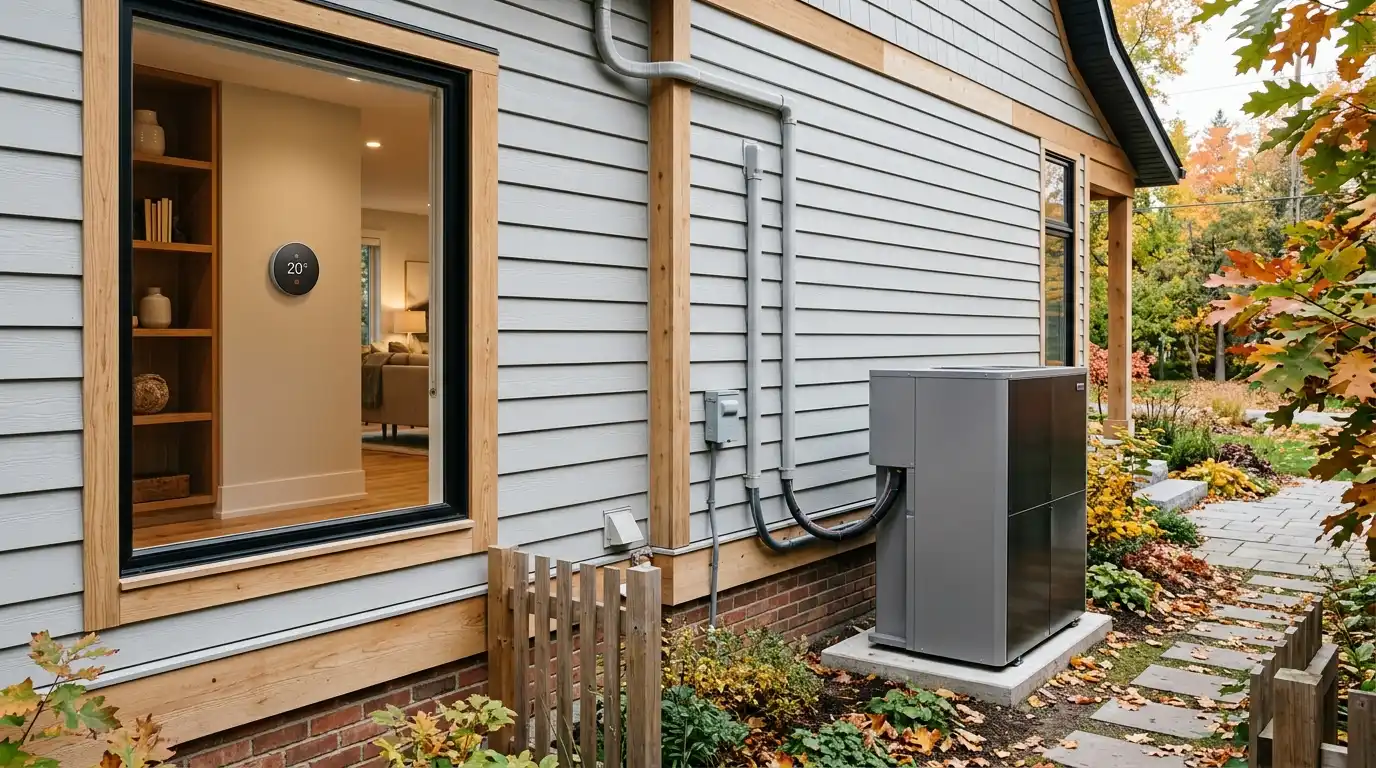
A dual fuel heat pump is a hybrid heating setup that combines an electric heat pump with a gas or oil furnace so one system can use two different heat sources. The heat pump commonly handles heating during milder weather and provides air conditioning in summer. When outdoor conditions become colder, or when the system’s controls determine that the furnace is the better source, the furnace takes over or provides supplemental heat.
This arrangement is also called a hybrid heating system. It is not a heat pump and furnace running without coordination. The equipment, thermostat, temperature sensors, ductwork, electrical supply, fuel connections, and control settings must work together as one system. A properly planned installation can improve heating flexibility, but compatibility and sizing need to be verified for the specific home rather than assumed from the name of an existing furnace or air conditioner.
How the Two Heating Sources Work Together
An air-source heat pump moves heat rather than creating all of its heat through combustion or electrical resistance. In heating mode, the outdoor unit extracts available heat from outdoor air and transfers it indoors through the refrigerant circuit, indoor coil, blower, and ductwork. The same basic system can reverse its operation in summer to move heat from the home to the outdoors for cooling.
For a related next step, read heat pump installation Mississauga.
The furnace produces heat through its own fuel-burning process and distributes that heat through the home’s ductwork. In a conventional split-system arrangement, the heat pump and furnace typically use the same indoor blower and supply-air network. This shared ductwork is one reason a dual-fuel system can be considered for some homes that already have forced-air heating.
The equipment does not usually operate both heating sources at the same time. A compatible thermostat or control system determines which source should run, based on the system configuration and settings. The changeover may respond to outdoor temperature, a programmed balance-point or lockout setting, comfort requirements, equipment limits, and operating economics. There is no single temperature that applies to every home.
The U.S. Department of Energy’s heat pump guidance explains the basic role of heat pumps in moving heat and describes how heat pump systems can provide both heating and cooling. A dual-fuel arrangement adds the furnace and the controls needed to coordinate that operation.
What Happens During Mild Weather
In moderate outdoor conditions, the heat pump will often be the preferred heating source. It can maintain indoor temperature while also providing efficient cooling during the warmer part of the year. The exact performance depends on the equipment, outdoor conditions, home construction, ductwork, airflow, and control settings.
The heat pump may run for longer periods than a furnace because it often delivers heat more gradually. That is not automatically a sign of a problem. A furnace may produce a short, strong burst of heat, while a heat pump can operate steadily to maintain the temperature. Comparing run time alone does not establish whether the system is working correctly.
During a defrost cycle, an air-source heat pump may temporarily change its operation to clear frost from the outdoor coil. The system can use supplemental heat during that period, depending on its design and controls. A brief change in sound, airflow, or outdoor-unit behaviour can therefore be part of normal operation, but frequent or prolonged defrosting requires assessment.
Why the Furnace Takes Over in Colder Conditions
As outdoor air becomes colder, the heat pump may need to work harder to extract and transfer heat. At some point, the furnace may be selected because it can meet the home’s heating demand more directly, maintain comfort during a cold spell, or operate according to the system’s configured limits. That point is often described as the balance point, but the term can refer to more than one practical decision.
A home’s balance point may be discussed in relation to the outdoor temperature at which the heat pump can no longer meet the full heating load by itself. A control setting may also establish a lockout or changeover temperature. These are related concepts, but they are not interchangeable in every installation. Equipment capacity, design temperatures, fuel prices, electricity rates, comfort preferences, and manufacturer requirements can all influence the final settings.
For example, a heat pump might still be physically capable of producing heat at a low outdoor temperature, yet the controls could be configured to operate the furnace earlier. In another home, the heat pump might remain the preferred source for longer. The correct choice must be based on the installed equipment and the home’s needs, not on a universal rule of thumb.
When the furnace operates, the heat pump’s heating function is normally disabled or placed in the appropriate mode so the two sources do not conflict. Incorrect staging or thermostat configuration can cause improper operation and may damage equipment. This is one reason dual-fuel controls should be configured as part of the installation rather than treated as a simple thermostat replacement.
What a Dual-Fuel Installation Has to Coordinate
A dual-fuel system involves more than placing an outdoor heat pump beside an existing furnace. Several components and building conditions have to be reviewed together.
Heat Pump and Furnace Capacity
The outdoor heat pump, indoor coil, furnace, blower, and controls must be matched. A larger outdoor unit is not automatically better. Oversized or mismatched equipment can affect comfort, humidity control, airflow, cycling, efficiency, and system reliability.
Proper sizing starts with a whole-home heating and cooling load calculation, commonly associated with Manual J methodology. The calculation considers factors such as floor area, insulation, windows, air leakage, orientation, design conditions, and other characteristics of the building. It provides a more defensible starting point than copying the capacity of an old furnace or choosing equipment based only on the home’s square footage.
Indoor Coil and Airflow
The indoor coil used by the heat pump must be suitable for the outdoor unit and the furnace or air handler. The blower must also be able to deliver the airflow required for both heating and cooling modes. A furnace that was acceptable with a previous air conditioner may not automatically be suitable for a new heat pump combination.
Airflow problems can appear as weak supply air, uneven room temperatures, unusual noise, excessive filter loading, poor cooling performance, or repeated system cycling. These symptoms do not identify one failed component by themselves. They can result from duct restrictions, filter issues, blower settings, coil selection, dampers, or equipment capacity.
Ductwork and Distribution
Existing ducts may be reusable, but they still need to be inspected. The installer may review duct size, return-air capacity, supply registers, trunk lines, insulation, leakage, balancing, and access. A heat pump’s airflow requirements may differ from those of the previous system, and a duct system that was marginal before can become more noticeable after the equipment is changed.
Room comfort also matters. If some rooms have always been too warm or too cold, installing a new heat pump without addressing airflow distribution may leave the underlying issue in place. Duct modifications, return-air improvements, balancing, or zoning may need to be considered, depending on the home’s layout and the equipment design.
Electrical Service
The heat pump outdoor unit requires an appropriate electrical circuit and disconnect arrangement. The installation review should account for the unit’s electrical requirements, available panel capacity, wiring route, disconnect location, and other loads in the home. The existing electrical service should not be assumed to have enough capacity simply because an air conditioner was previously installed.
Electrical work, equipment connections, and testing should be completed by appropriately qualified professionals. Homeowners can gather panel and equipment information for an assessment, but the installation itself is not a suitable project for trial-and-error wiring.
Fuel, Combustion, and Venting
If the backup furnace burns gas or oil, its fuel supply, venting, combustion air, heat exchanger condition, and surrounding clearances are relevant to the review. An older furnace may operate today but still require replacement, modification, or further evaluation before it is used as part of a new dual-fuel configuration.
Combustion and fuel connections require professional attention. Do not open fuel lines, change gas controls, alter venting, or attempt to configure combustion equipment based on general online instructions. If there is a gas odour or concern about combustion, leave the area if necessary, avoid ignition sources, and contact the appropriate emergency or utility service according to local guidance.
Thermostat and Changeover Controls
The thermostat is part of the operating system, not just a wall-mounted temperature display. A dual-fuel thermostat or compatible control must understand the heat pump, furnace, auxiliary or supplemental heat, outdoor sensor, staging, and changeover logic used by the installation.
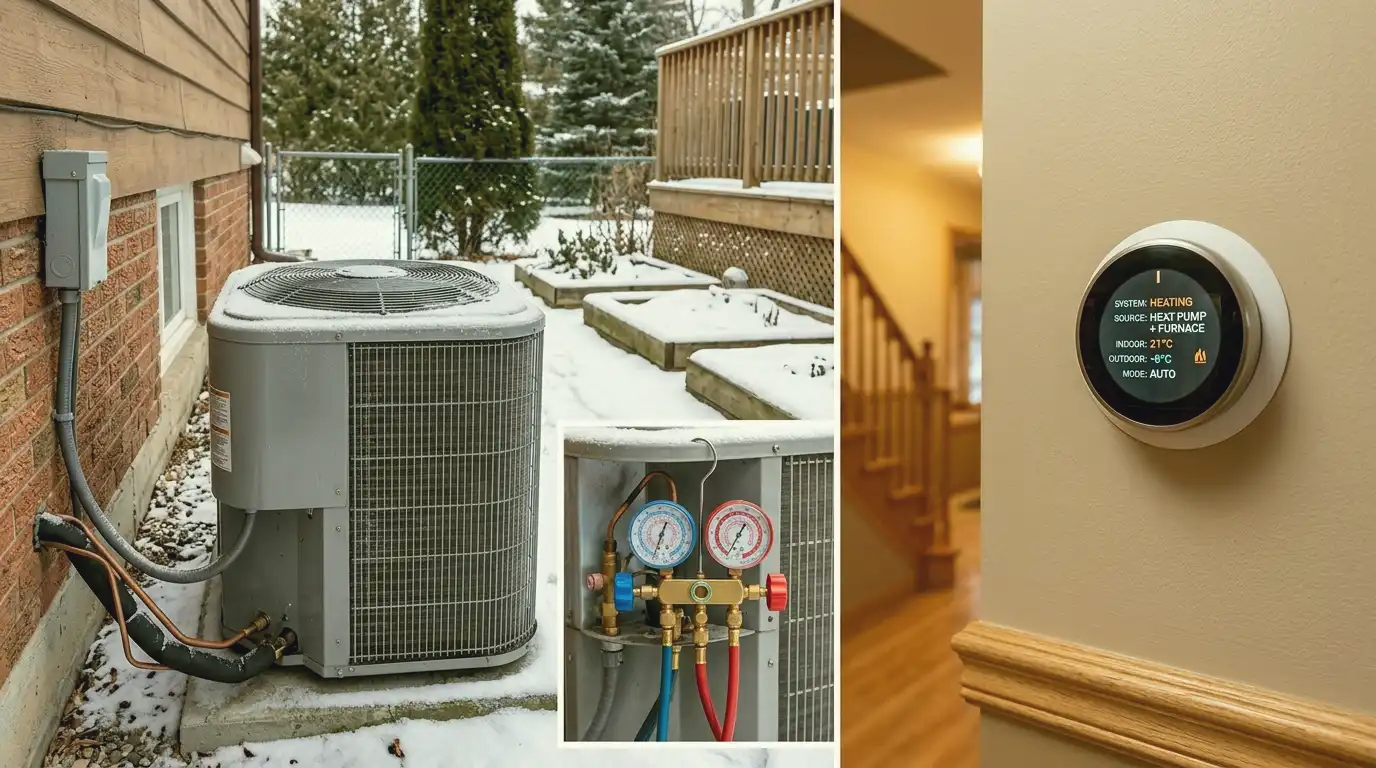
Some systems use an outdoor temperature sensor to help determine when the furnace should operate. Other settings may establish a heat-pump lockout temperature, a furnace changeover point, or limits on supplemental heat. The available options depend on the equipment and control manufacturer. A smart thermostat is not automatically compatible with every dual-fuel arrangement.
Incorrect setup can lead to problems such as the furnace operating when the heat pump should be running, the heat pump and furnace responding in the wrong sequence, supplemental heat running too often, cooling and heating signals being misinterpreted, or the system failing to maintain the requested temperature. Configuration should be verified after installation, including heating, cooling, changeover, emergency operation where applicable, fan operation, and any connected accessories.
Connected-home features can add another layer of compatibility. A thermostat may work with a home platform while still lacking the specific equipment controls required for a dual-fuel system. Compatibility should therefore be confirmed from the actual thermostat and HVAC equipment documentation, not from a general statement that the thermostat supports heat pumps.
Information to Gather Before Requesting an Installation Review
A homeowner can make the assessment more efficient by collecting basic information before requesting an installation or replacement review. This does not replace a site visit, but it helps the installer understand the existing arrangement.
- The furnace manufacturer, model number, serial number, fuel type, and approximate installation age.
- The existing air conditioner or heat pump model information, if one is already installed.
- The thermostat make and model, including any remote sensor or home-automation connection.
- The electrical panel rating and a clear photograph of the panel directory, without removing the panel cover.
- Recent concerns such as uneven temperatures, short cycling, weak airflow, unusual noise, or frequent service calls.
- Any known changes to insulation, windows, additions, renovations, or finished spaces.
- The location of the furnace, indoor coil, outdoor unit, thermostat, electrical panel, and fuel connections.
- Whether the home has central ductwork throughout the areas that need heating and cooling.
Model and serial numbers are usually found on equipment data plates or labels. A photograph is often useful, but the label should be readable and the equipment should remain closed. Do not remove access panels or expose wiring to obtain information.
Photos That Can Improve an Installation Request
Clear photographs can answer basic layout questions before a site visit. Take them in good lighting and include enough surrounding area to show access and clearances.
- A wide photograph of the furnace and indoor equipment area.
- A closer photograph of each equipment data plate.
- The outdoor unit and the area around it.
- The thermostat on the wall, including its wiring only if it is already visible without opening the thermostat.
- The electrical panel exterior and panel directory.
- The main supply and return duct connections near the indoor equipment.
- Any tight doorway, attic access, crawlspace entrance, stairway, or other route that could affect equipment removal and delivery.
- Visible venting, flue connections, fuel piping, condensate drains, and refrigerant lines, viewed without disturbing them.
Photos should document what is visible. They should not be used to diagnose a refrigerant charge, confirm combustion safety, identify hidden duct restrictions, or prove that equipment is compatible. Those questions require measurements and professional testing.
Examples of Situations That May Suit a Hybrid System
Replacing an Older Furnace and Air Conditioner
A home with an aging gas furnace and central air conditioner may be considered for a heat pump and furnace combination. The existing ductwork could provide a useful starting point, but the indoor coil, blower, electrical service, thermostat, refrigerant lines, furnace condition, and outdoor-unit location would still need review.
The previous air conditioner capacity should not simply determine the new heat pump size. Changes to the building envelope or the home’s heating and cooling needs may support different equipment. A load calculation and equipment-match review are important before selecting a replacement.
Keeping a Suitable Furnace as Backup
In some cases, an existing furnace may be suitable for continued use as the backup source. That depends on its condition, capacity, airflow, controls, venting, fuel system, and compatibility with the proposed heat pump and indoor coil. Age alone does not prove that it must be replaced, but age also does not prove that it is a suitable component for a new system.
Replacing an Air Conditioner While Retaining Forced-Air Heating
A homeowner replacing central cooling may ask whether a heat pump can provide both cooling and some heating while the furnace remains available for colder conditions. This can be a practical question when the home already has ducts, but the answer depends on the matched equipment and the building’s load. The electrical and control requirements must be included in the review.
Common Assumptions That Cause Problems
“The old furnace size tells me what heat pump to buy.” Furnace capacity may reflect an older sizing decision, a different fuel source, or a system that was oversized. It is not a substitute for a current load calculation.
“The system should switch at one standard outdoor temperature.” Changeover depends on the equipment’s performance, the home’s heat loss, operating costs, comfort preferences, and control strategy. A setting used in one home may be unsuitable in another.
“Any smart thermostat that supports a heat pump will work.” Dual-fuel control requires the correct equipment terminals, staging logic, sensor support, and configuration. Compatibility must be checked for the specific system.
“Existing ducts guarantee an easy retrofit.” Ducts can simplify some installations, but size, airflow, leakage, return capacity, access, and distribution still affect the result.
“A heat pump will always lower energy costs.” Operating results depend on electricity and fuel rates, equipment efficiency, climate, insulation, duct condition, maintenance, sizing, and control settings. A qualified assessment can discuss expected operation without promising a fixed saving.
“The furnace and heat pump can be connected first and configured later.” Controls are central to safe, correct operation. Equipment matching and thermostat configuration should be resolved as part of the installation plan.
Questions to Ask Before Work Begins
- Was the home evaluated with a whole-home heating and cooling load calculation?
- Which equipment combination is being proposed, and has the indoor coil and blower match been verified?
- Will the existing furnace remain, and what confirms that it is suitable as backup heat?
- How will the ductwork and return-air capacity be assessed?
- Does the electrical service support the proposed outdoor unit?
- Which thermostat or control is compatible with this exact dual-fuel arrangement?
- What outdoor sensor, balance-point, or lockout settings will be used, and why?
- How will the system be tested in heat-pump heating, furnace heating, cooling, and changeover modes?
- Are there visible concerns with venting, combustion air, condensate drainage, refrigerant lines, or equipment access?
- Which current permits, code requirements, incentives, or utility programs need separate local confirmation?
When Professional Verification Matters
A dual-fuel heat pump installation brings together refrigerant work, electrical connections, combustion equipment, fuel systems, ductwork, airflow, drainage, thermostat controls, and equipment commissioning. A problem in one area can appear to be a problem in another. For example, poor airflow may affect both heating and cooling, while an incorrect thermostat setting may make a compatible system appear unreliable.
Professional verification is especially important when an installation involves a gas or oil furnace, refrigerant lines, high-voltage electrical equipment, a new indoor coil, altered venting, difficult access, or an older electrical panel. Homeowners can gather model numbers, photographs, and comfort information, but invasive diagnosis and installation should be left to qualified professionals.
The most useful installation request describes the home’s existing equipment and the problem or goal in concrete terms. Include whether the request concerns a replacement, a new heat pump paired with an existing furnace, uneven comfort, high operating costs, repeated repairs, or a desire for more flexible heating. Add the model information and photographs you have collected, while leaving final compatibility and settings to the site assessment.
What a Good Assessment Should Establish
Before a dual-fuel heat pump system is selected, the assessment should establish whether the home can support the proposed equipment and whether the equipment can work together as intended. That includes the heating and cooling loads, equipment capacity, indoor coil and blower match, ductwork, electrical service, fuel and venting conditions, thermostat controls, outdoor-unit placement, drainage, access, and commissioning requirements.
The assessment should also explain what the heat pump is expected to handle, when the furnace is expected to operate, and which settings are based on the equipment and home rather than a generic temperature rule. That explanation helps the homeowner understand normal operation and recognize when a service call is warranted.
A dual-fuel system is best understood as a coordinated heating and cooling design. The heat pump and furnace each have a role, but the value of the arrangement depends on correct sizing, compatible components, sound distribution, properly configured controls, and professional verification. Gathering accurate equipment details and clear photos is a useful first step toward that review.
Need Appliance Repair?
Share the appliance, brand, address, symptoms and optional photos online. A contractor can review the request and contact you about availability and next steps.
Start Your Repair Request