
Heat Pump Short Cycling: Why It Starts and Stops
Heat Pump Short Cycling guide: learn the key details, compare options, check verified sources, and make a safer decision before you act.
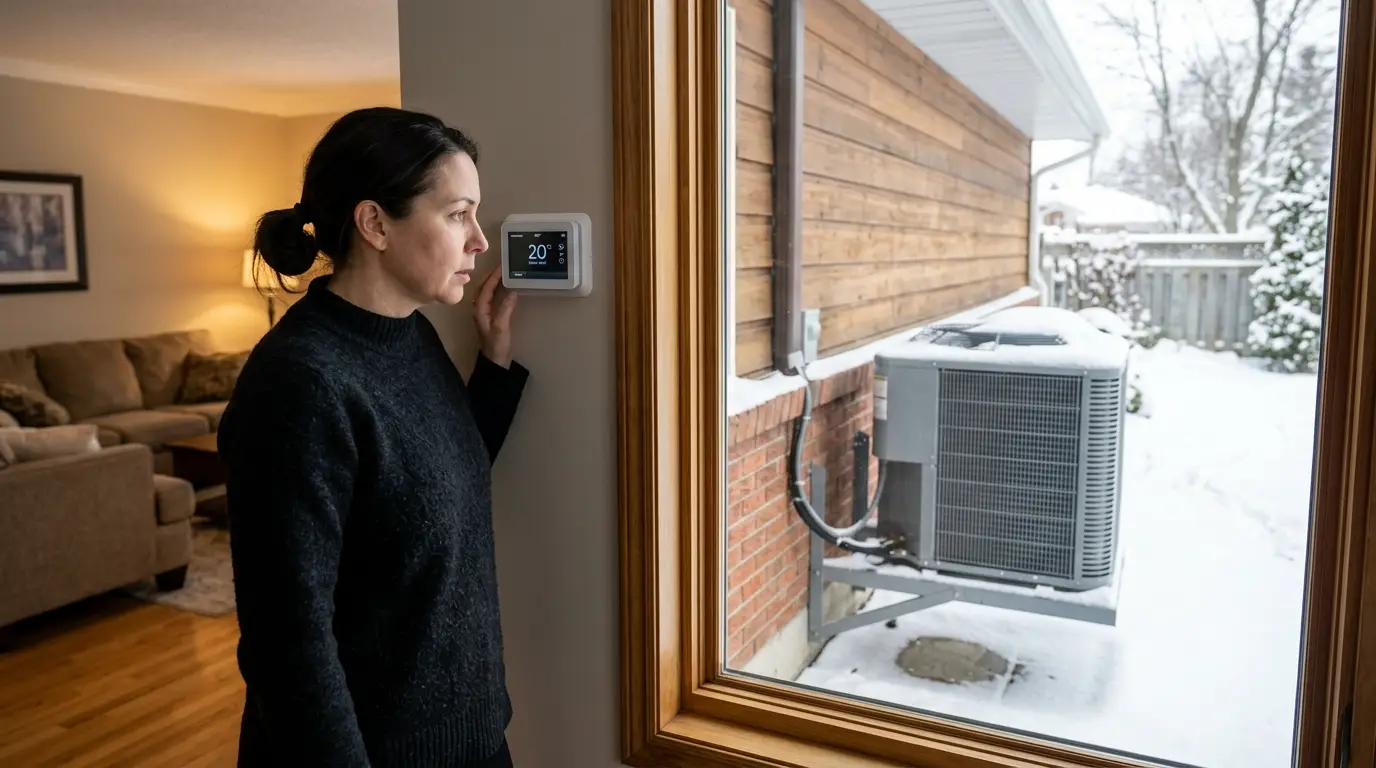
Heat pump short cycling means the system starts and stops repeatedly instead of running through a normal heating or cooling cycle. The pattern matters more than a single shutdown. A heat pump may pause during a normal defrost cycle, reduce output through inverter modulation, or let the indoor blower run briefly after the compressor stops. Those events can look unusual without indicating a fault.
Abnormal cycling is more concerning when the outdoor compressor repeatedly starts, runs briefly, shuts down, and then tries to restart soon afterward. It can also occur when the indoor blower stops while the outdoor unit continues, or when both indoor and outdoor equipment shut down before the home reaches the thermostat setting. The likely cause depends on which component stops, what the weather is doing, whether the system is in heating or cooling mode, and whether a warning or fault code appears.
What Heat Pump Short Cycling Looks Like
There is no universal number of minutes that defines short cycling for every heat pump. Single-stage, two-stage, variable-capacity, ducted, ductless, and dual-fuel systems all use different controls. Outdoor temperature, indoor load, thermostat configuration, zoning, and manufacturer programming also affect normal run behaviour.
For a related next step, read heat pump installation Mississauga.
Instead of relying on a stopwatch alone, watch for a repeatable pattern. Does the compressor start, run briefly, and stop several times while the room remains below the set temperature? Does the outdoor fan stop but the indoor blower continue? Does the entire system lose its call for heat or cooling? Does the thermostat immediately show another call after the shutdown? These observations provide more useful information than declaring a specific run time abnormal.
Record the following before changing settings or switching the system off:
- Whether the system is heating, cooling, or in an automatic mode
- The indoor temperature and thermostat setpoint
- Outdoor temperature and whether the weather is damp, snowy, or freezing
- Which unit stops first, including the compressor, outdoor fan, indoor blower, or ductless head
- Whether the system restarts on its own and how often the pattern repeats
- Any fault code, flashing light, unusual sound, ice, burning odour, or electrical odour
- Whether the home eventually reaches the set temperature
That record can help a technician distinguish a control decision from a protection shutdown. It also helps prevent a normal defrost or blower delay from being mistaken for a failing compressor.
Short Cycling or Normal Heat Pump Operation?
Heat pumps do not always operate with a simple on and off pattern. Variable-capacity equipment may ramp up or down as the load changes. A low-output compressor can run for a long period, while a higher-output system may briefly reduce capacity without fully shutting down. Some ductless indoor heads may change fan speed or pause independently of the outdoor unit.
Cold-weather defrost is another common source of confusion. In heating mode, frost can build up on the outdoor coil under suitable weather conditions. The system temporarily changes its operation to remove that frost. During defrost, the outdoor fan may stop, the sound may change, airflow indoors may feel different, and the thermostat may display a temporary indication. A short burst of cooler air or water draining from the outdoor unit can also occur.
Those signs do not automatically mean the heat pump is short cycling. Defrost should be judged by the complete pattern. If the system returns to normal operation afterward and continues to heat, a temporary change may be part of its intended sequence. If the system repeatedly enters and exits defrost, develops heavy ice, displays a fault, or cannot maintain the set temperature, the system needs professional assessment.
Thermostat and blower timing can create another false alarm. The indoor fan may continue after the compressor stops to use remaining conditioned air, or the compressor may pause while the fan continues during a control transition. What matters is whether the compressor is restarting abnormally often and whether the system is satisfying the demand.
Use the Stopping Pattern as a Diagnostic Clue
The most useful first distinction is whether the outdoor compressor stops, the indoor blower stops, or both stop together. A homeowner cannot confirm the failed part from this observation, but the pattern can narrow the cause group.
Outdoor Compressor Stops First
If the indoor blower continues but the outdoor compressor stops, the thermostat may still be calling while an outdoor control is pausing the compressor. Airflow problems, a sensor reading, a protection control, refrigerant-related conditions, or an electrical issue can all produce similar symptoms. In some systems, the outdoor fan and compressor are controlled separately, so do not assume the compressor has failed simply because the fan is still running.
Listen for whether the compressor attempts to restart and then stops again. A click, brief hum, or abrupt shutdown may be useful information, but sound alone cannot identify a component. Repeated restart attempts can place stress on equipment and should not be treated as a reason to keep testing indefinitely.
Indoor Blower Stops While the Outdoor Unit Runs
If the outdoor unit appears to run but the indoor blower stops, the problem may involve the indoor fan control, an airflow restriction, a safety response, a thermostat signal, or a communication issue on a communicating system. The outdoor unit may continue briefly because the system’s controls do not stop every component at the exact same instant.
Check whether air is still moving from the registers and whether the thermostat shows a call. Do not remove panels or reach into the air handler. If the blower repeatedly stops during a call, the system may not be transferring heat properly, and continued operation can worsen comfort problems or trigger additional protection responses.
Both Indoor and Outdoor Units Stop
When the entire system stops before the home reaches the setpoint, the thermostat may be ending the call, a safety control may be opening, or a control or power problem may be interrupting operation. A thermostat located near a heat source, in direct sunlight, or in a poorly representative area can satisfy early even when other rooms remain uncomfortable. A loose connection, control fault, or recurring power interruption can look similar from inside the home.
Notice whether the thermostat screen goes blank, resets, or displays a fault. A blank or restarting display raises a different concern from a normal satisfied indication. Do not repeatedly reset breakers to force operation. A breaker that trips again is a warning sign, not a troubleshooting invitation.
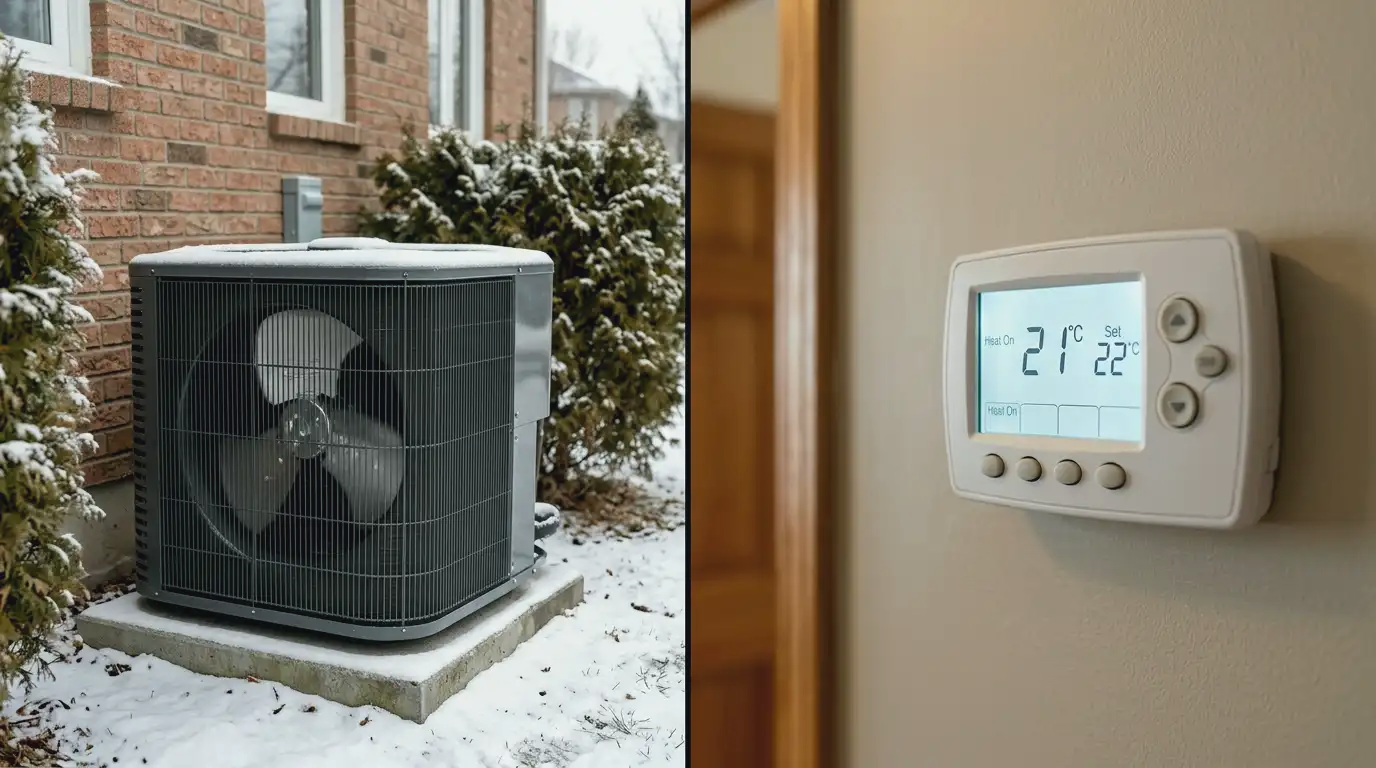
Common Heat Pump Short Cycling Causes
Restricted Airflow
A dirty filter, blocked return, closed register, obstructed outdoor coil, or heavily restricted duct system can reduce the amount of air moving through the heat pump. Poor airflow affects heat transfer and may cause temperatures or pressure conditions that lead controls to reduce or stop operation. In a ductless system, blocked filters or a dirty indoor coil can create a similar problem.
Airflow should be considered alongside the stopping pattern. If the system runs for a while, airflow weakens, and the unit shuts down or produces a fault, restriction becomes more plausible. If airflow is normal at every register but the compressor stops almost immediately, another cause group may deserve attention.
Thermostat or Sensor Problems
A thermostat can end a heating or cooling call if it senses that the target temperature has been reached, even when the rest of the home feels uncomfortable. Poor placement, a temperature swing setting, an intermittent connection, or a sensor problem can lead to irregular calls. Smart thermostats and communicating systems may also follow equipment-specific algorithms that are not obvious from the display.
Check the thermostat mode, setpoint, schedule, and fan setting. Make sure a temporary hold or automatic schedule is not changing the call unexpectedly. Avoid making repeated adjustments while trying to observe the system. Record what the thermostat shows when the equipment stops, since that information is more useful than constantly changing the setpoint.
Equipment That Is Too Large for the Load
An oversized heat pump can satisfy the thermostat quickly, especially during mild weather, then shut down before providing steady temperature control. That may create frequent starts and stops without a clearly failed component. Oversizing is not confirmed by the home’s floor area or by short run times alone. It requires a proper load assessment and a review of the equipment’s capacity, staging, duct system, and controls.
A system that short cycles mainly during mild weather but runs normally during more demanding conditions may deserve a sizing review. However, thermostat settings, airflow, zoning, and control configuration should also be checked before blaming the equipment size.
Defrost or Ice-Related Operation
Light frost can be part of normal winter operation, and a scheduled defrost cycle can temporarily change airflow and outdoor fan behaviour. Heavy ice that remains on the coil, returns quickly, or blocks the outdoor unit is different. It may reflect airflow, sensor, drainage, defrost-control, refrigerant, or other equipment conditions.
Keep snow, leaves, and other visible debris away from the outdoor unit without bending coil fins or opening the cabinet. Do not chip ice away with a tool, pour hot water over the coil, or operate equipment that is visibly obstructed. A professional should determine why ice is accumulating and whether the defrost sequence is working correctly.
Refrigerant or Heat-Transfer Conditions
An incorrect refrigerant charge, a restriction, or another sealed-system condition can affect heat transfer and operating pressures. The equipment may struggle to reach the setpoint, trigger a protection response, or operate in a way that resembles short cycling. These conditions cannot be confirmed from frost patterns, sound, or cycle timing alone.
Do not connect gauges, add refrigerant, release refrigerant, or open sealed-system components as a homeowner test. The correct diagnosis requires appropriate instruments, equipment data, and qualified service. A technician may also need to rule out airflow and control problems before deciding that refrigerant work is justified.
Electrical and Control Faults
Electrical faults, communication errors, failed sensors, control-board problems, and protection devices can interrupt a cycle. A heat pump may stop to protect the compressor when a monitored condition falls outside its permitted range. A repeated breaker trip, burning smell, buzzing, arcing, or visible damage requires the system to be switched off and assessed.
Do not remove access panels, test live wiring, bypass a safety control, or repeatedly reset a breaker. Even when the system appears to restart afterward, the underlying fault may remain. The time and conditions of each shutdown can help a technician determine whether the interruption is related to demand, temperature, pressure, voltage, or communication.
Safe Checks You Can Make
Limited observation and basic external checks are reasonable. They should not involve opening the heat pump, air handler, electrical compartment, or refrigerant circuit.
- Confirm that the thermostat is set to the intended heating or cooling mode.
- Check whether a schedule, setback, vacation mode, or temporary hold is changing the setpoint.
- Inspect the filter and replace it if it is dirty, using the correct size and type for the system.
- Make sure supply registers and return grilles are open and not covered by furniture or stored items.
- Look around the outdoor unit for leaves, snow, grass, or other visible blockage, keeping clear of the fan and coil.
- Record fault codes and take note of unusual sounds without removing covers.
- Check whether the system eventually reaches the setpoint or continues to cycle while the home remains uncomfortable.
After a filter change or removal of a visible external obstruction, allow the system to operate normally long enough to observe the result. Do not keep forcing operation if there is heavy ice, an electrical odour, a burning smell, a recurring breaker trip, or a fault indication.
Proper installation and commissioning also matter. ENERGY STAR’s HVAC quality installation guidance emphasizes load-based sizing, airflow, refrigerant charge, and other installation factors that affect performance. That is why recurring cycling may require more than replacing a thermostat or cleaning a filter.
What Cycle Timing Can and Cannot Tell You
Timing is useful evidence, but it is not a diagnosis. A short run during mild weather may reflect a small heating or cooling load. A pause during defrost may be normal. A variable-capacity system may change output without behaving like a conventional single-stage unit. A blower may continue after the compressor stops as part of normal fan control.
On the other hand, repeated compressor starts with incomplete temperature control, recurring fault codes, heavy ice, or abrupt protection trips deserve attention. The more consistently the same pattern appears under similar conditions, the more useful the observation becomes.
Do not use cycle duration to declare that a compressor, capacitor, control board, pressure switch, sensor, or refrigerant circuit has failed. Several unrelated problems can create the same visible symptom. A technician may need to compare thermostat demand with operating pressures, temperatures, airflow, electrical readings, sensor values, and manufacturer diagnostic information.
When to Stop Using the Heat Pump
Turn the system off and arrange professional help when you notice burning or electrical odours, smoke, visible arcing, repeated breaker trips, damaged wiring, heavy ice that blocks the unit, loud mechanical sounds, or water entering areas where it could create an electrical hazard. Do not operate equipment that is making a strong abnormal noise or repeatedly attempting to start.
If there is no immediate safety warning but the heat pump short cycles repeatedly, does not reach the setpoint, or displays a fault, schedule diagnosis rather than treating the symptom as a simple inconvenience. Continued cycling can leave the home uncomfortable and may add unnecessary starts to the equipment. A prompt assessment can also distinguish a repairable control or airflow issue from a broader installation or capacity concern.
Repair, Sizing Review, or Replacement?
The right next step depends on what testing finds. A dirty filter or obstructed register may be straightforward to correct. A thermostat issue may require configuration or replacement. A control fault, electrical problem, defrost problem, or sealed-system condition requires a more involved diagnosis and should not be treated as a homeowner repair.
If the system has always cycled frequently, a load and installation review may be more useful than replacing an individual component. The review should consider the home’s heating and cooling load, equipment capacity, staging or modulation, ductwork, zoning, thermostat configuration, airflow, and commissioning data. Floor area alone is not enough to confirm oversizing.
If the problem began suddenly, focus first on changes in operation. Consider recent filter replacement, construction dust, blocked outdoor airflow, thermostat changes, power interruptions, new fault codes, weather conditions, or a difference between heating and cooling performance. A clear timeline can make diagnosis more efficient.
What to Record Before Service
Write down the operating mode, setpoint, indoor temperature, outdoor conditions, approximate timing of starts and stops, and which component appears to stop. Note whether the air feels normal, weak, cool during heating, or unusually warm during cooling. Record ice, water, sounds, odours, breaker activity, and every displayed code.
Also note whether the system behaves differently during defrost, after a filter change, in one zone, or at a particular outdoor temperature. Do not remove panels to collect more information. A careful record of normal external observations is safer and often more valuable than an invasive test that changes the system’s condition.
Frequently Asked Questions
How many starts count as heat pump short cycling?
There is no single start count or universal time limit that applies to every heat pump. Equipment type, capacity control, weather, thermostat settings, zoning, and manufacturer logic all affect normal operation. Repeated brief compressor runs that leave the home below the setpoint are more concerning than one temporary pause during defrost or modulation.
Can a dirty filter cause a heat pump to short cycle?
Yes, restricted airflow can contribute to abnormal operation and protection shutdowns. Check the filter and visible airflow restrictions without opening the equipment. If cycling continues after a correct filter change, or if airflow remains weak, professional diagnosis is needed.
Is it normal for a heat pump to stop during winter?
A temporary change during a defrost cycle can be normal. The outdoor fan may stop, the sound may change, and indoor airflow may briefly feel different. Persistent rapid cycling, heavy ice, fault codes, or failure to restore normal heating is not something to dismiss as ordinary defrost behaviour.
Does short cycling prove the compressor is bad?
No. Short cycling can involve airflow, thermostat settings, sizing, sensors, defrost controls, electrical conditions, refrigerant-related problems, or other protection responses. Compressor failure cannot be confirmed from cycling frequency alone.
Should I keep resetting the breaker?
No. A breaker that trips repeatedly may indicate an electrical or equipment fault. Leave the system off and arrange qualified service, especially if there is a burning smell, buzzing, visible damage, or smoke.
Can an oversized heat pump be confirmed from short run times?
No. Oversizing is one possible explanation, particularly if frequent cycling has been present since installation, but confirmation requires a proper load and system-capacity review. Airflow, thermostat control, zoning, and equipment faults should be considered as well.
Next Steps
Start by identifying what actually stops and whether the event matches a normal defrost or modulation pattern. Check only the thermostat settings, filter, registers, return airflow, and visible outdoor obstructions. Keep a record of the conditions and stop using the system if there are electrical warnings, heavy ice, recurring breaker trips, or other safety concerns.
When repeated cycling continues, professional testing can determine whether the cause is airflow, controls, sizing, defrost operation, electrical protection, or a sealed-system condition. That evidence supports the right decision, whether it is a targeted repair, an installation review, or a replacement discussion based on the system’s actual performance.
Need Appliance Repair?
Share the appliance, brand, address, symptoms and optional photos online. A contractor can review the request and contact you about availability and next steps.
Start Your Repair Request