
Oven Not Heating: Electric and Gas Causes
Oven Not Heating Up guide: learn the key details, compare options, check verified sources, and make a safer decision before you act.
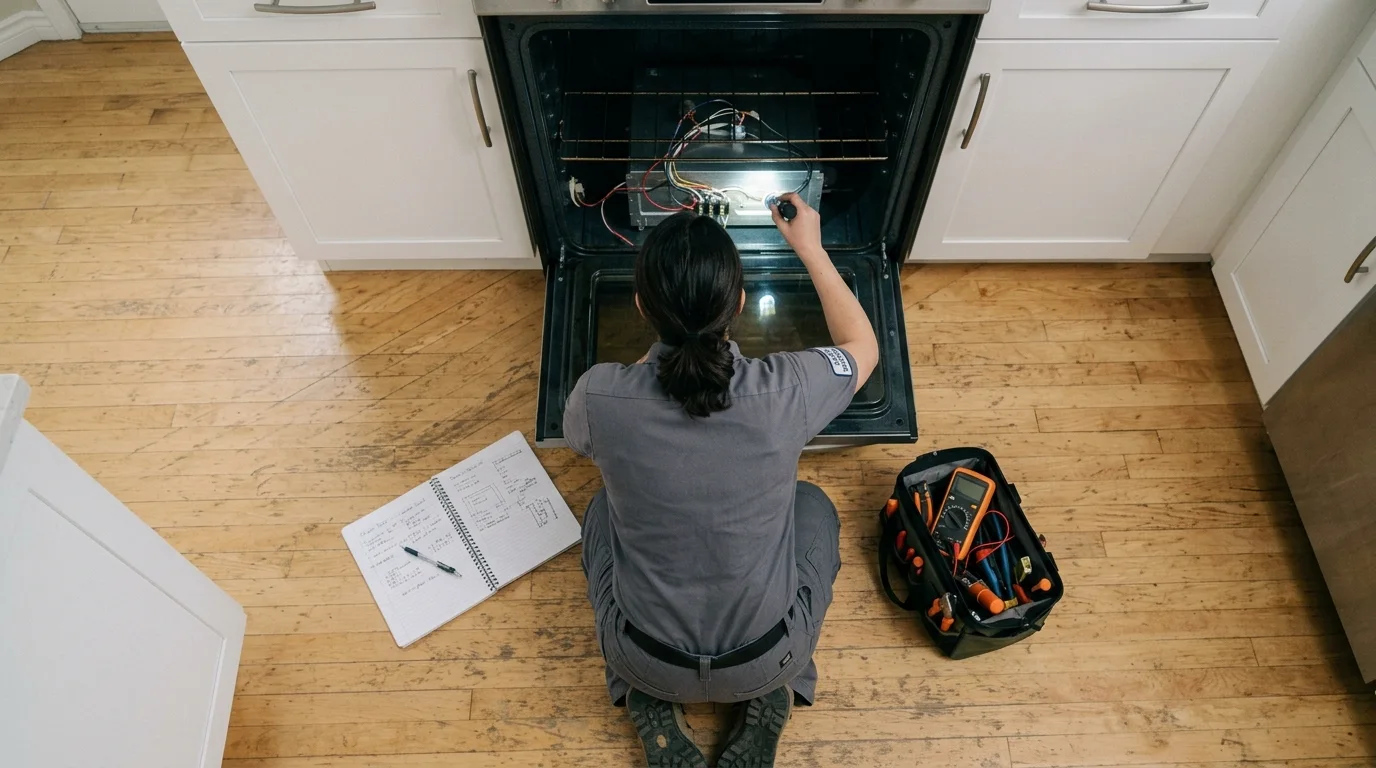
An oven not heating up can have very different causes depending on whether the appliance is electric or gas. Electric ovens may have a power-supply, bake-element, sensor, wiring, or control problem. Gas ovens may have an ignition, burner, gas-supply, sensor, or control problem. The symptom alone does not identify the failed part, so the safest approach is to separate the fuel type, observe the heating pattern, and avoid internal gas or live-electrical testing.
Oven Not Heating Up: First Separate Electric From Gas
Before troubleshooting, confirm which type of oven you have. An electric oven generates cooking heat with electric elements. A gas oven uses a burner system that must ignite and maintain controlled combustion. Both types also depend on temperature sensing, control logic, door sealing, and a reliable electrical supply for at least part of their operation.
Current Whirlpool guidance for an oven that is not heating includes checking basic power conditions, the door, the heating element on electric models, and the igniter or related system on gas models. Whirlpool’s oven heating troubleshooting guide is one manufacturer reference for those broad cause groups, but model-specific service information still controls the exact diagnostic procedure.
When to Stop Using the Oven Immediately
Some heating failures are inconvenient. Others involve gas, overheating, or damaged electrical components and should not be tested through repeated cooking cycles.
- You smell natural gas or a rotten-egg odour. Leave the area immediately. Do not operate switches, appliances, phones, or anything else that could create a spark inside the area. Call 911 or Enbridge Gas from a safe location. Enbridge Gas Ontario’s current gas-leak guidance should take priority over appliance troubleshooting.
- You see smoke, sparking, melted wiring, or scorching that is not normal cooking residue. Turn the appliance off if it can be done safely and do not continue using it.
- The oven or range repeatedly trips its breaker. Do not keep resetting the breaker to force another test cycle. An electrical fault needs proper assessment.
- The gas oven attempts ignition abnormally, makes unusual ignition noises, or fails to light reliably. Stop using the oven rather than repeatedly cycling the ignition system.
In Ontario, gas-appliance work is regulated. TSSA states that registered fuels contractors are the businesses legally authorized to perform fuels-related work, and regulated work is performed by appropriately certified technicians. See the TSSA fuels contractor registry and guidance when gas-side repair is required.
Symptom Patterns That Help Narrow the Cause
The oven does not heat at all
A completely cold oven starts with basic supply and control questions. On an electric model, a tripped breaker, failed element, wiring fault, sensor issue, or control problem can all prevent heating. On a gas model, the appliance may have electrical power for the display while the burner system fails to ignite. A functioning clock or oven light does not prove that the heating system has the power or control signal it needs.
The oven heats, but never reaches the set temperature
Partial heating changes the diagnosis. An electric oven may have one heating element working while another is not, depending on the cooking mode and design. A gas oven may ignite but have trouble maintaining the expected heating cycle. Temperature sensing, calibration, door sealing, control logic, and airflow can also affect the result.
Use an oven-safe thermometer only if the oven is operating without gas odour, electrical warnings, or abnormal ignition behaviour. One reading does not diagnose a sensor or control board. What matters is the pattern across a normal preheat and cooking cycle compared with the model’s expected operation.
The stovetop works but the oven does not
On a range, working surface burners tell you that at least part of the appliance is receiving energy, but they do not prove the oven heating circuit or gas ignition system is healthy. On a gas range, surface-burner operation can make a whole-home gas outage less likely, while the oven can still have an ignition or control fault of its own. On an electric range, cooktop operation does not rule out a separate oven element, wiring, sensor, or control problem.
The oven takes much longer than usual to preheat
Slow preheating is different from zero heat. It can reflect weak or incomplete heating, a door that is not sealing well, a temperature-sensing issue, a control problem, or a cooking mode that is not behaving as expected. The important clue is whether the oven eventually stabilizes near the set temperature or continues falling short.
Common Electric Oven Cause Groups
Power and control settings
Start with the non-invasive checks. A tripped breaker, recent power interruption, control lock, demo mode, delayed-start setting, or another control-state issue can leave the oven apparently functional while preventing normal heating. Manufacturer product-help pages list these as model-dependent checks for ovens that power on but do not heat.
If a breaker trips again after being reset once, stop. Repeated tripping is not a setting problem and should be treated as an electrical fault rather than something to work around.
Bake or broil element problems
Electric ovens use one or more heating elements depending on design and cooking mode. An exposed element may show blistering, a break, or an area that no longer glows during operation. Some newer ovens hide the bake element beneath the oven floor, so a homeowner may not be able to inspect it visually at all.
A visible defect can support the diagnosis, but a normal-looking element can still be electrically open. Confirming the component requires safe electrical testing with the appliance disconnected and the model’s service information available.
Temperature sensor, wiring, or control faults
The oven control relies on temperature feedback to decide when to energise the heating system. A sensor reading that is inaccurate, damaged wiring, a failed relay, or a control-board problem can result in no heat, intermittent heat, or temperatures that never settle correctly. These faults can look similar from the kitchen, which is why replacing the sensor based only on a temperature complaint is guesswork.
Common Gas Oven Cause Groups
Ignition-system problems
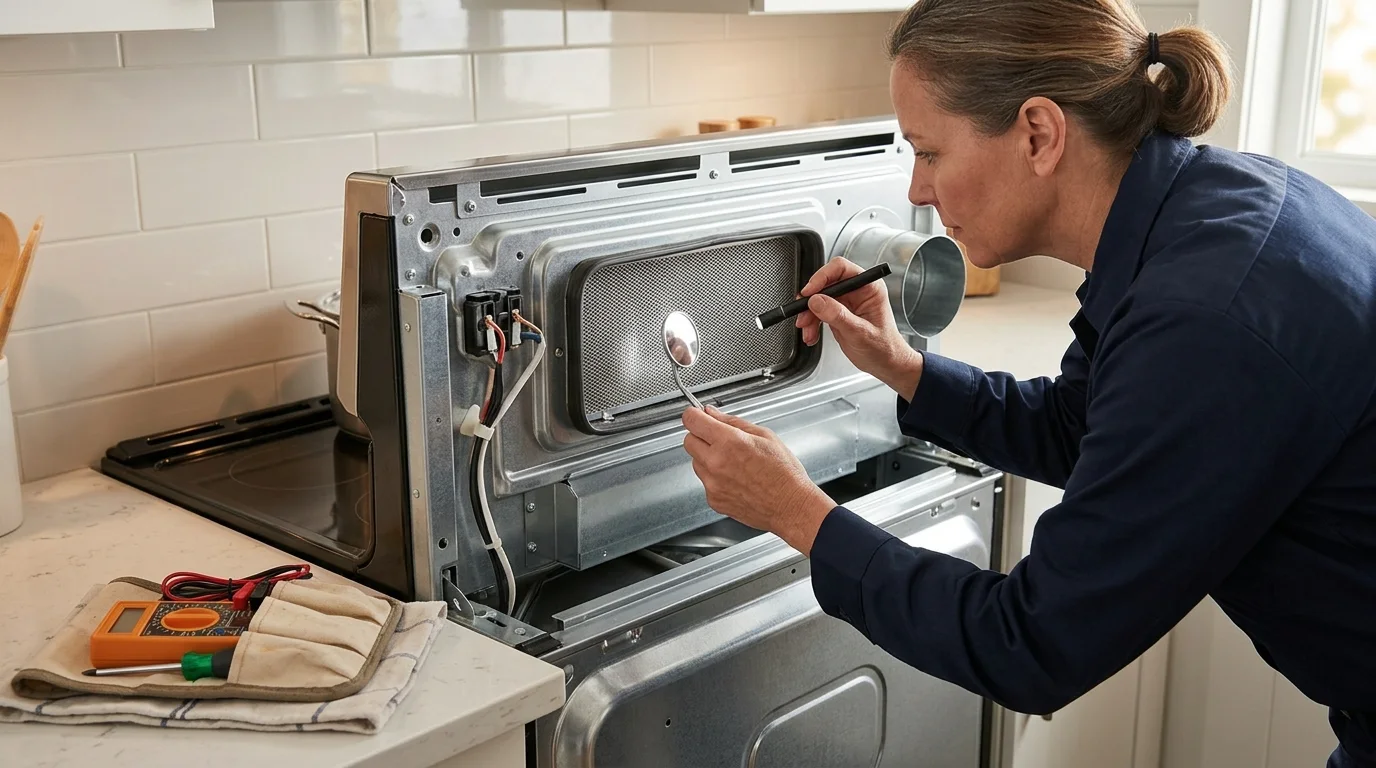
Modern gas ovens commonly use an electronic ignition system. A weak, dirty, misaligned, or failed igniter can prevent reliable burner ignition, but the exact design varies by model. A gas oven that does not light is not a homeowner parts-replacement project. Any work involving the burner, valve, or gas connections requires a properly authorized technician.
An igniter that appears to glow or spark does not by itself prove that the igniter, gas valve, or control is good or bad. The complete ignition sequence has to be evaluated.
Gas-supply or burner-system problems
If there is any suspicion of a gas leak, stop troubleshooting and follow Enbridge Gas emergency guidance. If no leak is suspected, a technician can determine whether the oven is receiving the correct gas supply and whether the safety valve, burner, regulator-related components, and ignition system are operating as designed.
Do not loosen gas fittings, bypass a safety device, or attempt to measure gas pressure as a homeowner check. Those are gas-side service tasks.
Temperature sensing and control faults
Gas ovens still depend on sensors and electronic or mechanical controls to cycle heat. An ignition system may be capable of lighting while a sensor or control problem causes poor temperature regulation. That is one reason a gas oven can have a normal-looking flame during part of the cycle and still fail to cook properly.
Error Codes and Calibration Need Model Context
If the control displays an error code, record it exactly along with the model number before clearing or resetting anything. Error-code meanings and diagnostic modes are manufacturer and model specific. A code may identify the system that needs attention without proving the individual failed component, so a generic code list should not override the owner’s manual or service information for the appliance.
Temperature calibration is similar. A consistent small temperature offset on an otherwise stable oven can be different from an oven that never reaches temperature, swings widely, or stops heating during the cycle. Calibration should not be used to hide a real heating-system fault. The symptom pattern and model instructions determine whether adjustment is appropriate or whether electrical, ignition, sensing, or control testing comes first.
Safe Checks a Homeowner Can Make
The goal of homeowner troubleshooting is to rule out simple setup and supply conditions without entering live electrical areas or the gas train.
- Confirm the cooking mode and temperature. Make sure the oven is actually in Bake or the intended heated mode rather than a delay, keep-warm, proof, or control-lock state.
- Check the breaker. If it is tripped, reset it once. If it trips again, stop and arrange electrical or appliance service.
- Look for an error code. Record the exact code and model number, then use the model-specific owner documentation. Do not assume a generic online definition applies to every oven.
- Inspect the door seal and closure. Food debris, a damaged gasket, or a door that does not close properly can contribute to slow heating and unstable temperature.
- Electric models only: visually inspect exposed elements with the oven off and cool. Look for obvious breaks or blistering. Do not remove panels or test continuity while the appliance is connected to power.
- Gas models: stay outside the appliance. If the oven fails to ignite, makes unusual ignition noises, or has any gas odour, do not access the igniter, burner, valve, regulator, or supply connection yourself.
What a Technician May Inspect or Test
A professional diagnosis begins by confirming whether the complaint is zero heat, weak heat, intermittent heating, or inaccurate temperature. From there, the test path separates sharply between electric and gas models.
On an electric oven, a technician may verify the incoming electrical supply, inspect bake and broil circuits, test heating elements, check temperature-sensor resistance against service specifications, inspect wiring and connectors, and verify whether the control board is sending the expected output to the heating circuit.
On a gas oven, the technician may observe the ignition sequence, assess the igniter and burner operation, verify safety-valve behaviour, inspect gas-side components, test temperature sensing, and check control outputs. In Ontario, gas-side work must stay within the TSSA-regulated contractor and technician framework.
In either type, the useful question is not “which part commonly causes no heat?” but “which component failed its actual test on this model?” A temperature complaint can be produced by several systems, and the correct repair should follow measured evidence rather than a parts list.
What the Heating Symptom Does Not Prove
An oven that stays cold does not automatically prove the bake element or igniter has failed. The heating component may be capable of working but never receive the correct power or control signal. A sensor can report the wrong temperature, a relay or wiring connection can interrupt the circuit, a control setting can prevent the cycle from starting, or a gas ignition sequence can fail at a different point than the part that first catches your attention.
The same caution applies to partial heat. An oven that warms but does not reach the set temperature does not automatically need calibration, and a gas igniter that visibly glows does not confirm that the complete ignition system is operating correctly. On electric models, one cooking mode may use elements differently from another, so a symptom in Bake may not tell you what happens in Broil.
Good diagnosis therefore moves from the observable pattern to a measured test. Is the appliance receiving the correct supply? Is the control requesting heat? Does the heating component pass its model-specific electrical test? Is the temperature sensor reporting a plausible reading? On gas models, does the regulated ignition and burner system complete its sequence safely? Those questions separate evidence from assumption and reduce unnecessary parts replacement.
Repair or Replace After the Fault Is Confirmed
An oven not heating up does not automatically mean the appliance has reached the end of its useful life. A single element, sensor, igniter, connection, or control-related fault can have a very different repair scope from multiple electrical problems, damaged wiring, or major gas-system concerns.
After the diagnosis, compare the repair scope with the oven’s overall condition, repair history, parts availability, and the cost and features of a comparable replacement. Avoid using one universal age cutoff or percentage rule as the deciding factor.
For a broader decision framework after you have a confirmed diagnosis, see the repair or replace appliance guide.
When to Request Appliance Repair
If the oven still will not heat after safe checks of the mode, breaker, door closure, and visible external conditions, a professional assessment is the practical next step. Gas ignition problems, repeat breaker trips, internal electrical testing, and control diagnosis should not be pushed into DIY territory just because the appliance still powers on.
For more information, see the oven repair service page. You can also Request Appliance Repair to connect with an independent appliance repair contractor serving your area.
Need Appliance Repair?
Share the appliance, brand, address, symptoms and optional photos online. A contractor can review the request and contact you about availability and next steps.
Start Your Repair Request