
Oven Takes Too Long to Preheat: Common Causes
Oven Takes Too Long To Preheat guide: learn the key details, compare options, check verified sources, and make a safer decision before you act.
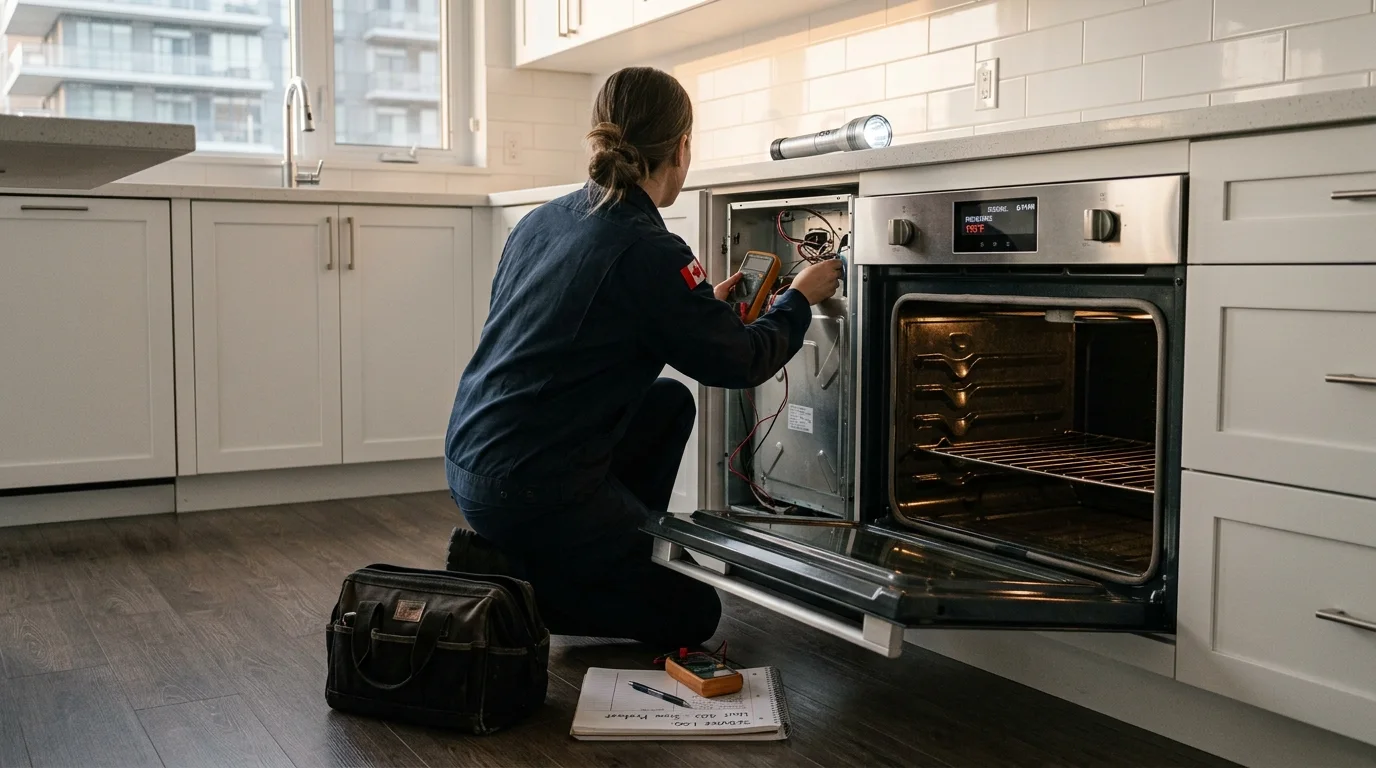
If your oven takes too long to preheat, compare it with its own normal behaviour before deciding that a part has failed. Preheat time changes with oven design, set temperature, room conditions, rack load, power supply, and whether the oven uses visible or hidden heating elements. A sudden, repeatable increase from the same oven’s usual preheat time is more useful than a universal minute rule.
The next question is whether the oven eventually reaches and holds temperature. An oven that preheats slowly but then bakes normally is a different problem from one that is slow and also runs cold. They have different causes.
Oven Takes Too Long to Preheat: Establish a Fair Baseline
Do not compare a cold winter morning at a high setpoint with a previous low-temperature bake cycle. Use the same oven mode, a similar starting condition, and a common set temperature. Keep the door closed and avoid placing a large cold item in the cavity before preheat is complete unless the cooking instructions call for it.
Whirlpool’s current long-preheat guidance shows why model design matters: ovens with visible bake elements and ovens with hidden elements can have different normal preheat ranges, and higher target temperatures take longer. That makes a single internet number a poor diagnostic standard.
Instead, ask: Has this oven become materially slower under similar conditions? If the answer is yes for several cycles, the change deserves investigation.
Understand What the Preheat Tone Means
Not every oven uses the same preheat algorithm. Some models signal when the cavity reaches the set temperature. Others signal when the oven is hot enough to add food even though the cavity will continue stabilizing. GE’s current preheat guidance specifically explains that preheat indicators can work differently across models.
This matters when someone places a thermometer in one spot and expects it to match the display at the instant the tone sounds. Oven temperatures cycle and vary throughout the cavity. A single reading at the tone is not enough to prove a calibration or sensor problem.
Slow Preheat With Normal Baking Versus Slow Preheat With Weak Heat
Slow preheat, then normal results: Think about design, setpoint, room conditions, racks, door openings, voltage differences on an electric installation, or a preheat algorithm that has always behaved this way. The oven may still need assessment if the change is new, but the final heating performance gives useful context.
Slow preheat and the oven never gets properly hot: A heat source may not be contributing correctly, the temperature-sensing system may be inaccurate, the control may not be driving the heat as expected, or an electric range may have a supply problem. Gas ovens can have ignition or burner-performance issues. These possibilities require model-specific testing.
Slow preheat plus uneven baking: Air circulation, element contribution, sensor response, door sealing, and rack or cookware conditions may all matter. The symptom is broader than preheat time alone.
Compare the Oven With Its Own History
The most reliable baseline is the same appliance under similar conditions. If your oven normally signalled preheat in roughly the same window for months and now takes much longer on every standard bake cycle, the change matters even if the new time still falls inside a broad range quoted for another model.
Conversely, a newly installed oven with a hidden bake element may simply have a different normal preheat pattern from an older visible-element range. The owner’s manual and manufacturer support for the exact model should win over a generic internet expectation.
What Happens After the Tone Is as Important as the Tone
Preheat is only the first part of oven performance. Once the tone sounds, observe whether the oven cooks normally. If cookies, casseroles, and other familiar foods finish in their usual time and brown evenly, the problem may be limited to preheat expectations or a modest change in warm-up behaviour.
If food consistently takes longer, the oven never seems fully hot, or browning is weak even after the tone, the diagnosis expands to heat-source contribution, temperature sensing, control, power supply, and door sealing. A thermometer used correctly over a full heating cycle may help a technician, but a single momentary reading should not be treated as the final answer.
Why Electric Ovens Can Heat Slowly Without Being Completely Dead
Electric ranges commonly use more than one heating circuit during preheat. If one circuit is not contributing correctly, the oven can still warm, which makes the failure less obvious than a completely cold oven. The symptom may be “takes forever” rather than “does not heat.”
Power supply also matters. A range can have lights and controls while a supply problem limits heating performance. GE specifically directs attention to the electrical supply when preheat is extremely long. Live-voltage and wiring checks should be handled by qualified people.
Why Gas Ovens Need a Different Diagnostic Path
A gas oven depends on its ignition and burner sequence. Slow preheat can result from delayed ignition, poor burner performance, or control and sensing issues. These are professional gas-appliance checks, not homeowner adjustment steps.
If a gas oven has delayed ignition, repeated ignition attempts, unusual flame, or any gas odour, stop testing. Follow Enbridge Gas emergency guidance from a safe location. Do not keep cycling the oven to measure preheat time.
Door Openings Can Distort Your Test More Than You Think
Every time the door opens, hot air leaves and colder room air enters. Repeated thermometer checks can create the very long preheat you are trying to measure. Use the oven light and display where possible and keep the door closed during a controlled baseline test.
Also check that nothing prevents the door from closing fully. A rack inserted incorrectly, oversized cookware, or a damaged gasket can allow heat loss. The visible gasket can be inspected without disassembly.
One Long Preheat Is Not the Same as a Repeatable Fault
A single long cycle after a power interruption, self-clean cycle, unusually cold room condition, or extensive door opening should be recorded but not overdiagnosed. Repeat the comparison under ordinary conditions. If the oven consistently takes much longer than its own baseline, the evidence is stronger.
Consistency matters because professional diagnosis depends on reproducing the complaint. A technician can do more with “standard bake is fifteen minutes slower than before on three similar tests” than with “it felt slow once.”
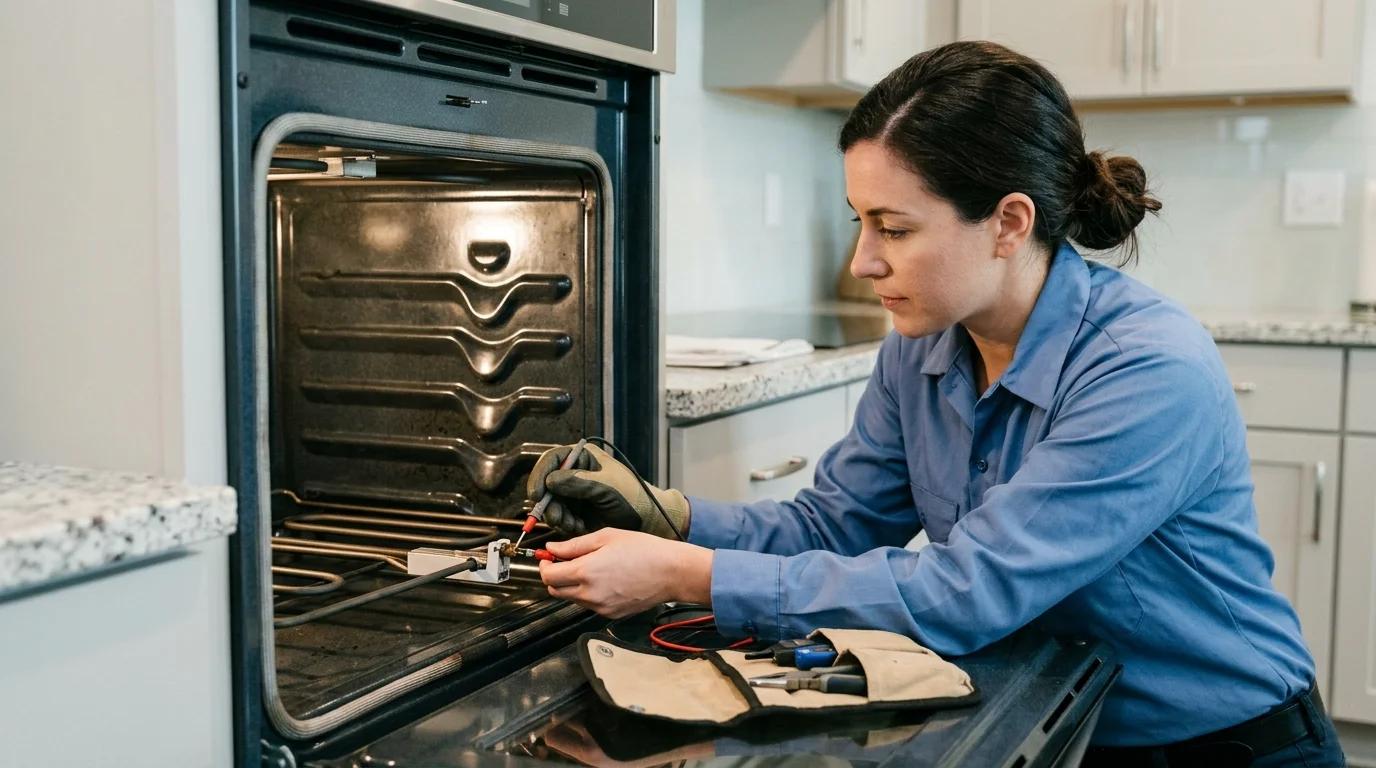
Common Cause Groups
Normal design and operating conditions
Hidden bake elements, larger cavities, higher set temperatures, multiple racks, a cold room, and some preheat algorithms can increase the time needed. If the oven has behaved this way since installation and cooking results are normal, compare the timing with the model’s own documentation before treating it as a failure.
Door openings or sealing problems
Opening the door releases heat. A door that does not close fully can create a constant heat loss. Check for an obvious obstruction and inspect the visible gasket for damage without removing it. Do not adjust hinges or latches unless the owner manual provides a user procedure.
Electric power-supply issue
An electric range can appear partly functional even when the supply is not correct. GE’s official long-preheat support page recommends verifying power when preheat becomes extremely long and specifically notes installation wiring as a consideration. Electrical supply testing belongs with a qualified person.
One heating source not contributing properly
Many ovens use more than one heat source during preheat. If one is not contributing, the oven may still warm but take much longer. In an electric oven, that can involve bake or broil heating circuits. In a gas oven, ignition and burner performance can matter. Do not touch energized elements or perform gas-system tests.
Temperature sensing or control problem
If the sensor reports an incorrect temperature or the control does not cycle heat correctly, preheat and final cooking performance can both change. A professional can compare sensor data, actual cavity response, and control output using the model’s service information.
Safe Checks a Homeowner Can Make
Run one controlled comparison. Start with a cool oven, select the normal bake mode, use a typical set temperature, leave the standard racks in the normal positions, and keep the door closed. Note how long it takes to signal. Repeat on another day under similar conditions if needed.
Check whether the oven door closes fully and whether the gasket is visibly torn or displaced. If the range was newly installed and has always preheated abnormally slowly, note that for the installer or service professional. For an electric oven, do not remove covers or measure live voltage yourself unless you are qualified to do electrical work.
Also observe what happens after preheat. Does the oven brown and cook normally? Does it struggle to reach the set temperature? Does the temperature swing dramatically? Does one mode behave differently from another? Those clues matter.
What Not to Conclude From Preheat Time Alone
Slow preheat does not prove the bake element is bad. It does not prove a gas igniter is weak. It does not prove the sensor needs calibration. Those are possible systems to test, not conclusions.
Likewise, one long cycle after a power interruption, heavy cooking session, cold-room condition, or door left open may not represent a repeatable fault. The pattern over comparable cycles is more useful.
What a Technician May Inspect or Test
A technician can verify the complaint under controlled conditions and compare the actual heating sequence with the model design. For an electric oven, testing can include supply voltage, heating-element circuits, relays, sensor response, wiring, and control output. For a gas oven, ignition timing, burner operation, temperature sensing, and control behaviour may be relevant.
The technician can also check whether the preheat signal is being interpreted correctly. If the oven signals early by design but reaches stable temperature normally, that is different from an oven that is truly underheating.
Repair or Replace Context
Preheat time alone is rarely enough to make a replacement decision. The useful questions are whether the oven reaches and holds temperature, whether the fault is isolated or part of several failures, the appliance age and condition, and the confirmed repair scope. Avoid making that decision from a guessed part.
If the diagnosis confirms a substantial repair, the repair-or-replace guide can help frame the next decision.
Track the Preheat Change Over Two or Three Comparable Cycles
If the oven is safe to use and still reaches normal temperature, compare two or three ordinary bake cycles rather than relying on one frustrating evening. Use the same mode and a similar setpoint, keep the door closed, and note the time to the preheat signal. You are looking for consistency, not a laboratory measurement.
If the oven is slow every time and the change is new, the complaint is reproducible. If one cycle is long and the next two are normal, note what was different about the long cycle. Room temperature, a recent self-clean cycle, door openings, rack arrangement, or a power interruption may explain the outlier.
Stop the comparison if the oven cannot reach temperature, has delayed gas ignition, trips a breaker, produces an electrical smell, or shows another safety warning. At that point, more timing tests add little value.
When to Request Appliance Repair
Request professional assessment when preheat has become consistently and significantly slower under similar conditions, when the oven also fails to reach or hold temperature, when an electric installation may have a supply issue, when a gas oven has abnormal ignition behaviour, or when the appliance shows an error, electrical smell, repeated breaker problem, or visible damage.
For related service information, see oven repair Toronto. If the range includes cooktop concerns, see stove repair Toronto. To submit the model, fuel type, preheat timing, and cooking-performance pattern, Request Appliance Repair.
Build a Better Preheat Record Before Service
Write down the mode, set temperature, starting condition, number of racks, approximate room condition, time to the preheat signal, and whether food cooks normally afterward. If the oven has multiple modes, note whether convection preheat behaves differently from standard bake.
A repeatable record helps separate a real performance change from a one-time long cycle and gives a technician a practical baseline to reproduce.
A useful final comparison is whether preheat and normal baking changed at the same time. If both changed together, tell the technician, because the shared timing can help separate a simple expectation issue from a real heating-performance change.
Oven Takes Too Long to Preheat: Practical Takeaway
When an oven is taking longer to preheat, start by comparing it with its own baseline under similar conditions: same mode, similar room conditions, door closed. Combine preheat timing with what happens after: does it bake normally, or does it also run cold? A change that is repeatable and recent warrants professional assessment. Model-specific power or heating-circuit tests are more useful than guessing at a part.
Need Appliance Repair?
Share the appliance, brand, address, symptoms and optional photos online. A contractor can review the request and contact you about availability and next steps.
Start Your Repair Request