
Single-Stage vs. Two-Stage Furnace: What Changes
Single Stage Vs Two Stage Furnace guide: learn the key details, compare options, check verified sources, and make a safer decision before you act.
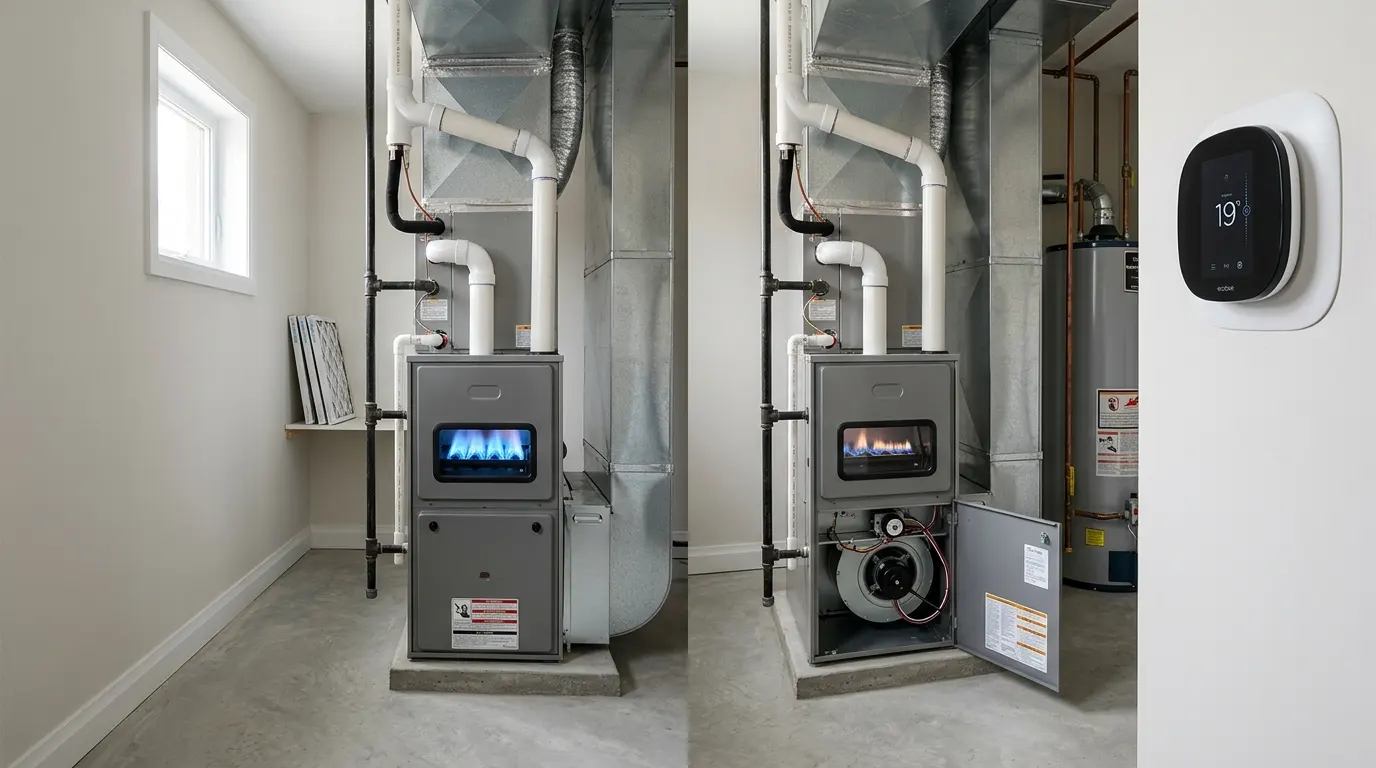
A single stage vs two stage furnace comparison is mainly a comparison of how the furnace delivers heat. A single-stage furnace generally operates at one full-output level whenever the thermostat calls for heat. A two-stage furnace can usually run at a lower output for milder heating demands and shift to a higher output when the home needs more heat.
That difference can affect temperature consistency, cycling, airflow and operating noise. It does not automatically determine annual fuel use, repair costs or the right choice for every home. Furnace staging is only one part of the system. Heat-loss calculations, equipment sizing, ductwork, insulation, thermostat controls and installation quality often have just as much influence on comfort.
A two-stage furnace may be worthwhile when a home has uneven temperatures, long heating seasons, multiple comfort zones or occupants who value steadier, quieter operation. A properly sized single-stage furnace may be entirely reasonable when the system is simple, the home is well balanced and the homeowner prefers a lower equipment and control cost. The best choice comes from matching the equipment to the home rather than treating two-stage operation as an automatic upgrade.
For a related next step, read furnace installation Mississauga.
Single-Stage and Two-Stage Operation Compared
| Feature | Single-stage furnace | Two-stage furnace |
|---|---|---|
| Heat output | One primary heating output when there is a call for heat | Usually a lower output and a higher output |
| Typical cycle behaviour | Often reaches the selected temperature with shorter, higher-output cycles | Can run longer at lower output before using the higher stage |
| Temperature consistency | May produce more noticeable swings if the system is oversized or airflow is uneven | May provide steadier room temperatures when the system is correctly sized and controlled |
| Air movement | Often delivers a stronger airflow during a heating cycle | Low-stage operation can deliver gentler airflow, depending on the blower and model |
| Noise | Full-output starts and operation may be more noticeable | Lower-stage operation may reduce perceived noise during ordinary heating calls |
| Controls | Generally uses simpler staging controls | May require compatible thermostat wiring, controls and equipment configuration |
| AFUE rating | Can have a wide range of efficiency ratings | Can have a similar or higher rating, but two-stage operation itself is not an AFUE rating |
| Installation considerations | Usually has a simpler control arrangement | Requires correct setup of staging, airflow and controls |
The table describes common arrangements, not a guarantee for every model. Some furnaces use variable-speed or multi-speed blowers, and those blower characteristics can change how staging feels in the home. A two-stage furnace with poorly configured airflow may not deliver the comfort expected from its equipment label.
How a Single-Stage Furnace Heats the Home
When a thermostat detects that the indoor temperature is below its setting, a single-stage furnace normally receives a call for heat and operates at its available heating output. It continues until the thermostat is satisfied, then shuts down. The furnace may modulate the blower during startup or shutdown, but its heating burner or heat-producing section generally has one operating stage.
This arrangement is straightforward. It can be easier to match with an existing thermostat and control system, and it may involve fewer staging-related components. A correctly sized single-stage furnace can heat a home effectively, especially when the duct system distributes air evenly and the building envelope does not have major insulation or air-leakage problems.
The possible drawback is that the furnace may deliver more heat than the home needs during many ordinary heating calls. The thermostat reaches its setting, the furnace stops, and the cycle repeats as the temperature falls again. That pattern can be more noticeable in a home with an oversized furnace, a poorly located thermostat or rooms that heat at different rates.
A single-stage furnace is not automatically inefficient or uncomfortable. Short cycling, cold rooms and large temperature changes should prompt an assessment of sizing, airflow, duct balance, thermostat location and insulation before the equipment type is blamed.
How a Two-Stage Furnace Changes the Cycle
A two-stage furnace has two available heating output levels. During a moderate heating demand, the system may begin and remain in low stage. If the home needs more heat, the thermostat or furnace controls can call for the higher stage. The exact sequence depends on the furnace, thermostat, control board and installation configuration.
Low-stage operation can allow the furnace to run for longer periods at a lower output. That gives the blower more time to distribute warmed air through the ductwork and can reduce the repeated feeling of a strong blast of heat followed by a cool period. Longer cycles may also help reduce temperature differences between rooms, although the result depends heavily on duct design and the home’s insulation and air-sealing.
Two-stage equipment does not necessarily run in low stage all the time. On a very cold day, after a significant temperature setback or when the home loses heat quickly, the higher stage may operate. A two-stage furnace is therefore not a promise of gentle low-output heating under every condition. It is a way for the system to choose between two output levels when its controls and setup support that behaviour.
Some installations use a basic thermostat that controls the first and second stages differently from an advanced communicating control. The furnace may also have specific requirements for wiring, airflow settings and staging delays. The equipment’s published installation instructions and the actual control configuration matter more than the phrase “two-stage” by itself.
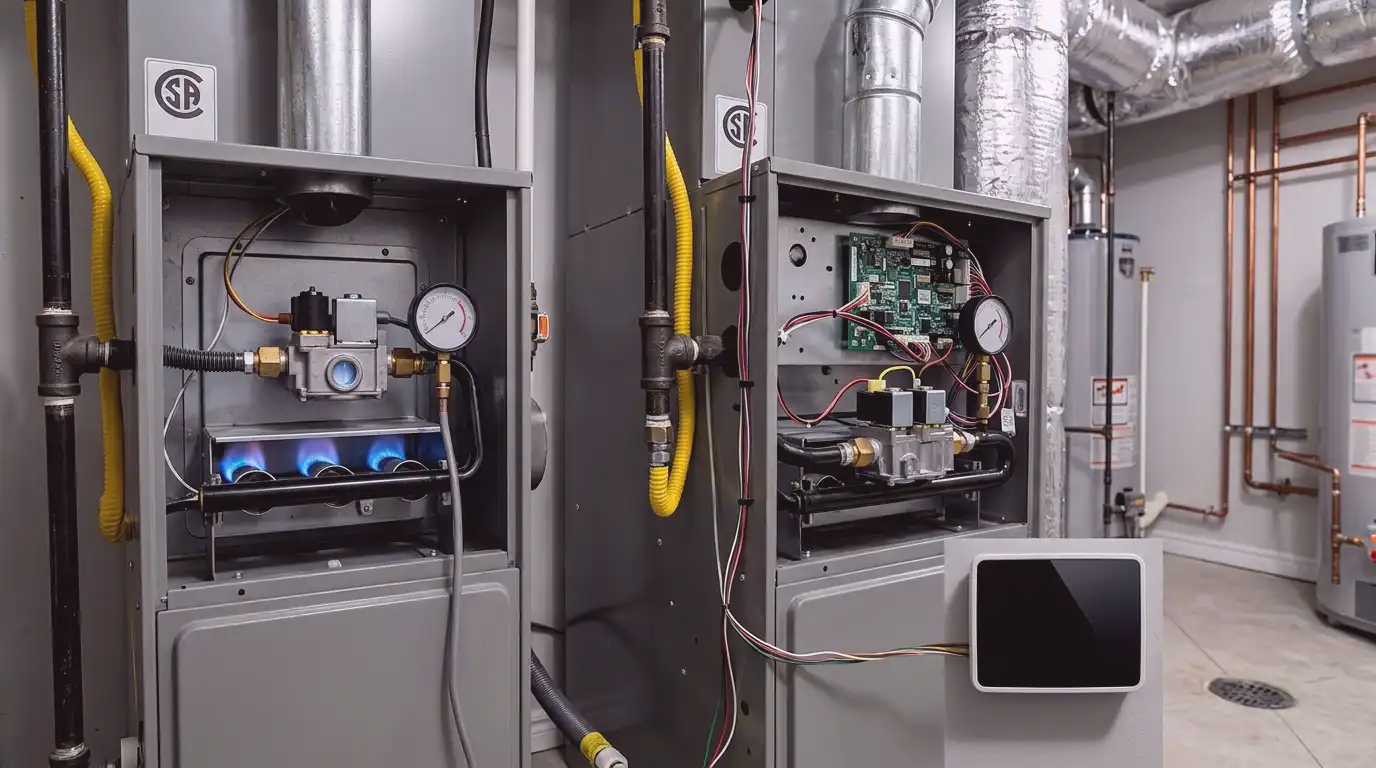
Comfort Is Usually the Clearest Difference
For many homeowners, comfort is the main reason to consider two-stage operation. Low-stage heating can reduce the contrast between a cold room and the warm air coming from a register. It may also allow more continuous circulation during a heating call, which can make the indoor temperature feel steadier.
This can be useful in homes with open living areas connected to cooler rooms, rooms over garages, additions, large windows or more than one floor. A lower output may give the duct system more time to distribute heat before the thermostat ends the call. In some homes, that produces a more even experience than a single full-output cycle.
There are limits. A two-stage furnace cannot correct every comfort problem. A closed register, blocked filter, undersized return, leaking duct, weak insulation layer or poorly balanced branch duct can still leave a room cold. If the thermostat is in a location that warms quickly, it may stop the furnace before distant rooms catch up. These issues should be investigated before assuming that changing furnace staging will solve them.
Comfort also includes humidity, airflow and sound. A furnace replacement does not automatically create a particular indoor humidity level, and staging should not be presented as a guaranteed indoor air quality or allergy solution. Those outcomes depend on the full HVAC system, filtration, ventilation, moisture control and building conditions.
Noise and Airflow
A single-stage furnace commonly starts and operates at its full heating output. Depending on the blower design and ductwork, occupants may notice stronger airflow from the registers or a more obvious change in sound when the furnace starts.
When a two-stage furnace operates in its lower stage, airflow and sound may be less noticeable. The lower output can make ordinary heating calls feel less abrupt. This does not mean every two-stage furnace is quiet, or that every single-stage furnace is loud. Blower design, cabinet construction, return-air restrictions, duct velocity and installation details all affect the sound heard in living spaces.
Airflow that is too high can create register noise, drafts and pressure problems. Airflow that is too low can affect heat transfer, comfort and equipment operation. The installer must configure the blower and duct system according to the furnace requirements. A staging upgrade without proper airflow verification can leave the homeowner with a more complex system but no meaningful comfort improvement.
Two-Stage Does Not Mean Higher AFUE
Staging and AFUE describe different characteristics. Staging describes how many heating output levels the furnace can use. AFUE, or annual fuel utilization efficiency, describes the furnace’s rated efficiency under a defined test method. A two-stage furnace can have a high AFUE rating, but two-stage operation alone does not establish that rating.
Two furnaces with different staging arrangements can have similar AFUE ratings. Conversely, a two-stage model may have a higher rating than a particular single-stage model because of other design features, such as its heat exchanger arrangement or venting system. The comparison should therefore identify the actual AFUE ratings of the models being considered rather than assuming the staging label answers the efficiency question.
Actual fuel use also depends on factors outside the furnace label. The home’s heat loss, outdoor temperature, thermostat settings, operating schedule, duct leakage, filter condition, insulation and installation quality all affect consumption. A higher-rated furnace may not deliver its expected performance if it is oversized, poorly commissioned or connected to a duct system with serious airflow losses.
There is no universal fuel-saving percentage or payback period that applies to every two-stage installation. Any estimate should be based on the specific models, fuel use, house characteristics and expected operating conditions. Be cautious with claims that staging guarantees a particular reduction in energy bills.
Ontario Homes and Cold-Weather Demand
Ontario homes can experience mild shoulder-season conditions as well as periods of substantial winter heating demand. During milder weather, the lower stage of a two-stage furnace may be able to meet the load for longer periods. During colder weather, the higher stage may be needed more often.
The benefit depends on how the home loses heat. A well-insulated home with moderate and predictable heat loss may spend much of its heating season in lower demand. A drafty home, an older addition or a house with significant window and insulation differences may have more uneven room temperatures, but the underlying solution may involve the building envelope or duct system rather than staging alone.
Home layout matters as well. A compact bungalow with a well-balanced duct system may not experience the same comfort difference as a tall home with multiple floors and long duct runs. A thermostat on the main floor cannot directly measure the temperature in every bedroom. Two-stage operation may help distribute heat more gradually, but it cannot replace zoning or correct a badly balanced system.
Cold-weather performance should be discussed using the furnace’s rated capacity and the home’s calculated heat loss. The furnace must be able to meet the design heating requirement without being substantially oversized for most of the season. Equipment selection based only on the old furnace’s input rating or the home’s floor area can produce an unsuitable result.
When a Single-Stage Furnace May Be a Reasonable Choice
A single-stage furnace may be appropriate when the home has relatively even temperatures, the ductwork is in good condition and the equipment can be sized properly. It can also make sense when the homeowner values simpler controls, has a limited equipment budget or is replacing a system where the existing thermostat and wiring favour a straightforward configuration.
For a smaller or compact home with short duct runs, the difference in perceived comfort may be modest. A properly sized single-stage furnace can provide reliable heating without the added staging controls and configuration requirements of a two-stage system.
The important qualification is “properly sized.” If the current furnace cycles frequently, replacing it with another single-stage unit of similar oversized capacity may preserve the problem. The contractor should assess heat loss, available equipment sizes, duct capacity and the thermostat location. A simpler furnace that is correctly matched can be a better result than a more advanced furnace installed without attention to the rest of the system.
A single-stage choice should also account for the furnace’s AFUE rating, venting requirements, blower type, filter arrangement, service access and expected operating pattern. Staging is one decision among several, not a substitute for comparing the complete system.
When Two-Stage Operation May Be Worth Considering
Two-stage operation may deserve consideration when steady comfort is a high priority and the home frequently needs less than the furnace’s maximum output. It may be especially useful when occupants notice temperature swings, strong register airflow or repeated starts and stops during ordinary heating weather.
It can also be a suitable option for a larger or multi-level home when the duct design and controls can take advantage of longer, lower-output cycles. The equipment may be more useful when paired with a compatible thermostat and a blower arrangement that supports the intended airflow.
That does not make two-stage equipment the automatic best choice. The additional equipment and control complexity may not provide much value if the ductwork is inadequate, the furnace is still oversized or the thermostat cannot control the stages as intended. A professional recommendation should explain the expected comfort benefit in the specific home and identify any work needed to support it.
Installation Details That Affect the Result
The furnace must be selected and installed as a complete heating system. Important questions include:
- What is the home’s estimated heat loss at the applicable outdoor design condition?
- Is the proposed furnace capacity appropriate rather than simply matched to the old unit?
- Can the existing supply and return ductwork handle the required airflow?
- Are there duct leaks, restrictions or balancing problems that should be corrected?
- Does the thermostat support the furnace’s staging requirements?
- Does the wiring provide the necessary control connections?
- What blower speeds and staging delays are specified for the installation?
- Will the filter, return-air path and cabinet access support proper operation and maintenance?
- Have combustion, venting, electrical and safety requirements been addressed by appropriately qualified professionals?
These details are particularly important for gas equipment. Combustion setup, venting, gas connections and electrical work are not suitable areas for improvised homeowner procedures. A homeowner can describe comfort symptoms and ask questions about the proposed design, but installation and commissioning should follow the applicable equipment instructions and local requirements.
Carrier’s overview of two-stage furnace operation describes the practical distinction between one full-output setting and lower and higher operating stages. It is useful background when reviewing a proposal, but the model-specific installation instructions and the home’s design requirements still control the final equipment choice. See Carrier’s explanation of two-stage furnaces for the manufacturer’s general description.
Questions to Ask Before Choosing
A clear proposal should explain more than the number of stages. Ask the contractor:
- What heat-loss calculation supports the proposed furnace size?
- What comfort issue is the second stage expected to improve in this home?
- What are the AFUE ratings of the models being compared?
- How will the thermostat control low and high stage?
- Does the existing wiring support the proposed control arrangement?
- Will the blower settings be adjusted for the home’s ductwork?
- Are there return-air, supply-air or duct-balancing issues that should be addressed first?
- How often is the higher stage expected to operate under normal conditions?
- What maintenance access and filter configuration will the new installation provide?
- Which parts of the proposal are equipment upgrades and which are required installation work?
Ask for fuel-saving estimates to be identified as estimates rather than guarantees. A responsible comparison should state the assumptions behind any projected operating cost, including the furnace ratings, fuel price assumptions, usage pattern and building conditions. Current prices, rebates and incentive eligibility should be checked separately because they can change and may depend on the exact equipment and installation.
How to Compare the Total Value
The lower purchase price is not the only consideration, but a higher equipment cost is not automatically justified either. Compare the expected comfort improvement, efficiency rating, control requirements, ductwork condition, maintenance needs and likely operating pattern.
A two-stage furnace may offer more flexibility during moderate heating demand. That flexibility has the most practical value when the rest of the system can use it. If a home has major duct restrictions or a large room-to-room temperature imbalance, correcting those conditions may produce more noticeable improvement than changing from one stage to two.
A single-stage furnace may offer a simpler and more economical installation when the existing system is well designed and the homeowner’s comfort needs are already being met. It may also leave more budget available for improvements such as duct sealing, return-air work, insulation or thermostat replacement, depending on the home’s priorities.
Replacement decisions should be based on the complete installation and the condition of the home. Equipment labels provide useful information, but they do not replace sizing and system assessment.
The Practical Answer
The practical difference in a single stage vs two stage furnace is that the two-stage model can adjust between a lower and higher heating output, while the single-stage model generally operates at one full heating output. Two-stage operation may improve comfort by supporting longer, gentler cycles and may reduce noticeable airflow and sound during ordinary calls for heat.
It does not guarantee lower fuel bills, a specific payback period, a longer furnace life or better comfort in every home. Two-stage operation is also separate from AFUE efficiency. The right decision depends on the home’s heat loss, layout, insulation, ductwork, thermostat, budget and comfort priorities.
Before approving an upgrade, ask for the proposed furnace size, AFUE rating, control arrangement and airflow setup in writing. Ask which existing comfort problem the change is meant to address and whether ductwork or insulation work should be considered at the same time. A balanced recommendation may be a properly sized single-stage furnace, a two-stage furnace or another system configuration. The equipment should fit the home, not the other way around.
Need Appliance Repair?
Share the appliance, brand, address, symptoms and optional photos online. A contractor can review the request and contact you about availability and next steps.
Start Your Repair Request