
Washing Machine Smells Musty: Causes and Prevention
Washing Machine Smells Musty guide: learn the key details, compare options, check verified sources, and make a safer decision before you act.
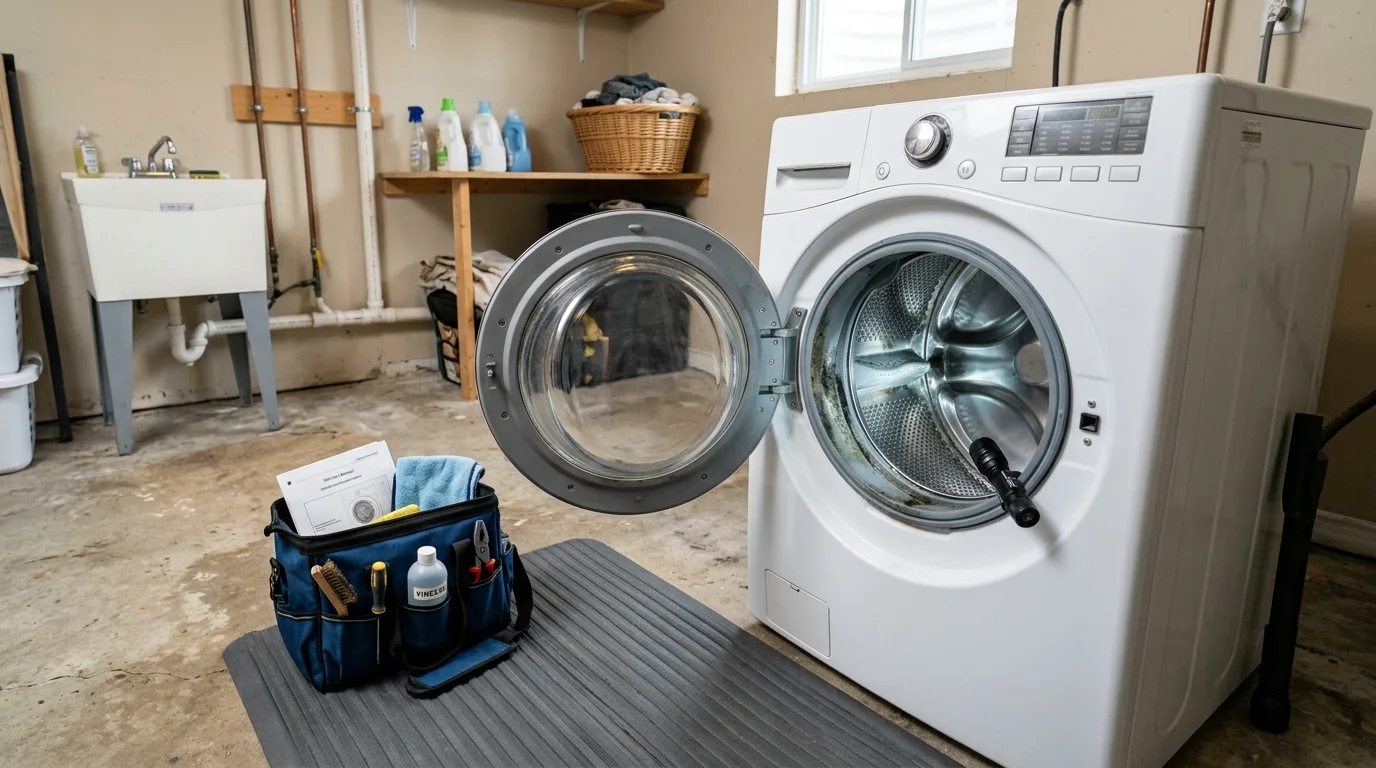
The most common mistake when a washing machine smells musty is masking the odour with more detergent or fragrance. Extra product can leave more residue behind. Start by cleaning the areas that stay damp or collect detergent, then run the washer’s approved cleaning cycle and change the habits that keep moisture trapped. If the smell quickly returns, drainage, residue buildup, or a hidden maintenance problem may need closer inspection.
Washing Machine Smells Musty: Start With the Moisture and Residue
A musty washer usually develops because moisture and residue are staying in places that do not dry well. The drum may look clean while detergent film, lint, soil and water remain around a front-load door gasket, dispenser, pump-filter area, tub surfaces or other internal passages.
Whirlpool’s current washer-odour guidance identifies factors such as improper cleaning, too much or the wrong detergent, wet laundry left in the machine and a dirty dispenser. GE also notes that persistent sewage-like odour can point to the household drain rather than the washer itself.
That distinction matters. A musty smell from damp residue needs a different solution from a sewer-gas smell at the standpipe or a burning electrical smell. Before cleaning, identify what the odour resembles and where it seems strongest.
Before You Start Cleaning
Empty the washer completely. Check pockets, the bottom of the drum, the gasket folds on a front-loader and the detergent dispenser for anything left behind.
Then find the care-and-cleaning section of the owner’s manual. Washers do not all use the same cleaning products or cycles. Some manufacturers allow liquid chlorine bleach in specific cleaning procedures, while others specify a dedicated washer cleaner. Follow the model instructions rather than combining internet recipes.
Never mix chlorine bleach with ammonia, vinegar, acids or other cleaners. If you used one product, rinse the area and follow the manufacturer’s directions before using anything else. More chemicals do not mean a cleaner washer.
Step 1: Remove Wet Laundry and Let the Washer Air Out
Wet clothing left in the drum keeps humidity high and can make both the washer and the laundry smell stale. Remove finished loads promptly instead of using the washer as a hamper.
After the load is removed, leave the door or lid in the position recommended by the manufacturer so moisture can escape. For many front-load machines, a slightly open door helps the gasket and drum dry. Do not leave a door open where it creates a safety issue for children, pets, or a narrow walkway.
If airing the machine out noticeably reduces the smell, moisture retention is part of the problem. It still makes sense to clean the residue that has already formed.
Step 2: Clean the Door Gasket on a Front-Load Washer
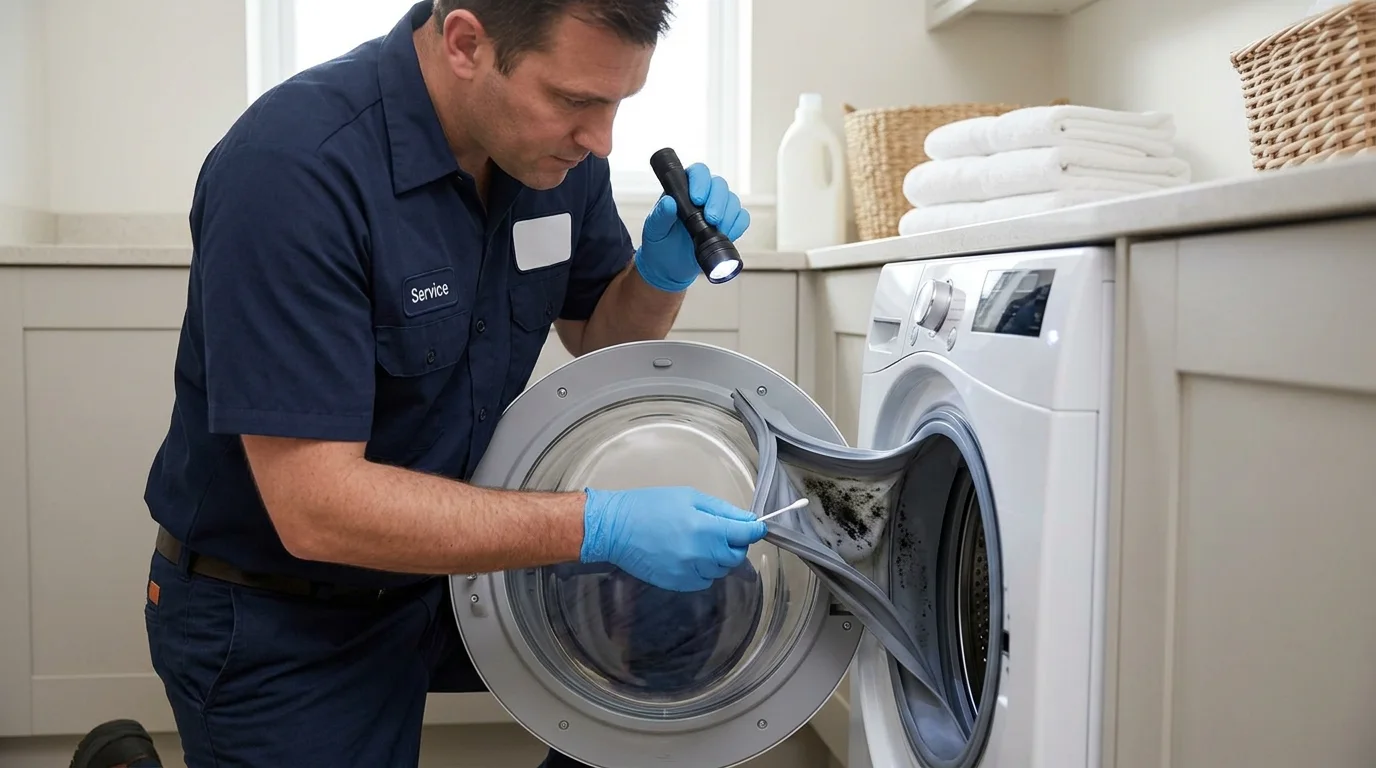
Front-load door gaskets have folds designed to contain water during the cycle. Those folds can trap hair, lint, small objects, detergent residue and moisture.
With the washer off, gently inspect the accessible gasket folds. Remove loose debris and wipe the surfaces using the cleaning method approved for your model. GE’s front-load guidance, for example, describes cleaning the gasket and then wiping away cleaning solution with warm water.
Look for black residue, slime, standing water, coins, hairpins or fabric caught in the folds. Do not use sharp tools that can puncture the rubber. A damaged gasket can turn an odour complaint into a leak.
Step 3: Clean the Detergent and Softener Dispenser
Detergent drawers are easy to overlook because the front surface may look clean while product residue collects behind it. Thick fabric softener and detergent can leave a sticky film that holds moisture and soil.
If the dispenser is removable according to the manual, take it out and clean it as directed. Rinse away old product, clean the accessible housing and let the parts dry before reinstalling them.
Also check your dosing habits. High-efficiency washers are designed to work with low-sudsing HE detergent. Using too much detergent can leave residue rather than making clothes cleaner. The correct amount depends on the detergent, load, soil level and water conditions, so use the product and appliance guidance rather than filling to the maximum line automatically.
Step 4: Run the Washer’s Cleaning Cycle
Many modern washers have a Clean Washer, Tub Clean or Self Clean cycle designed specifically for internal maintenance. Use the cycle and cleaning product specified for the model.
Whirlpool and GE both publish model-family guidance that includes regular tub-cleaning routines. The important rule is to use the washer’s own procedure. Do not add laundry to the cleaning cycle, and do not assume that a normal hot wash with extra detergent is an equivalent substitute.
After the cleaning cycle, wipe away any loosened residue that is accessible and allow the drum and gasket area to dry.
Step 5: Check the Drain-Related Areas Your Model Makes Accessible
If the washer has an owner-accessible pump filter, trapped lint and debris can hold dirty water and contribute to odour. Not every machine has the same filter design, and some filters are not meant for routine homeowner access.
Follow the manual before opening any drain-filter area. Be prepared for retained water. If the machine recently ran a hot cycle, allow the water to cool first.
If the washer smells worse near the drain hose or standpipe than inside the drum, the source may be outside the washer. A plumbing or standpipe issue can create an odour that seems to come from the appliance.
How to Tell Where the Smell Is Coming From
Musty smell strongest at the gasket or drum. Moisture and detergent residue are the first places to look.
Odour strongest at the dispenser. Product buildup or standing water in the dispenser path may be contributing.
Smell becomes obvious after the washer has been closed for several days. Poor drying and trapped moisture are likely part of the pattern.
Sewage-like smell strongest near the standpipe. The household drain or venting system may need attention. GE specifically distinguishes drain-related odour from ordinary washer residue.
Burning or hot-electrical smell. Stop using the washer. That is not a cleaning problem and should be professionally assessed.
Why Too Much Detergent Can Make the Smell Worse
Detergent has to be diluted and rinsed away. When the amount is excessive for the load and water conditions, residue can remain on internal surfaces. Fabric softener can leave its own coating.
That residue becomes a surface for lint, body oils and soil to collect. Add moisture and limited airflow, and the washer can smell stale even if the visible stainless drum looks clean.
This is why adding more scented product is often counterproductive. It may temporarily cover the odour while increasing the residue that caused it.
Common Mistakes to Avoid
Mixing cleaning chemicals. Never combine bleach with vinegar, ammonia, acids or other cleaners. Use one manufacturer-approved method at a time.
Using dish soap in the washer. Hand-dishwashing liquid can create excessive suds and is not a substitute for HE laundry detergent or washer cleaner.
Ignoring the gasket because the drum looks clean. Front-load gasket folds can hold debris where it is not visible from across the room.
Keeping the washer tightly closed while damp. If the manufacturer allows ventilation, letting the machine dry between loads helps prevent odour from returning.
Using the maximum detergent amount for every load. More product can mean more residue. Dose for the actual load and detergent concentration.
Cleaning the washer but not the drain area. A standpipe or plumbing odour can return immediately because the source was never inside the drum.
Prevention: What to Do After the Smell Is Gone
- Remove laundry promptly. Do not leave wet loads in the drum for long periods.
- Let the washer dry. Ventilate the drum and gasket as allowed by the manufacturer.
- Wipe visible moisture and residue. Pay attention to the gasket, glass and dispenser.
- Use the correct detergent type and amount. HE machines should use HE detergent.
- Run the model’s cleaning cycle on the maintenance schedule in the manual.
- Keep the dispenser clean. Rinse out accumulated product before it hardens.
- Address drainage problems. Water that is not leaving the washer normally can create odour and other performance issues.
After a cleaning cycle, check the washer again after it has been closed for a day or two. If the smell returns immediately, there may be residue deeper in the system or a drain-related source that routine cleaning is not reaching.
What a Technician May Inspect or Test
When normal cleaning does not solve the problem, a technician looks beyond the visible drum. The inspection may include the drain path, pump area, hoses, dispenser path, gasket condition and any accessible areas where stagnant water or residue can collect.
If the washer is also slow to drain, leaves water behind or produces recurring drain errors, those symptoms should be evaluated together. A drainage problem can keep dirty water in the system and make odour return after cleaning.
The technician can also determine whether the smell is actually coming from the washer. If the appliance is clean but the odour is strongest at the standpipe, a plumbing issue may need to be addressed instead of replacing washer parts.
When Musty Odour Is More Than a Cleaning Problem
A washer that smells musty but otherwise operates normally often improves with cleaning and better drying habits. The situation changes when odour appears with water left in the tub, leaking, recurring error codes, pump noise, slow drainage or visible damage to the gasket.
Those extra symptoms suggest that the washer may not simply be dirty. The machine may be retaining water where it should not, or a component may not be allowing the washer to drain and dry normally.
If the Washer Smells Fine Empty but Clothes Smell Musty
That pattern can change where you look. If the empty drum smells normal but freshly washed clothing comes out stale, check whether loads are sitting wet after the cycle, whether detergent is being overdosed, whether the machine is rinsing and draining fully, and whether the laundry itself entered the washer with persistent odour.
Also compare small and large loads. If heavy loads consistently come out smelling worse, the washer may be overloaded or unable to rinse and extract water as effectively. A cleaning cycle will not correct a load-size or spin-performance problem.
If clothes stay unusually wet at the end of the cycle, treat that as a separate clue. Poor final extraction can leave fabrics damp for longer and can make odours more noticeable even when the washer interior has been cleaned.
What to Check After the Cleaning Cycle
Open the door or lid and smell the washer before adding laundry. Check the gasket, dispenser and drum separately. Then run a normal load using the correct detergent dose and confirm that the washer drains fully and the clothes finish at the expected dampness for the selected spin speed.
If the odour is gone immediately after cleaning but returns within a few loads, focus on the habits and systems that allow residue or water to build again. A repeated pattern is more diagnostic than one strong smell after months without maintenance.
Washing Machine Smells Musty: Frequently Asked Questions
Why does my washer smell even after I run a hot cycle?
A normal wash cycle may not clean the gasket, dispenser, pump-filter area or other places where residue collects. Use the washer’s dedicated cleaning procedure.
Should I add more detergent if the washer smells bad?
No. Excess detergent can leave more residue. Use the correct detergent type and dose for the load.
Can I use vinegar and bleach together?
No. Never mix bleach with vinegar, ammonia, acids or other cleaners. Follow one manufacturer-approved cleaning method at a time.
Why does a front-load washer smell more around the door?
The gasket folds can trap moisture, lint and detergent residue. Cleaning and drying that area is important.
Can the drain cause a musty or sewer smell?
Yes. If the odour is strongest near the standpipe or resembles sewage, the household drain may be the source rather than the washer.
How do I keep the smell from returning?
Remove wet laundry promptly, ventilate the washer when appropriate, keep the gasket and dispenser clean, use the correct detergent amount and run the model’s maintenance cycle as directed.
When to Request Appliance Repair
Request professional assessment if the smell keeps returning despite proper cleaning, the washer retains water, drains slowly, leaks, shows recurring error codes, or the gasket or other parts are visibly damaged. A burning smell should be treated as a separate stop-use issue rather than a musty-odour problem.
For broader service information, see washer repair Toronto. To arrange an assessment, Request Appliance Repair. Before the visit, note whether the smell is strongest in the drum, gasket, dispenser or standpipe and whether any drainage symptoms occur at the same time.
Need Appliance Repair?
Share the appliance, brand, address, symptoms and optional photos online. A contractor can review the request and contact you about availability and next steps.
Start Your Repair Request