
Washer Not Draining: Pump, Filter, Hose and Lock Clues
Washer not draining? Standing water can point to a drain hose, clogged filter, or pump problem. Learn the key checks and when to call for appliance repair.
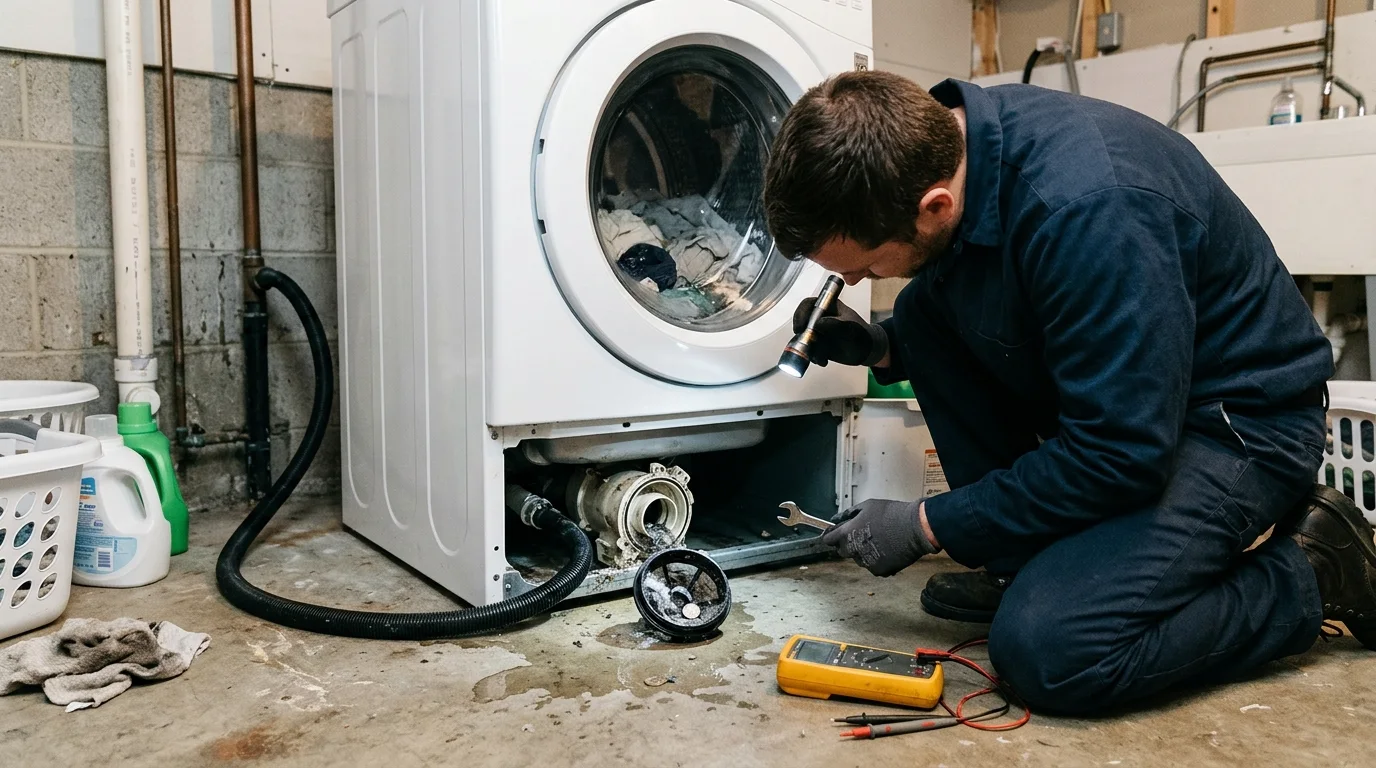
A washer not draining can be caused by a kinked or incorrectly installed drain hose, a clogged filter on models that have an accessible one, a blocked or failing drain pump, excessive suds, cycle or load issues, or a lid or door system that is preventing the machine from advancing normally. Standing water does not prove the pump has failed. The most useful clues are how much water remains, whether you hear the pump, and what the washer does immediately before it stops.
First Decide What “Not Draining” Actually Looks Like
There is a difference between a washer that never moves water, one that drains very slowly, and one that pumps water out but leaves clothes unusually wet. Those symptoms overlap, but they do not start in exactly the same place diagnostically.
The tub is still full of water and there is no obvious drain attempt. The washer may not be advancing to the drain step, the lid or door system may not be confirming a safe state, the pump may not be receiving power, or a control fault may be involved.
For a related next step, read washer dryer repair Toronto.
You hear a pump or humming sound but little water leaves. A blockage in the filter, pump inlet, hose, or household drain becomes more plausible. A humming sound alone does not prove the pump motor is bad. A pump can sound active while working against a restriction.
Water leaves, but very slowly. Look closely at the drain hose and, on applicable front-load machines, the pump filter. Partial restrictions often show up as a cycle that takes much longer than normal to drain rather than a complete stop.
The tub is mostly empty but clothing is soaking wet. That may be more of a spin or load-balance problem than a true no-drain problem. The machine may have drained water but reduced or skipped high-speed spin.
Water disappears and then seems to return. Drain-hose installation and siphoning deserve attention. A hose pushed too far into a standpipe or sealed incorrectly can disturb normal draining and filling behaviour.
Why Hose Installation Matters More Than It Looks
The drain hose is not just a pipe that points toward a drain. Its height, insertion depth, air gap, routing, and freedom from kinks all affect how the washer moves water.
Samsung Canada’s current washer drainage guidance tells owners to inspect hose insertion, height, kinks, bends, damage, and airtight standpipe connections. Whirlpool also warns that a hose extending too far into a standpipe can allow water to siphon back or create abnormal flow.
A washer that was recently installed, moved, pushed closer to the wall, or connected to a different standpipe deserves an especially careful hose check. If the problem began right after one of those changes, that timing is useful evidence.
Common Cause Groups
Drain-Hose Restriction or Installation Problem
A kink behind the washer can reduce flow without stopping it completely. The hose can also be compressed between the appliance and wall. At the standpipe, incorrect insertion or sealing can create siphoning or drainage behaviour that looks like a pump problem.
Check only the visible, accessible hose. Do not pull aggressively on plumbing connections or disconnect a hose full of water without being prepared for spillage.
Pump Filter or Debris Restriction
Many front-load washers have an accessible pump filter designed to catch lint and small objects before they reach the pump. Coins, hair pins, small socks, pet hair, and other debris can reduce the pump’s ability to move water.
Not every washer has the same arrangement. Samsung’s current guidance specifies the removable pump-filter step for front loaders, not top loaders. Whirlpool also notes that filter locations vary, some filters are not accessible, and some models do not have a homeowner-serviceable filter at all. That is why the owner manual should decide whether filter access is an appropriate homeowner step for your specific machine.
If your model does have an accessible front-load filter, be prepared for retained water before opening it. Samsung Canada warns that water from recent hot cycles can be hot enough to create an injury risk and recommends allowing it to cool first. Use the model instructions, a shallow container, and towels rather than simply unscrewing a filter cap without a plan for the water behind it.
Drain Pump Problem
The pump may be mechanically blocked, electrically faulty, damaged by debris, or unable to move water effectively. The symptom alone cannot tell you which. A pump that makes noise may still be obstructed. A silent pump may be failed, but it may also not be receiving the command or power it needs.
That is why “I hear humming” and “I hear nothing” are useful observations, not diagnoses. A technician can combine those observations with electrical and flow testing.
Cycle, Load, and Detergent Issues
Whirlpool notes that low-spin settings, bulky or unbalanced loads, and excessive detergent can contribute to water remaining in the washer. Too many suds can interfere with the machine’s normal drain and spin sequence, especially in high-efficiency washers.
If the washer drains normally with a smaller balanced load after the settings and detergent amount are corrected, there may be no failed drain component at all.
Lid, Door, and Lock Signals
Washers use lid or door systems to confirm that the machine can safely continue through different parts of the cycle. On a top-loader, a lid that is not fully closed can prevent normal operation. Front-load models use a door-lock system that interacts with the control during wash, drain, and spin stages.
A door or lid problem can therefore appear beside a drain complaint even though the hose and pump are clear. Look for a door that does not latch normally, a lock indicator that behaves differently than usual, or a cycle that repeatedly pauses before the drain or spin stage.
Safe Checks a Homeowner Can Make
Start with the checks that do not require cabinet disassembly.
- Pause the cycle and note the water level. Knowing whether the tub is full, half full, or nearly empty helps distinguish drain failure from poor spin performance.
- Check the selected cycle and spin setting. Confirm that a low-spin or specialty cycle is not responsible for excess water retention.
- Reduce and rebalance the load. A single bulky item can prevent the washer from reaching normal spin speed.
- Inspect the visible drain hose. Look for kinks, crushing, damage, or a recent installation change.
- Check the lid or door closure. Make sure it closes normally and remove any clothing caught in the opening.
- Clean the pump filter only if your model provides homeowner access. Follow the owner manual. Let hot wash water cool before opening an applicable front-load filter area.
- Record any error code. Use the model manual to understand which system the code relates to. Do not assume the code names the failed part.
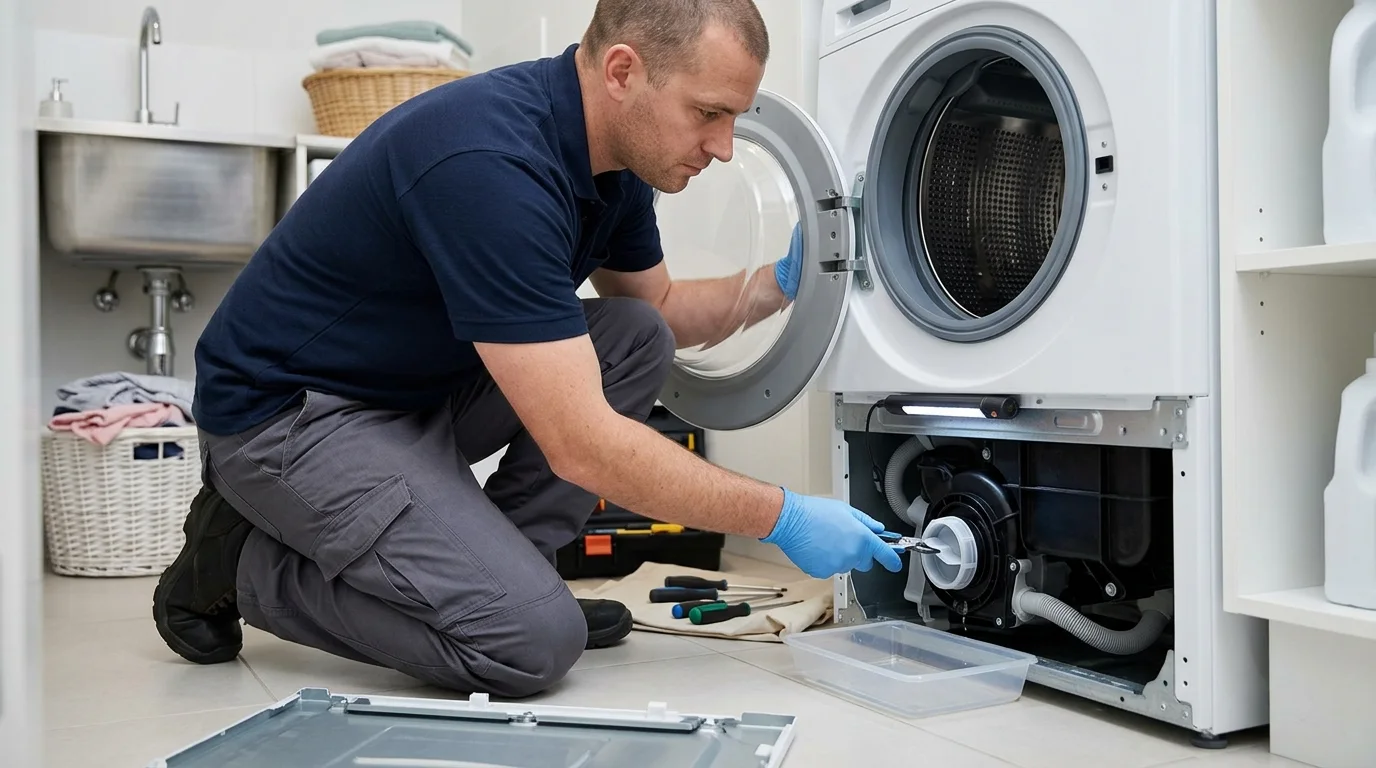
If standing water is near electrical components, the washer is leaking onto the floor, there is a burning smell, or the appliance repeatedly trips a breaker, stop use and arrange professional assessment rather than continuing to run drain attempts.
What the Washer’s Sound Can Tell You
Sound is useful when combined with water movement. A smooth pump sound with strong water flow suggests the basic drain path is working. A rough rattle may mean debris is contacting the pump area. A steady hum with almost no water movement can indicate a restriction or a pump that cannot turn normally.
Silence during the expected drain stage is also useful information, but it does not automatically condemn the pump. The control, wiring, lid or door signal, or another condition may be preventing the pump from being energized.
Listen from outside the cabinet. Do not remove panels or reach near a pump while the washer is powered.
What a Technician May Inspect or Test
A professional diagnosis follows the water path from the tub to the household drain rather than starting with a replacement part.
The technician may verify drain-hose routing and standpipe conditions, inspect the pump filter and pump inlet for debris, and confirm that the pump can move water at a normal rate. If a blockage is not obvious, the pump can be evaluated electrically and mechanically using the procedure for the specific model.
The lid or door-lock system may also be checked to confirm that the control is receiving the correct safe-to-run signal. On electronically controlled washers, stored diagnostic information or model-specific test modes can help determine whether the control is commanding the drain system.
That sequence matters because a clear hose with a good pump can still leave water behind if the cycle is not reaching the proper drain or spin stage. The reverse is also true: replacing a control will not fix a sock lodged in the pump inlet.
Do Not Forget the Household Drain
The washer can be functioning normally and still struggle to empty if the household standpipe or laundry drain is restricted. A slow standpipe may accept water at first and then back up as the pump reaches full flow. The result can look like a washer leak, a partial no-drain problem, or water returning around the hose connection.
Watch the standpipe or laundry sink during a drain cycle from a safe distance. If the washer pumps strongly but the household drain rises rapidly, gurgles, or overflows, the plumbing path deserves attention. That is different from a washer that makes little drain sound and sends almost no water out of the hose.
Do not seal the drain hose more tightly to stop a backup. An airtight connection can create additional drainage and siphoning problems. If the household drain cannot accept the washer’s discharge, the plumbing issue should be corrected rather than forcing the appliance connection to contain the overflow.
Manage Standing Water Before It Becomes a Floor Problem
A washer full of water can release a surprising amount if a filter cap, hose, or pump connection is opened. Before any model-approved front-load filter cleaning, protect the floor, use a shallow container, and follow the appliance instructions for draining retained water in small amounts.
If the machine is in a condo, upper floor, finished basement, or other location where a spill could damage surrounding property, the safer choice may be to stop troubleshooting and request service. Preventing a few litres of water from becoming a ceiling or flooring repair is more important than reaching the pump filter yourself.
Never tip the washer, remove a lower panel, or disconnect an internal hose while the machine contains water unless you are trained and prepared to control the release. A straightforward drain complaint can become a much larger problem if water reaches electrical parts or finished surfaces.
What to Tell the Technician
Useful details include whether the washer is front-load or top-load, how much water remains, whether you hear humming or pumping, whether the drain hose was recently moved, and whether the household standpipe backs up. Also mention any recent heavy or unbalanced load, excessive suds, or door-lock behaviour that changed at the same time.
That combination of where the water stops and what the washer does next is more diagnostic than simply reporting that the machine “won’t drain.”
Repair or Replace: A Drain Fault Is Not Enough Information
A no-drain complaint can range from a simple hose or filter issue to a pump, lock, wiring, or control repair. That range is too wide for a useful repair-or-replace decision before diagnosis.
Consider the confirmed repair, the washer’s overall condition, whether other major faults are present, and the realistic replacement option. Avoid assuming that age alone decides the outcome, and avoid applying a fixed percentage rule without an actual estimate.
When to Request Appliance Repair
Request professional help if the washer remains full of water after the accessible hose and filter checks, if the pump repeatedly hums without moving water, if the lid or door will not lock or release normally, if a drainage error keeps returning, or if you are not comfortable managing retained water safely.
For broader service information, see washer repair Toronto. To arrange an assessment, Request Appliance Repair. Before the visit, note whether the pump makes sound, how much water remains, whether the problem affects every cycle, and whether anything changed with the drain hose or installation before the issue began.
Need Appliance Repair?
Share the appliance, brand, address, symptoms and optional photos online. A contractor can review the request and contact you about availability and next steps.
Start Your Repair Request