
Samsung Washer 4E Error: Water Fill Problems
Samsung Washer 4E Code guide: learn the key details, compare options, check verified sources, and make a safer decision before you act.
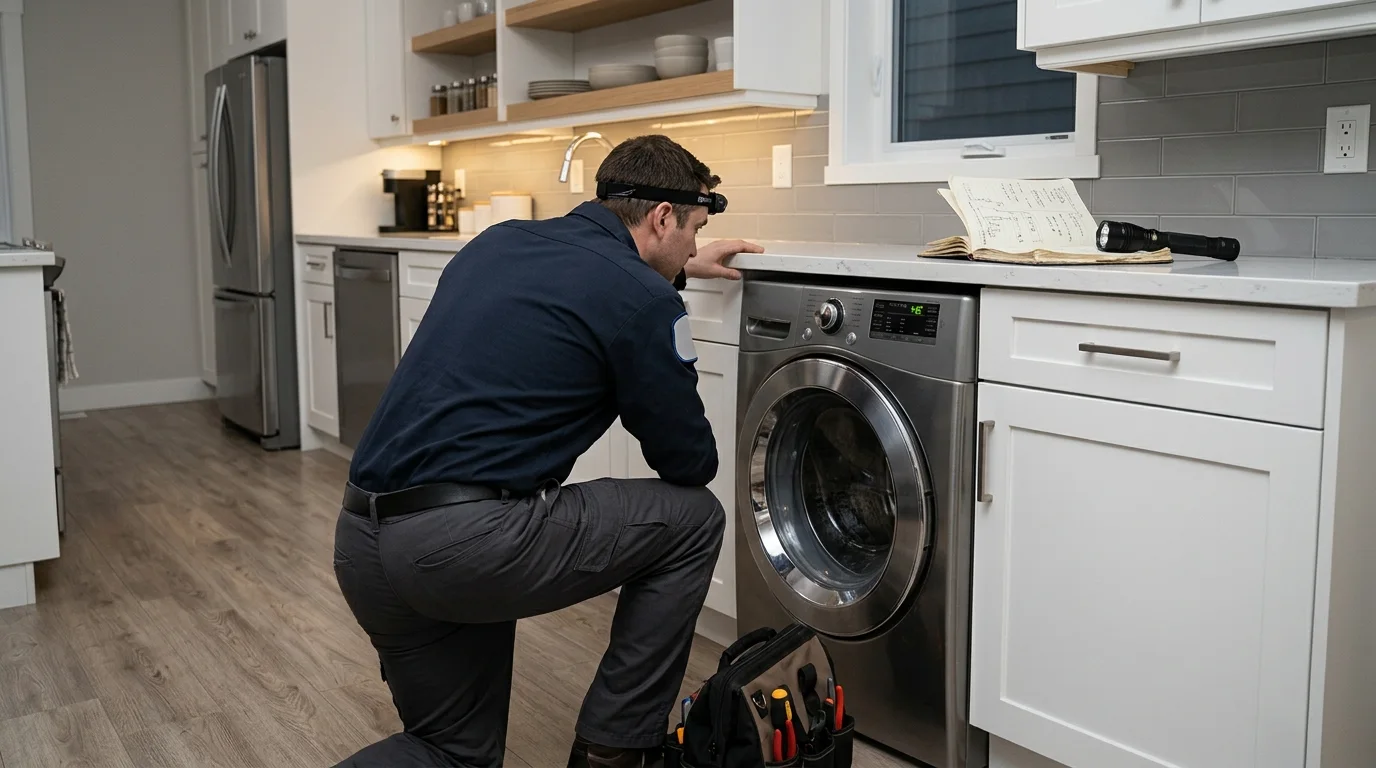
If a Samsung washer 4E code appears, check the water supply before resetting the machine again. Samsung Canada currently describes 4C or 4E as a condition where the washer cannot fill with water. Make sure the household valves are fully open, the hot and cold hoses are not kinked or pinched, and the supply connections are correct. If the external water path is good and the code returns, the washer may need model-specific diagnosis.
Samsung Washer 4E Code: What It Means
The 4E error belongs to the washer’s water-fill system. On affected Samsung models, you may also see 4C used for the same general problem family. The code means the washer did not receive water as expected. It does not tell you why.
Samsung Canada’s current washer reset guidance gives a useful diagnostic boundary: a 4C or 4E code means the washer cannot fill with water, and resetting will not fix an underlying water-supply or installation problem.
For a related next step, read washer dryer repair Toronto.
That is why the best troubleshooting order follows the water itself. Confirm water is available at the home, confirm it can travel through the hoses, confirm the inlet screens and connections are not restricting it, then consider an internal valve, sensor, wiring or control issue.
Before You Start: Protect the Floor and Water Connections
Most first-line 4E checks are external and low risk, but water supply hoses are pressurized. Turn the washer off before moving it. If you need to disconnect a hose for a model-approved screen check, close the household water valves first and have a towel and shallow container ready for residual water.
Do not loosen a hose connection under pressure. If a supply valve is corroded, leaking or difficult to operate, forcing it can turn a washer problem into a plumbing leak.
Check the Water Path in This Order
1. Confirm both supply valves are open
Many washers use both hot and cold supply even when the selected cycle feels mostly cold. Make sure both household valves are fully open unless the exact model documentation says otherwise.
If the code began after plumbing work, a move, a hose replacement or a valve being shut off, start there. A partially reopened valve can reduce flow enough to create a fill problem.
2. Inspect the hot and cold hoses
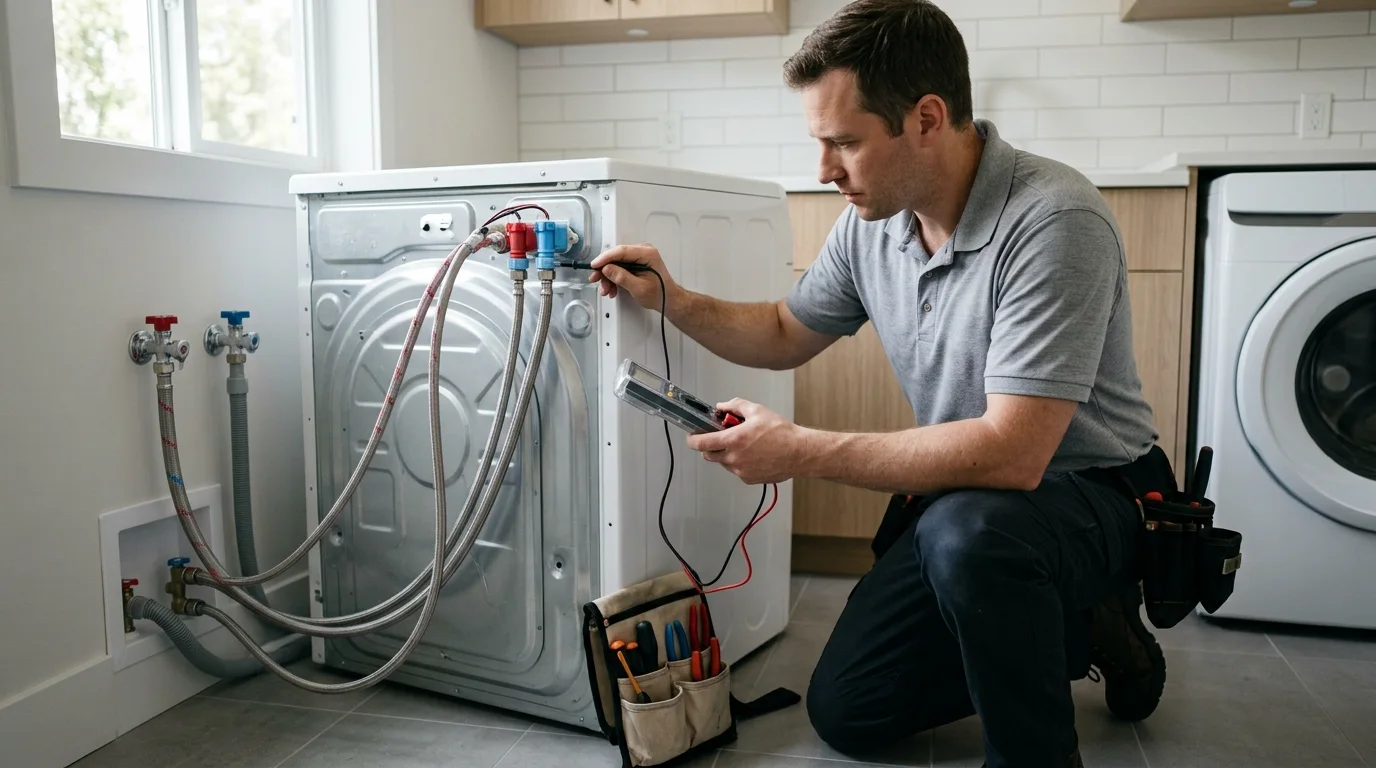
Look behind the washer for a hose that is folded, pinched against the wall, twisted at the fitting or trapped under the machine. Samsung’s current water-fill support specifically tells owners to check for bent, kinked or pinched hoses.
Also confirm that hot is connected to hot and cold is connected to cold. An installation problem can produce unexpected fill behaviour even when water is technically available.
3. Check whether the home actually has normal water flow
If nearby fixtures have unusually weak water flow, the problem may not be inside the washer. Low household supply, a plumbing issue or a partly closed main valve can reduce the fill rate.
The exact pressure requirement varies by washer model, so this article does not use one universal number. If the home supply is obviously weak, correct that condition before diagnosing the washer’s internal fill system.
4. Inspect inlet screens only as the model instructions allow
Samsung support for water-fill problems includes checking inlet conditions. Small screens at the washer’s hose connections can collect sediment. If your model instructions describe cleaning those screens, turn off the water supplies and follow the manual rather than probing the inlet with sharp tools.
A clogged screen can restrict flow while making the household supply look normal everywhere else. A clean screen, however, does not prove the water inlet valve is healthy. It only removes one possible restriction.
What You May Notice While the Washer Tries to Fill
You hear water briefly, then the code appears. The washer may be receiving some water but not enough within the expected fill conditions. Hose restrictions, inlet screens, valve performance and sensing all remain possible.
You hear no water at all. Recheck the household valves and hoses first. If supply is definitely available, an internal inlet or control issue becomes more plausible, but the code still does not identify the failed part.
Only hot or only cold cycles cause the error. That pattern can help separate the two supply paths. A closed valve, kinked hose or restricted inlet on one side can affect cycles that need that supply.
The washer fills and immediately seems to lose water. Drain-hose installation may be affecting the water level through siphoning. If the problem started after installation or moving the washer, compare the drain-hose setup with the model instructions.
Listen to the Fill Attempt Before Changing Anything
Before moving hoses or resetting the washer, listen to one normal fill attempt if there is no leak or other stop-use concern. The sound can preserve useful evidence. A strong rush of water that stops early, a faint trickle, repeated valve sounds, or complete silence all describe different starting conditions.
Do not use the sound to name a failed component. Its value is comparative. If cold fill sounds normal but hot fill is nearly silent, one supply path deserves attention. If both sides are silent even though the household valves are open, the washer-side diagnosis becomes more important.
Recording the behaviour before a reset also helps because an intermittent code may disappear temporarily once power is cycled.
Why Repeated Resets Are the Wrong First Move
Power cycling can clear a temporary electronic state, and Samsung Canada provides a basic reset method. But the same official guidance warns that a reset will not correct a water-supply or installation problem. It also advises against repeatedly resetting because error history can be useful for diagnosis.
If you choose to perform the model-approved basic reset, do it once after the external supply checks. If 4E returns, treat the returning code as evidence that the underlying condition is still present rather than repeating the reset over and over.
What the 4E Code Does Not Prove
A Samsung washer 4E code does not automatically mean the water inlet valve has failed. It does not automatically mean the pressure sensor is bad. It does not prove the control board needs replacement.
All of those components participate in filling and water-level control, but so do the household valves, hoses, inlet screens and installation. A professional diagnosis separates those possibilities by confirming flow and the washer’s electrical commands instead of replacing the most familiar part.
Common Mistakes to Avoid
- Resetting before checking the valves. A reset cannot open a closed water valve.
- Checking only one hose. Many cycles need both supply paths.
- Pulling the washer out while the hoses are stretched tight. That can damage a connection or create a leak.
- Cleaning inlet screens with the water on. Shut the supply off first and follow the model instructions.
- Ordering an inlet valve from the code alone. The display identifies a fill problem, not the exact failed component.
What a Technician May Test If 4E Returns
Once household supply, hose routing and accessible inlet conditions are confirmed, a technician can test the washer itself. The diagnostic path may include verifying whether the inlet valves receive the correct command, whether they open and flow properly, and whether the washer’s water-level sensing system reports the expected change during fill.
Wiring, connectors and control outputs can also be checked with the service information for the exact model. A machine that fills physically but does not register the changing water level has a different problem from one that never opens the inlet path.
The technician may also inspect drain-hose installation if the washer is taking in water but losing it as quickly as it enters. That prevents a fill-system repair from being recommended when the actual problem is siphoning.
What to Record Before Service
Save the exact code, model number and the point in the cycle where 4E appears. Note whether you hear water, whether one temperature selection behaves differently from another, and whether the problem started after a move, hose change or plumbing work.
If you performed one reset, mention that too. Samsung Canada notes that repeated resets can remove useful error history, so preserving the sequence of events can help the technician reproduce the problem more efficiently.
If Only One Temperature Setting Triggers 4E
A fill error that appears mainly on hot-water cycles or mainly on cold-water cycles is especially useful. It can point you back toward one household valve, one hose or one inlet path before any internal part is considered. Confirm both supply valves are fully open and compare the two hoses for kinks or recent installation changes.
Do not swap hot and cold connections casually just to test them. Use the washer installation instructions. The important observation is whether the problem follows one supply side consistently.
Recent Plumbing or Installation Changes Are Important Clues
If 4E started immediately after the washer was installed, moved, a hose was replaced, or plumbing work was completed, mention that timing. A partially reopened valve, a new kink behind the machine, debris disturbed in the plumbing, or an incorrect hose connection can create a new fill problem without an internal washer failure.
That timing does not prove the installation is at fault, but it changes the order of checks. A new problem that begins right after a physical change should be inspected at that change before a control board or inlet valve is blamed.
When to Request Appliance Repair
If both water supplies are open, the hoses are correctly connected and unrestricted, accessible inlet screens are clean where the model permits that check, and 4E still returns, the next step is professional diagnosis. The same applies if the washer leaks while filling, a valve will not shut off, or the machine behaves unpredictably around water.
To arrange an assessment, Request Appliance Repair. A useful service note is specific: “4E returns on every cycle, both valves are open, hoses are clear, and I can hear only a short fill before the code.” That gives the technician more diagnostic value than simply reporting that the washer stopped.
Frequently Asked Questions
Is 4E always a broken washer part?
No. Samsung uses the code for a water-fill problem, and household supply or installation conditions can cause it. Confirm the external water path before assuming an internal component has failed.
Can I keep resetting the washer until it fills?
That is not a good troubleshooting strategy. Samsung Canada says resetting does not fix an underlying supply problem and repeated resets can remove useful error history.
Should I replace the water inlet valve because of 4E?
Not from the code alone. The valve is one possible part of the fill system, but hoses, screens, supply, sensing, wiring and controls can produce similar symptoms.
What should I check after clearing a kinked hose?
Run the model-approved test or normal cycle and confirm that water enters normally and the code does not return. If it does return, record the exact behaviour rather than repeating the same fix.
Need Appliance Repair?
Share the appliance, brand, address, symptoms and optional photos online. A contractor can review the request and contact you about availability and next steps.
Start Your Repair Request