
LG Washer UE Error: Understanding Imbalance Problems
LG washer UE code means spin stopped due to imbalance. Redistribute the laundry and check levelling before any suspension or drive part is suspected.
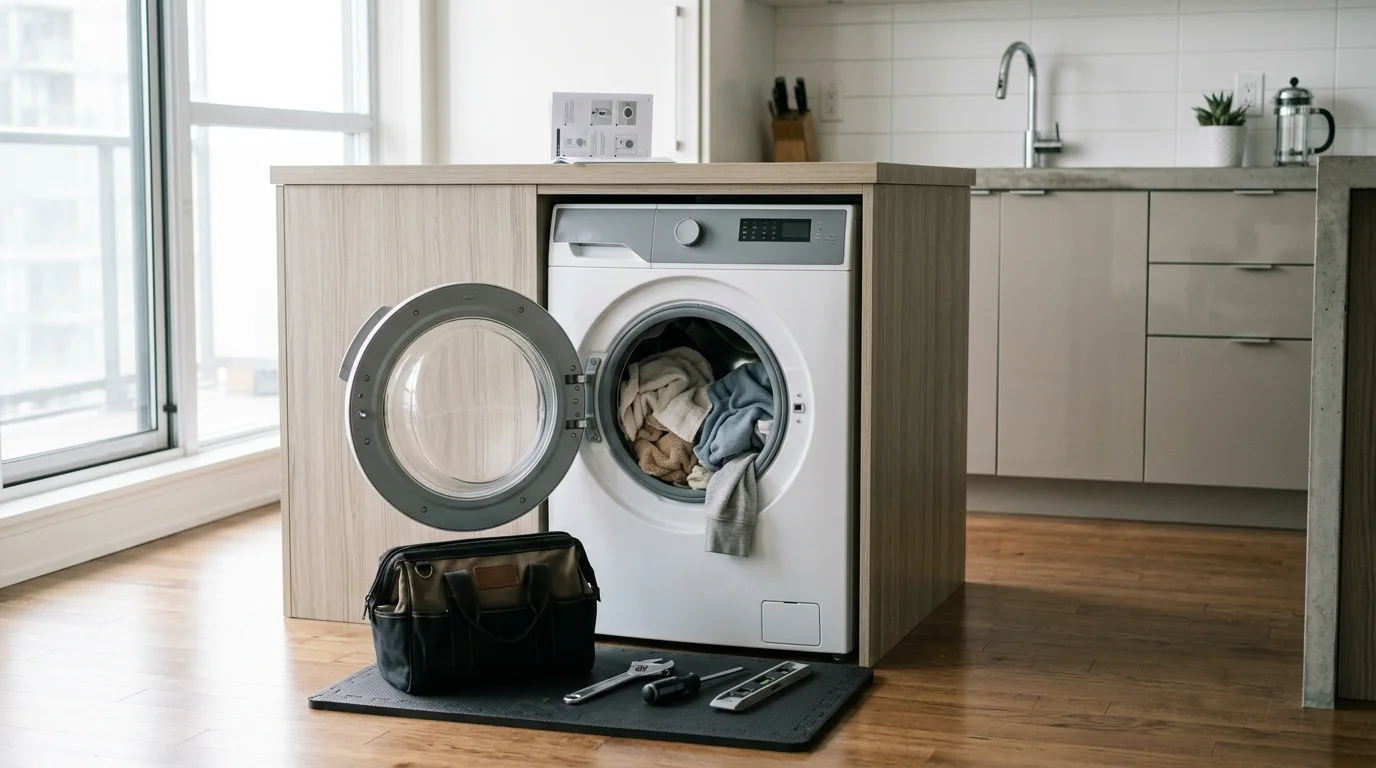
If an LG washer UE code appears, pause the cycle and correct the load before assuming the washer needs a part. LG currently defines UE as an unbalanced-load condition on affected models. Redistribute the clothing, make sure the load is not extremely small or packed too tightly, and confirm the washer is level and stable. If UE keeps returning with ordinary balanced loads after those conditions are corrected, the machine itself may need professional assessment.
LG Washer UE Code: Start With the Load, Not the Parts
UE is the washer telling you that it could not achieve the balance it expected for a proper spin. LG’s current UE and Ub guidance identifies three basic causes first: laundry distributed unevenly, an unsuitable amount of laundry, or a washer that is not level.
That framing matters. A UE error can happen on a completely functional washer if one heavy item collects on one side of the drum. The same code can also become a symptom of a washer problem when it appears repeatedly on normal loads despite correct levelling and loading.
For a related next step, read washer dryer repair Toronto.
The useful diagnostic question is therefore: does the error follow a difficult load, or does it follow the washer regardless of the load?
One-Off UE vs Repeated UE
UE appears only with a blanket, bath mat or one bulky item. Load shape is the leading clue. Heavy items can hold a large amount of water and concentrate weight on one side during spin.
UE appears with a very small load. Too little laundry can be hard to distribute evenly. LG specifically notes that both oversized and undersized loads can create imbalance.
UE appears with almost every ordinary load. After load distribution is corrected, check the washer’s level and stability. If the machine is solid and level but UE remains repeatable, the diagnostic focus can move toward suspension, sensing, drive or control conditions.
The spin phase keeps extending before UE appears. The washer may be attempting to redistribute the load. Extra time during that process does not by itself prove another fault.
Step 1: Redistribute the Laundry
Pause the cycle and wait until the washer allows safe access. Spread the clothing around the drum instead of leaving a heavy bundle on one side. If one item has wrapped around the rest of the load, separate it.
Do not simply push all clothing down to create more room. The goal is not maximum capacity. The goal is enough free space for the laundry to move and redistribute as the drum accelerates.
LG’s current front-load guidance says the washer performs best with the drum around two-thirds full. Treat that as manufacturer guidance for affected models, not a universal measurement for every washer ever made.
Step 2: Correct Loads That Are Too Small or Too Large
A single heavy towel, bath mat or similar item can become an off-centre weight during spin. Adding a few compatible items can sometimes give the washer enough material to distribute the weight more evenly.
An overfilled drum creates the opposite problem. Clothing cannot move freely, so one wet mass can remain stuck on one side. Remove some items and try the appropriate spin cycle again.
Also respect the model manual for bulky, waterproof or specialty items. LG warns that some items are unsuitable for normal machine washing and can create imbalance, excessive vibration or damage.
Step 3: Check Whether the Washer Is Actually Level
A washer can look level from across the room and still rock under spin force. With the appliance off, press gently at the top corners. It should not wobble from one foot to another.
LG recommends confirming that the machine is level and that the feet are in firm contact with the floor. If an adjustable leg is not carrying weight, the washer can twist when the drum accelerates even if the cabinet appears visually straight.
Use a level if needed and follow the washer’s installation instructions for adjusting the feet. Do not compensate for an uneven floor with loose improvised shims that can shift during spin.
Step 4: Run a Normal Balanced Test Load
After redistributing the laundry and confirming the washer is stable, test with an ordinary mixed load that is neither tiny nor packed full. The point is to remove the difficult-load variable.
If the washer spins that load normally, the earlier UE was likely related to the laundry or setup. If UE returns on several normal loads, you now have stronger evidence that the problem is not just one blanket or one unbalanced batch.
Record whether the drum repeatedly accelerates and slows, whether the cabinet moves excessively, and whether you hear banging or contact noises. Those details help a technician understand whether the washer is struggling mechanically or simply refusing high-speed spin.
Watch What Happens Before the Error Appears
The few minutes before UE can be more informative than the code itself. A washer that repeatedly starts to accelerate, slows down, tumbles the load and tries again is behaving differently from one that begins banging immediately as spin starts.
If the machine is quietly attempting to redistribute one difficult load, the laundry remains the leading clue. If a normal load produces strong cabinet movement from the first acceleration, installation or mechanical support deserves more attention.
Note whether the error occurs only at final spin or during other spin stages as well. You do not need to remove a panel to collect this information, and it gives the technician a much clearer description of the problem sequence.
Common Mistakes That Make UE Harder to Diagnose
Testing again with the exact same difficult load. If one bulky item caused the error, repeating that load does not tell you whether the washer can handle a normal balanced load.
Assuming more laundry is always better. Too little and too much can both create imbalance. The goal is a suitable, movable load.
Adjusting one foot without checking stability. The machine needs firm support at all feet. A visually level top with one loose foot can still vibrate badly.
Ordering suspension parts from the code. UE identifies an imbalance condition. It does not identify the failed component.
What the UE Code Does Not Prove
It does not prove the shock absorbers or suspension rods are bad. It does not prove a motor sensor has failed. It does not prove the control board is defective.
Those systems can matter when a washer cannot maintain balance, but they have to be evaluated after the load and installation conditions are removed as explanations. A technician can compare how the tub moves, how the machine senses speed and position, and whether the drive responds normally under a balanced test load.
This is the same principle used throughout good appliance diagnosis: the error tells you which system needs attention, then observations and tests separate the possible causes.
When Repeated UE Points Beyond the Laundry
Professional diagnosis becomes more reasonable when UE appears across multiple normal loads, the washer is confirmed level, the feet are stable, and the laundry has been redistributed correctly.
Other clues include excessive tub movement with modest loads, banging that continues after load correction, a drum that sits visibly off-centre, spin speed that never increases despite balanced conditions, or repeated errors after the washer has been installed correctly and used normally.
These observations can lead a technician toward the suspension system, tub support, drive components, speed or position sensing, wiring, or control behaviour. The exact path depends on whether the washer is top-load or front-load and on the specific LG platform.
What a Technician May Inspect
A technician first confirms the same simple variables: load, level and stability. That avoids diagnosing a machine fault when the floor or load is the actual cause.
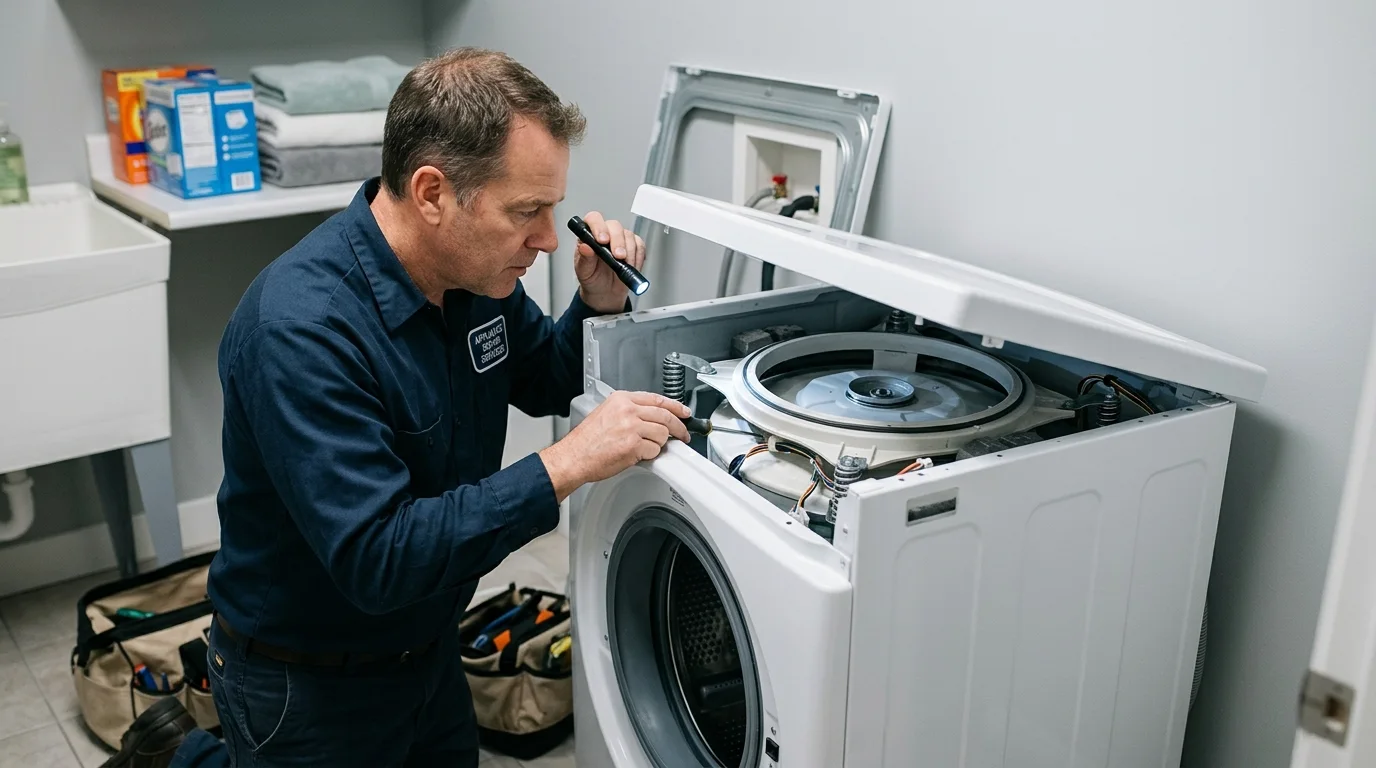
If the error is repeatable, the technician can inspect suspension and tub movement for the model, check for worn or damaged support components, verify that the drum or basket is not contacting the cabinet, and evaluate drive behaviour during spin.
Electronic diagnostics may also be relevant if the mechanical system looks normal. Speed sensing, motor feedback, wiring and control outputs can affect how the washer judges balance and whether it permits high-speed spin.
None of those parts should be condemned from UE alone. The value of service is separating a normal protective response from a genuine repeatable fault.
What to Check After You Correct the Load
After the washer completes a balanced test load, check the result rather than focusing only on whether the code disappeared. Did it reach normal spin speed? Are clothes reasonably spun out? Did the cabinet remain stable? Did cycle time return closer to normal?
If all of those improve, the load or levelling correction was meaningful. If the code disappears but the washer still bangs, walks or leaves normal loads unusually wet, the underlying balance problem may still deserve attention.
Why Water-Heavy Fabrics Make Balance Harder
A dry blanket may not look especially heavy, but after it absorbs water its weight can increase dramatically and concentrate on one side of the drum. The same is true for bath mats, thick towels and padded items. During low-speed tumbling the washer may appear normal, then the imbalance becomes obvious only when spin speed begins to rise.
This explains why a UE code can seem to appear suddenly near the end of an otherwise normal cycle. The washer is not necessarily detecting a new failure. It may be responding to the way the wet load has settled. Redistributing or changing the load is therefore a diagnostic step, not merely a convenience.
What Repeated Banging Changes About the Diagnosis
A single thump as a load shifts is different from repeated heavy cabinet contact. If a balanced normal load causes strong banging even after the machine is level and stable, stop repeatedly testing it. Excessive movement can point beyond simple laundry distribution and may indicate that the tub support or another mechanical system needs inspection.
Also note whether the washer physically walks across the floor, whether the drum appears unusually loose when the machine is off, or whether the noise began after the washer was moved. These observations help separate a setup issue from wear or damage inside the suspension system.
Do Not Confuse an Imbalance Error With a Drain Error
Clothes can come out wetter than expected after UE because the washer reduced or skipped high-speed spin. That does not automatically mean the drain pump failed. If the tub has emptied but the clothes are very wet, the missed spin may be the main reason.
If standing water remains in the tub, that is a different clue and the drain system also deserves attention. Keeping those two symptoms separate prevents one error from being stretched into an unrelated diagnosis.
When to Request Appliance Repair
If UE continues after you have corrected load size, redistributed the laundry and confirmed the washer is level and stable, Request Appliance Repair. Include whether the problem affects front-load or top-load operation, which types of loads trigger it, and whether the washer physically moves or bangs during spin.
That history helps the technician start with the right branch of the diagnosis instead of treating every UE code as the same problem.
Need Appliance Repair?
Share the appliance, brand, address, symptoms and optional photos online. A contractor can review the request and contact you about availability and next steps.
Start Your Repair Request