
LG Refrigerator Not Cooling: What Can Cause It
LG fridge not cooling? Check whether one or both compartments are warm. That observation guides the diagnosis before the compressor is blamed.
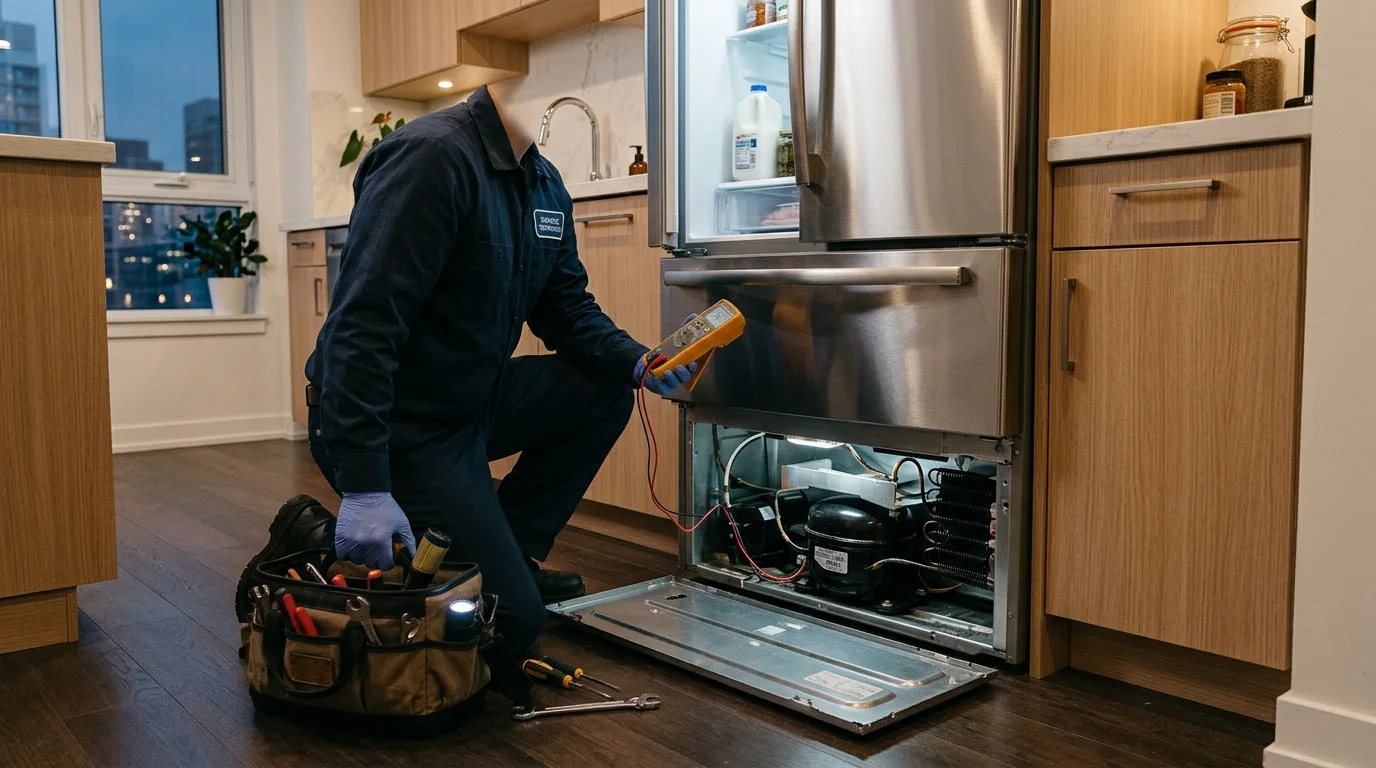
If your LG fridge not cooling is warmer than it should be, protect the food first, then verify the actual temperature and the pattern of the problem. Check the temperature setting, make sure interior vents are not blocked, confirm the doors seal, and note whether the freezer is still cold. If those external conditions look normal, fan, defrost, control, compressor, or sealed-system diagnosis may be needed.
LG Fridge Not Cooling: Start With Actual Temperature
Do not diagnose a refrigerator only by putting your hand inside for a few seconds. Opening the door releases cold air immediately, and different shelves can feel different. An appliance thermometer gives you much better information.
Health Canada recommends keeping the refrigerator at 4 degrees Celsius or below and the freezer at minus 18 degrees Celsius or below. If the refrigerator is above the safe range, treat food safety as a separate issue from appliance troubleshooting. Move high-risk perishables to reliable refrigeration when needed rather than waiting for the repair diagnosis.
For a related next step, read fridge repair Toronto.
Now compare the compartments. Is the freezer still holding frozen food solid while the fresh-food section is warm? Are both sections warming together? Did the problem happen suddenly, or has cooling weakened gradually over several days? Those patterns help decide where to look next.
What to Check Before Assuming a Compressor Problem
LG Canada’s current refrigerator not-cooling guidance starts with accessible operating conditions. That is useful because a warm cabinet does not automatically mean the compressor has failed.
Confirm the temperature settings were not changed accidentally. Look for food containers pressed tightly against interior air outlets. Make sure a shelf liner, bag, or oversized container is not blocking circulation. Check that the doors close fully and that nothing is caught between a gasket and the cabinet.
If the refrigerator was recently moved, heavily loaded, left open for a long period, or filled with a large amount of warm food, give the cooling system a reasonable chance to recover while monitoring the measured temperature. If temperatures keep rising instead of stabilizing, continue with the diagnostic pattern rather than simply turning the setting colder and colder.
Freezer Cold but Refrigerator Warm
This pattern often shifts attention toward airflow between the cooling source and the fresh-food section. The refrigerator can have working refrigeration capacity and still fail to deliver enough cold air where it is needed.
A blocked interior vent is the simplest version. Food pushed against an outlet or return can restrict circulation. Frost around an evaporator area can create a similar effect deeper inside the appliance. An evaporator fan that is not moving air normally, an air-control problem on models that use one, or a defrost problem that allows ice to build can all reduce fresh-food cooling.
Listen for changes in fan sound, but do not defeat a door switch just to force a fan to run. Some models intentionally change fan operation when doors are opened. A technician can determine whether the fan is being commanded correctly and whether frost is interfering with airflow.
The important diagnostic lesson is that a cold freezer does not prove the compressor is perfect, but it does show that the appliance is still producing meaningful cooling somewhere. That makes airflow and compartment-specific systems more relevant than they would be if both sections were warm.
Both the Fridge and Freezer Are Warm
When both compartments lose temperature, start with the basics that affect the entire appliance. Confirm power, make sure the controls are on, and listen for normal operating activity. A dark, silent refrigerator is a different problem from one with lights and fans operating but no useful cooling.
If the appliance is running, whole-cabinet warming can involve heat-rejection problems, condenser airflow, a fan problem, a control or sensor issue, a compressor-start problem, or the sealed refrigeration system. A heavy frost condition can also eventually affect both compartments on some designs.
Do not assume that hearing the compressor means the sealed system is healthy. A compressor can run while the system still fails to move enough heat. The reverse is also true: a quiet compressor does not automatically mean the compressor itself is defective because the control, protection devices, wiring, or supply can prevent it from running.
Airflow, Door Sealing, and Heat Rejection
Refrigeration is a heat-moving process. Inside the cabinet, cold air has to circulate. Outside the cabinet, heat has to leave. Problems at either side can reduce performance.
Inspect the visible door gaskets for food residue, folding, damage, or an object keeping the door slightly open. Look for condensation or frost concentrated near one section of the door opening, which can be a clue that warm room air is entering there.
Keep the refrigerator’s exterior ventilation space clear according to the installation requirements for the model. Do not pack items around ventilation openings or press the appliance into a space that prevents normal heat rejection.
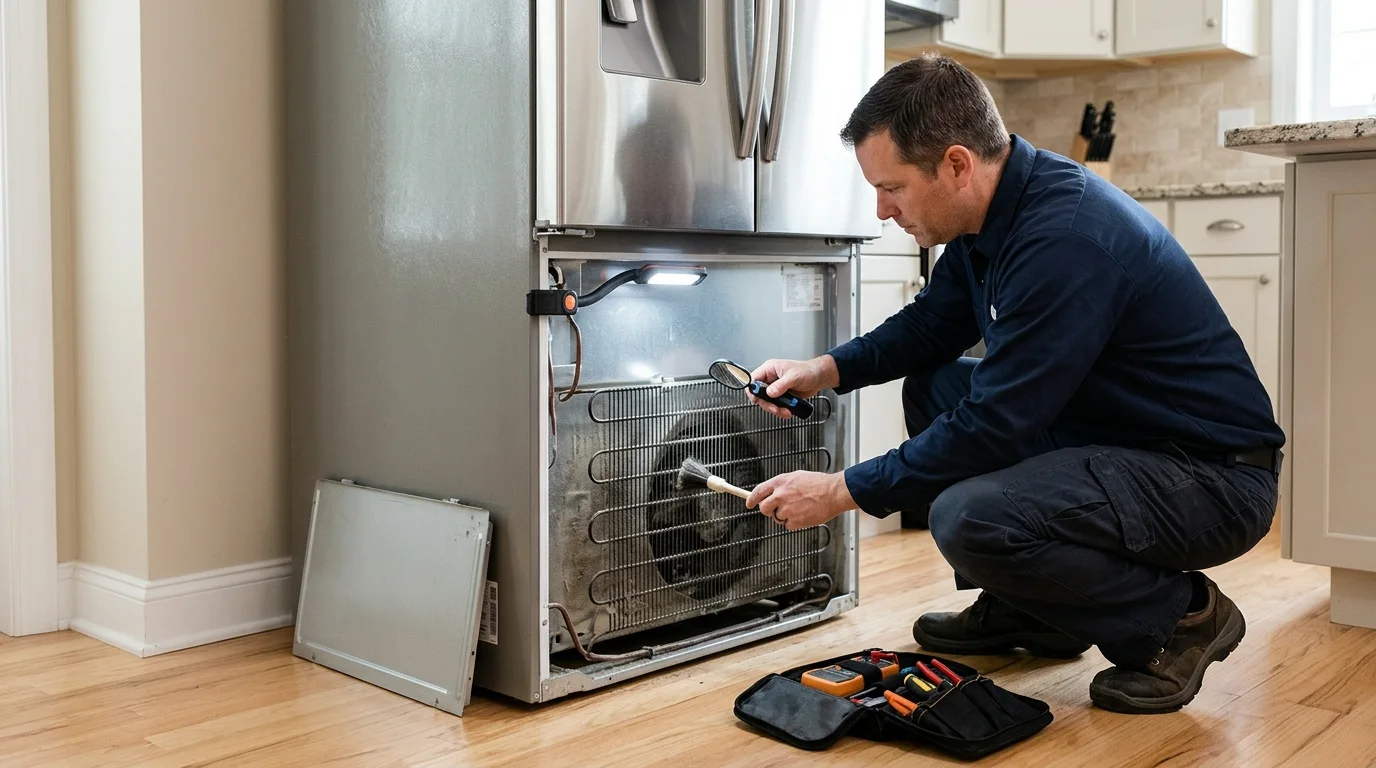
Some models have condenser components that are not intended for routine homeowner access. Do not remove covers just because a generic article says every refrigerator has exposed coils that should be vacuumed. Use the model instructions to determine what cleaning is actually designed for the owner.
This is the point where accessible checks end and professional diagnosis begins. Airflow conditions, condenser heat rejection, fan operation, and the sealed refrigeration system all overlap here, and separating them requires model-specific testing rather than visual inspection alone.
Frost Can Make a Cooling Problem Look Worse Than It Is
Frost is useful evidence because it tells you warm, moist air has met a cold surface. A small amount in the normal evaporator area is expected during operation, but heavy ice that blocks airflow is different.
A door that is not sealing can introduce enough moisture to create recurring frost. A defrost-system problem can allow normal frost to accumulate instead of being cleared during automatic defrost. If ice builds around an evaporator fan, you may hear rubbing, ticking, or a fan that starts and stops.
Do not chip ice with a knife or screwdriver. That can damage hidden tubing or wiring. If the model instructions include a safe defrost procedure, follow them. If heavy frost returns, the cause needs diagnosis rather than repeated manual ice removal.
What the Compressor Does Not Tell You by Itself
Online discussions about LG refrigerators often move directly to compressor failure. A compressor is one possible part of a no-cooling diagnosis, but the symptom is not a compressor test.
A technician needs to know whether the compressor is being commanded to run, whether it starts and remains running, what the fans are doing, whether the evaporator and condenser sides show the expected temperature behaviour, and whether the sealed system is actually moving refrigerant properly.
Those questions require model-specific electrical and refrigeration-system testing. An external symptom cannot separate a compressor problem from a restriction, refrigerant loss, control issue, start problem, or another sealed-system condition with enough certainty to justify a major repair.
Safe Homeowner Checks
- Measure temperature. Record the refrigerator and freezer temperatures rather than relying only on how the air feels.
- Confirm settings. Make sure the selected temperature and operating mode are appropriate for normal cooling.
- Clear interior vents. Move food away from visible supply and return air openings.
- Check door closure. Look for packages, drawers, or shelves preventing a full seal.
- Inspect visible gaskets. Clean obvious residue and note tears, folds, or gaps.
- Listen for fans and operating changes. Record unusual rubbing, repeated clicking, or silence without trying to defeat door switches.
- Look for frost patterns. Heavy recurring frost or ice near airflow areas is useful information for service.
Stop and disconnect power if there is smoke, sparking, visible scorching, a strong electrical burning smell, or repeated breaker trips. Do not open sealed-system tubing or attempt refrigerant work.
Common Mistakes That Delay the Real Diagnosis
Turning the temperature colder every few hours. Constant setting changes make the performance harder to evaluate. Make a sensible adjustment, allow time for response, and measure the result.
Assuming cold air in the freezer means the whole refrigerator is fine. The fresh-food section depends on controlled airflow. A freezer-cold/fridge-warm pattern is diagnostically meaningful.
Assuming the compressor is bad because the refrigerator is warm. Fans, defrost, airflow, controls, and sealed-system conditions can produce overlapping symptoms.
Using food safety rules as appliance diagnosis rules. Whether food is safe and why the refrigerator failed are two separate questions. Use measured temperature for food decisions and the symptom pattern for appliance diagnosis.
What a Technician May Inspect or Test
A technician can start by confirming actual temperatures and checking whether the refrigerator is calling for cooling. Fan operation, door inputs, sensors, defrost components, controls, and accessible airflow paths can then be evaluated against the model’s design.
If the compressor and sealed system become suspects, the technician can use model-specific electrical and refrigeration tools to determine whether the compressor starts correctly and whether the system is moving heat as expected. That is the point where professional testing can separate a control or start problem from a true sealed-system fault.
What to Check After the External Steps
After correcting a blocked vent, food placement issue, door obstruction, or obvious setting problem, watch the temperature trend rather than repeatedly opening the doors. The useful question is whether the measured temperatures are moving back toward the normal range and staying there.
Record the refrigerator and freezer readings, the time you took them, and whether the compressor and fans sound different from before. If the fresh-food section improves while the freezer was already normal, that supports an airflow or door-condition explanation. If both compartments continue warming even though settings and doors are correct, the evidence points away from a simple loading problem.
Also note whether frost returns after it has been cleared through a model-approved defrost procedure. Recurring ice is more informative than a one-time patch because it suggests the underlying moisture, airflow, or defrost condition has not been resolved.
Sudden and Gradual Cooling Loss Point to Different Starting Checks
The timeline does not diagnose the refrigerator, but it can tell you where to start. A sudden temperature change after the doors were held open, the refrigerator was moved, a setting was changed, or power was interrupted should first be separated from a cooling failure that developed gradually over days or weeks. LG’s current guidance starts with settings, airflow, door conditions, and the surrounding environment before it moves toward service.
A gradual decline can fit several patterns. Interior vents may be increasingly blocked by food, a door may not be sealing consistently, frost may be reducing evaporator airflow, or heat rejection around the condenser area may be getting worse. A fan or sensor can also become intermittent. None of those patterns rules out a refrigeration-system fault, but they give the technician a more useful history than the single statement that the fridge is warm.
A sudden loss of cooling in both compartments deserves a different observation set. Note whether the interior lights and display still work, whether fans are running, whether the compressor sounds different, and whether an error code appeared. Do not interpret one missing sound as proof of a compressor failure. Controls, protective devices, wiring, fans, and the compressor start or inverter system can influence what you hear.
If Cooling Returns After a Restart but Fades Again
A refrigerator that cools normally for a short period after power is restored and then warms again has not necessarily been fixed. The restart may temporarily change a control state or allow a heat-related fault to reset. Recurring loss of cooling can still involve airflow, defrost, fan, sensor, control, compressor, or sealed-system performance.
Repeated power cycling is not a substitute for diagnosis. If normal cooling returns, use the time to protect food, observe actual compartment temperatures, and record how long the improvement lasts. If the same cooling failure returns, that repeatable pattern is valuable service information and is more reliable than guessing which internal component is responsible.
Repair or Replace After the Cause Is Confirmed
A blocked vent or door-seal issue belongs in a very different decision category from a major sealed-system repair. Do not make the replacement decision from the symptom alone.
Once the fault is confirmed, compare the actual repair with the refrigerator’s overall condition and other known issues. Avoid a universal age cutoff or automatic compressor assumption. If you need a broader framework after diagnosis, the site can apply its repair-or-replace guidance when that current page is available to BEAST as a live link.
When to Request Appliance Repair
Request service when measured temperatures remain too warm after settings, airflow, and door conditions are corrected, when heavy frost returns, when a fan or compressor repeatedly attempts to run abnormally, or when both compartments continue warming without an external explanation.
For a non-emergency cooling problem that has reached that point, Request Appliance Repair. Include the model number, refrigerator and freezer temperatures, whether one compartment is colder than the other, any error code, and any unusual fan, click, or compressor sound.
Need Appliance Repair?
Share the appliance, brand, address, symptoms and optional photos online. A contractor can review the request and contact you about availability and next steps.
Start Your Repair Request