
Common problems
- Fridge not cooling
- Refrigerator leaking water
- Excess frost or condensation
- Unusual clicking, buzzing or humming
- Compressor or sealed-system symptoms
- Ice maker or starting problems
Request fridge repair in Toronto and nearby GTA communities. Share the brand, model if known, temperatures, symptoms, noises, error codes and when the cooling problem started.
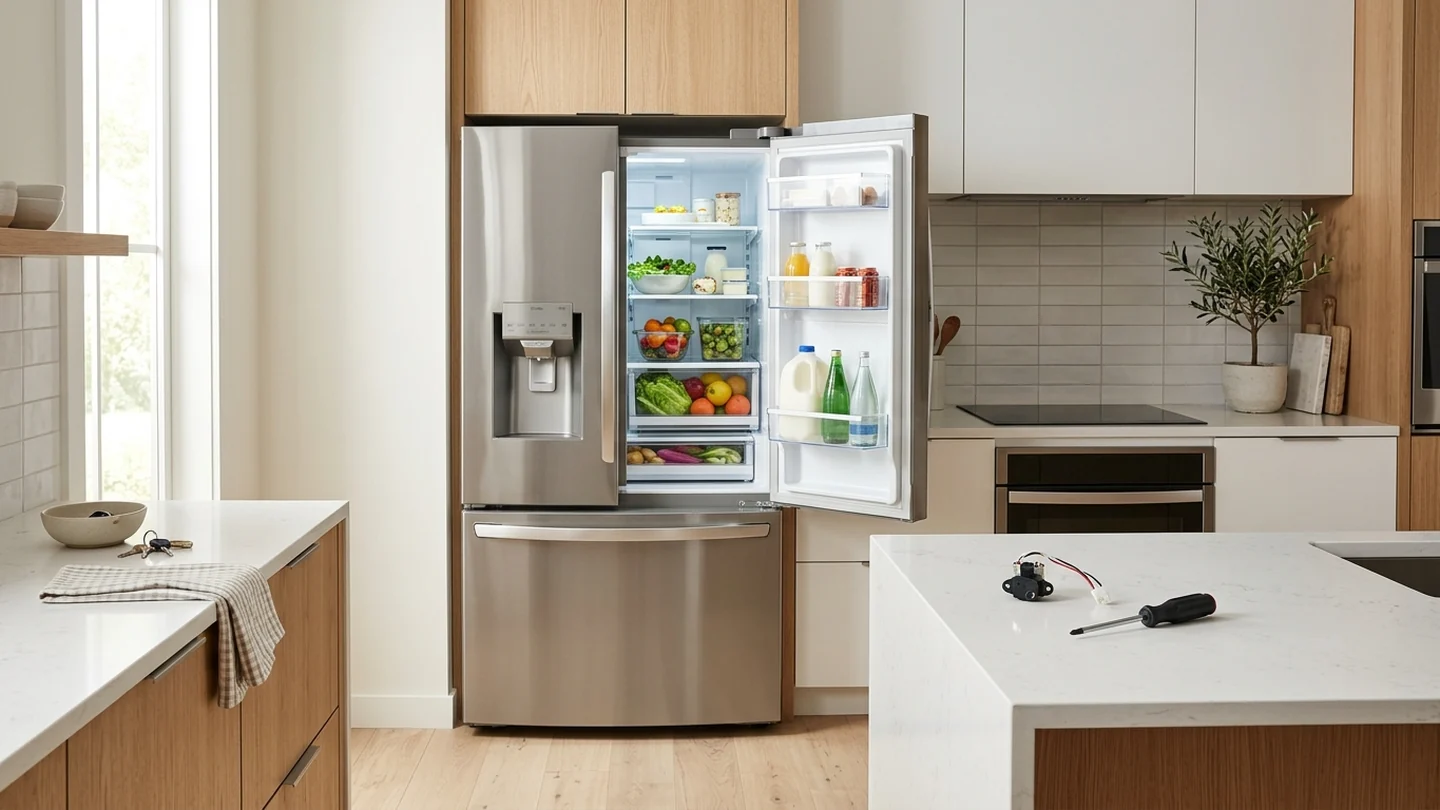
For Refrigerator Repair, describe what happens during normal use, when the symptom appears and any model, error-code or photo detail that helps show the condition.
For refrigerator repair, describe whether the fresh-food section, freezer section or both are affected. Include unusual frost, water, fan noise, cycling behaviour and any display code. A refrigerator that is warm while the freezer still cools is a different starting point from a unit that has lost cooling everywhere.
Note whether food is warming, freezing unexpectedly, collecting moisture or developing frost. If the refrigerator has a temperature display, include the current readings without changing settings repeatedly just to test the appliance.
A counter-depth, panel-ready or built-in refrigerator can have restricted side and top clearance. Include a photo of the full opening and surrounding cabinetry rather than pulling the unit forward if access is tight.
If temperatures are unsafe, protect perishable food according to appropriate food-safety guidance while arranging service. The website cannot confirm that stored food remains safe based on a repair description alone.
Include that exact split in the request, along with any frost, fan noise or blocked-airflow observation you can see without removing panels.
Yes. Describe whether water appears inside the fresh-food section, beneath the unit or near the ice maker or dispenser.
No. Leave a heavy or built-in refrigerator in place and send a wider installation photo if access may be limited.
A refrigerator that is not cooling can involve airflow, sensors, defrost components, start components, the compressor, refrigerant or another part of the sealed system. Share the temperatures, sounds, frost pattern and model information instead of assuming the compressor is the cause.
Compressor and sealed-system repair requests can be submitted for review. The appropriate next step depends on diagnosis, appliance model, parts, condition and the contractor requirements for the work.
Published Repair Guides support troubleshooting and planning. They are informational and do not replace an appliance diagnosis.
Include the approximate fridge and freezer temperatures, unusual sounds, whether interior lights work and when the cooling change started.
Yes. Clicking, intermittent starting and cooling problems can be submitted for diagnosis. Include a short video or audio clip description if useful.
Yes. Compressor, refrigerant, sealed-system and start-component symptoms can be submitted for diagnosis. The final repair scope depends on the diagnosis, appliance model, parts and the participating contractor.
Ice-maker and related refrigerator problems can be submitted. Include whether water dispensing and freezer cooling are also affected.
Yes. A clear photo of the model and serial label can help with parts and service review.
Move temperature-sensitive food to another working refrigerator or an insulated cooler if available, and follow applicable food-safety guidance for anything that may have warmed. Mention in the request whether food storage is becoming urgent so the contractor has that context.
Water leaks from a refrigerator can come from the defrost drain, the water supply line, the ice maker, a damaged door seal or condensation from blocked airflow. Include where the water is appearing and whether the leak is constant or happens at certain times.
Describe the specific refrigerator repair need, add the service address and include model, symptom, access or installation details that are relevant to this job.
Start Your Repair Request