
Refrigerator Freezing Food: Temperature and Airflow Causes
Refrigerator freezing food? Map where items freeze, check vent placement and temperature settings, then learn when sensors or dampers need testing.
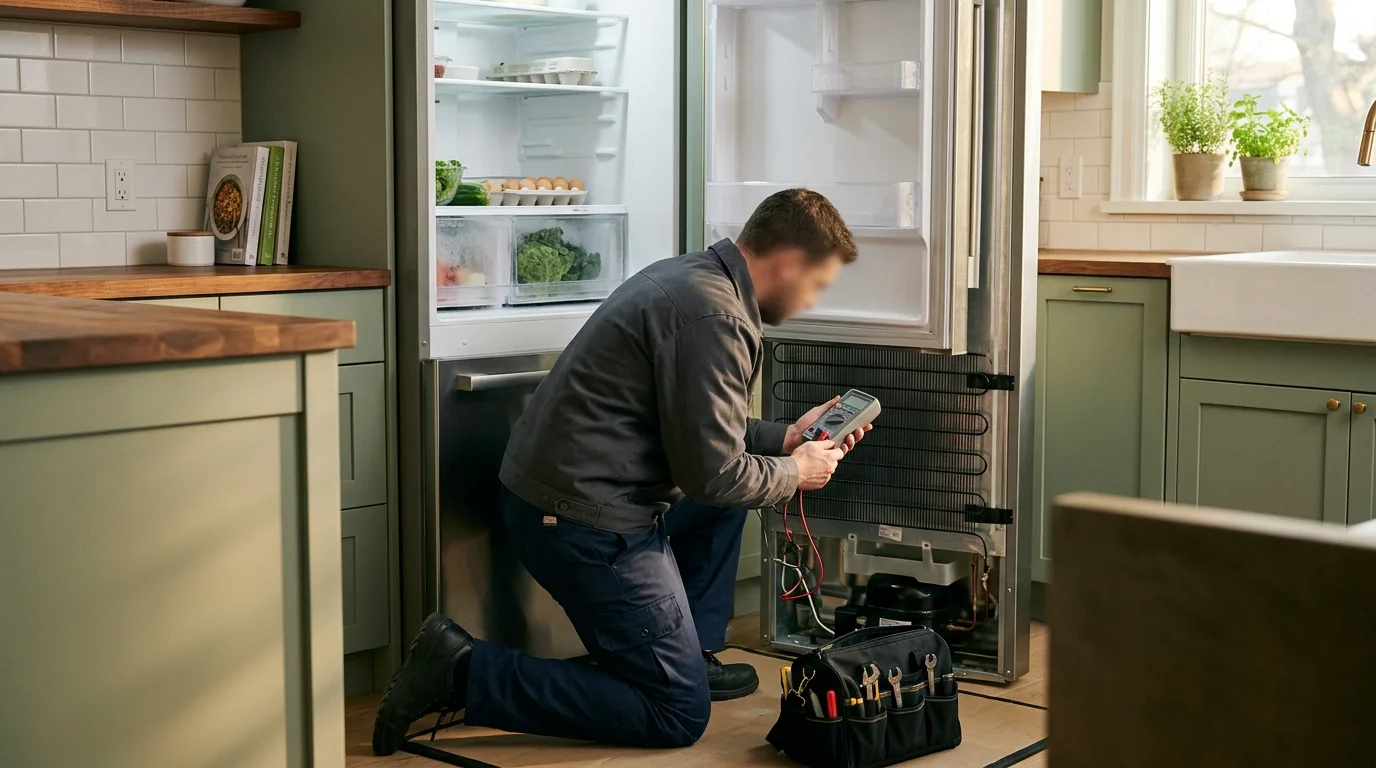
The most common mistake when a refrigerator freezing food problem starts is changing the temperature setting several times before checking where the food is freezing. If one container freezes beside a cold-air vent while the rest of the refrigerator is normal, airflow and placement matter. If food freezes across several shelves, settings, sensors, dampers, controls, or other overcooling causes become more important.
Refrigerator Freezing Food: Check the Pattern Before the Control
Move the frozen item away from the rear or side wall and look for nearby supply-air vents. Cold air from the freezer enters the fresh-food section through specific openings. Food placed directly in that stream can freeze even if the average compartment temperature is reasonable.
Whirlpool’s current refrigerator too-cold guidance identifies temperature settings, blocked vents, food placement, ice-maker conditions on some models, and ambient conditions as relevant checks. The key is to observe the pattern before deciding which component is at fault.
Step 1: Measure the Actual Refrigerator Temperature
A control-panel number is a setting, not a map of the temperature on every shelf. Use a refrigerator thermometer if one is available and allow enough time for the reading to stabilize. Canadian public-health guidance recommends keeping refrigerated cold foods at or below 4 degrees Celsius.
If the average temperature is reasonable but one item near a vent freezes, the problem is likely more localized than if several foods throughout the compartment are freezing solid.
Step 2: Map Where Food Is Freezing
Only food against the back wall or beside one vent freezes
Start with placement and airflow. Move temperature-sensitive food away from the direct cold-air path. Check that containers are not blocking a return vent and forcing air to take an abnormal path.
One drawer freezes produce but upper shelves are normal
Check how cold air enters that drawer area and whether its humidity or temperature controls are set correctly if the model has them. Some models intentionally direct colder air toward specific compartments, so the owner manual matters.
Food freezes across several shelves
This pattern makes a global overcooling condition more likely. Confirm the temperature setting, then consider temperature sensing, damper control, airflow distribution, or a control problem if normal settings do not correct it.
Food freezes only after the refrigerator was moved or the room became very cold
Installation and ambient conditions deserve attention. Very cold rooms can affect how some refrigerators cycle. Also check whether the move changed levelling, door closure, airflow clearance, or the position of food relative to vents.
Food freezes while the refrigerator also runs constantly
Overcooling with long run time can involve sensing or control problems, but blocked airflow can also create cold and warm zones at the same time. Check actual temperatures in more than one location before assuming the entire compartment is uniformly too cold.
Step 3: Check Temperature Settings Carefully
Use the normal recommended setting in the owner manual as the starting point. Make small changes rather than moving the control from one extreme to the other. Give the refrigerator time to respond before making another adjustment.
If the refrigerator remains too cold at a normal setting, the control value itself may not be the whole problem. The next question is whether the refrigerator is receiving accurate temperature information and controlling airflow correctly.
Step 4: Clear the Supply and Return Air Paths
Cold air has to enter the fresh-food section and return to the cooling area. Packages pressed against vents can redirect airflow, create cold spots, and produce uneven temperatures. Tall containers can also interfere with circulation between shelves.
Move food a short distance away from visible vents and avoid packing the rear wall tightly. Do not block a vent with a towel or tape to stop freezing. The vent is part of the refrigerator’s temperature-control system.
Common Cause Groups
Food placement directly in the cold-air stream
This is the simplest cause group and the easiest to overlook. A carton or produce bag sitting directly in supply air can freeze even when nearby food stays normal. Moving the item is both a correction and a diagnostic test.
Incorrect or over-adjusted temperature settings
A setting that is too cold can lower the whole compartment temperature. Repeated adjustments can also make the pattern hard to interpret because the refrigerator needs time to respond. Return to a normal setting and make one controlled change at a time.
Blocked airflow and uneven circulation
Blocked return or supply vents can create an uneven temperature map. One shelf may become too cold while another warms. This is why a single thermometer reading or one frozen item does not describe the whole compartment.
Damper or airflow-control problem
Many refrigerator designs regulate how much freezer air enters the fresh-food compartment. If a damper sticks too far open or is commanded incorrectly, too much cold air can enter. The exact design and access vary by model.
Temperature sensor or control problem
A sensor provides temperature information to the control. If the information is inaccurate, or if the control does not respond properly, the refrigerator can continue cooling past the intended point. A frozen carton does not prove the sensor is bad. Actual sensor readings and control behaviour need to be compared.
Ice-maker or model-specific interaction
Some manufacturer guidance notes that an ice maker left on without a connected water supply can affect temperature on certain designs. This is not a universal cause. Check the owner manual for your model before changing ice-maker operation.
Very cold room conditions
A refrigerator installed in an unheated or unusually cold space can behave differently from one in a normal kitchen. If freezing began during a cold-weather change in a garage or other marginal location, verify the appliance’s approved ambient operating range.
Safe Checks a Homeowner Can Make
- Measure actual temperature instead of relying only on the display setting.
- Move delicate foods away from cold-air outlets and the rear wall.
- Clear visible supply and return vents without covering them.
- Check that shelves, bins, and drawers are fully seated.
- Return controls to a normal setting and make gradual adjustments.
- Check door closure and gasket cleanliness, especially if frost or condensation is also present.
- Note whether freezing is localized, drawer-specific, or widespread across several shelves.
What the Freezing Pattern Does Not Prove
Food freezing near one vent does not prove a damper is stuck. Widespread freezing does not automatically prove a thermistor is bad. A cold drawer does not prove the control board has failed. These patterns tell a technician where to test first, but they do not replace model-specific measurements.
What a Technician May Inspect or Test
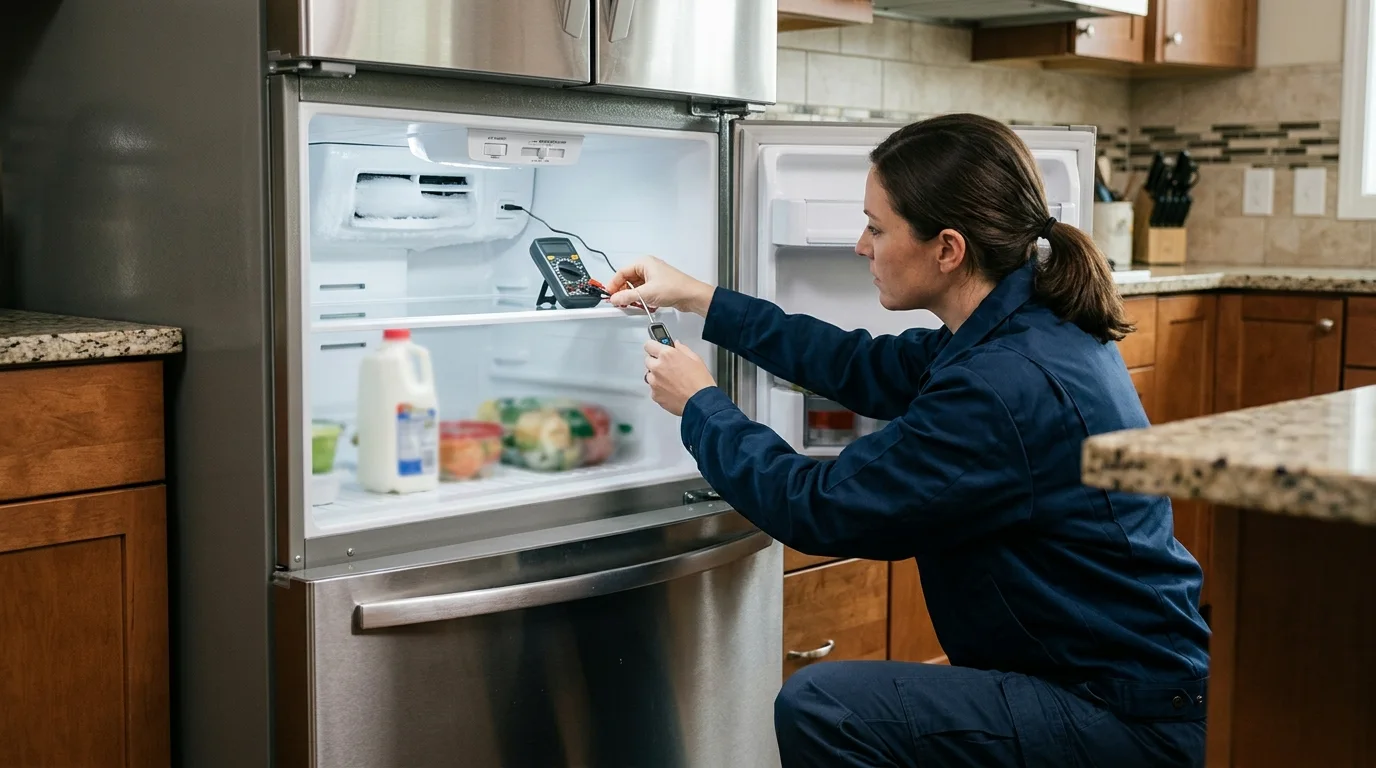
A technician can measure compartment temperatures at several locations and compare them with sensor values reported to the control. Damper operation, fan airflow, vent restrictions, and door sealing can be evaluated separately.
If the refrigerator is clearly overcooling, the technician may test temperature sensors, control outputs, and model-specific airflow controls. The point is to determine whether the system is receiving the wrong temperature information, moving too much cold air, or commanding cooling for too long.
If the freezing is highly localized, the repair may not involve an internal component at all. Correcting food placement or an airflow obstruction can solve a cold spot without replacing anything.
Common Mistakes to Avoid
Do not block vents to keep food warm. That can create a different airflow problem. Do not keep turning the control warmer every few hours. Give the refrigerator time to stabilize. Do not move all food to one side of the cabinet and accidentally block the return path while trying to protect one frozen item.
Also avoid diagnosing from one frozen bottle. Record the shelf, distance from vents, actual temperature, and whether the same thing happens in other parts of the compartment.
What to Check After You Make a Correction
After moving food and correcting a vent blockage or setting, allow the refrigerator time to stabilize. Measure the same area again. If the localized freezing stops and the rest of the compartment remains safely cold, the evidence supports a placement or airflow explanation.
If food continues freezing across multiple shelves at a normal setting, or if temperatures swing between too cold and too warm, professional sensor, damper, fan, and control testing becomes more useful.
Use a Simple Shelf Map to Find the Cold Spot
Before changing parts or making large setting changes, map where the freezing happens. Note which shelf, drawer, or back-wall area is affected and whether the same food freezes when moved elsewhere. A bottle that freezes beside one supply vent but stays liquid on a middle shelf is useful evidence of a localized cold-air path.
If food freezes across the full width of several shelves, the problem is less likely to be one item sitting directly in a vent stream. A setting, temperature-sensing, damper, control, or broader airflow condition becomes more relevant. Location turns a vague complaint into a pattern.
The type of food matters as well. Produce and liquids can show cold spots quickly. Dense containers placed away from vents may respond more slowly. Use several observations rather than one frozen item before concluding that the whole compartment is overcooling.
Why the Displayed Setting Is Not the Same as Shelf Temperature
The control panel tells the refrigerator what temperature to target. It does not guarantee that every location inside the cabinet is at that exact temperature. Air enters through specific vents, travels around stored food, and returns through another path. Shelves near the supply air can be colder than the average compartment temperature.
That is why an appliance thermometer placed in a representative area is more useful than repeatedly changing the display because lettuce froze beside a vent. If the average temperature is appropriate but one location is much colder, investigate airflow and placement first. If measured temperatures are too cold throughout the compartment, the control and sensing side deserves more attention.
Watch What Happens After One Controlled Change
Make one sensible correction at a time. Move food away from a vent, clear a blocked return path, or adjust an obviously incorrect setting according to the owner instructions. Then give the refrigerator enough time to stabilize before deciding whether the change worked.
If the freezing follows the food to a new location, a wider temperature-control issue is more plausible. If the problem stays tied to the same physical cold spot, airflow geometry matters more. If the refrigerator alternates between freezing food and becoming too warm, record that swing because unstable control behaviour is different from a consistently cold vent area.
Keep a short record of the actual temperature and the location of frozen items for a day or two if the refrigerator is otherwise operating safely. A pattern that repeats in the same cold spot supports an airflow explanation. A pattern that spreads across the compartment despite stable loading is stronger evidence that the temperature-control system needs professional testing.
Refrigerator Freezing Food: Frequently Asked Questions
Why does food freeze only near the back of the refrigerator?
Cold-air supply vents are often located toward the rear. Food placed directly in that air stream can freeze while the average compartment temperature remains normal.
Can blocked vents make food freeze?
Yes. Blocked or redirected airflow can create cold spots and uneven temperatures. Keep both supply and return paths open.
What temperature should my refrigerator be?
Canadian public-health guidance recommends keeping refrigerated cold foods at or below 4 degrees Celsius. Follow your model instructions for the control setting needed to achieve that actual temperature.
Does frozen food mean the temperature sensor is bad?
No. A sensor problem is one possibility when overcooling is widespread, but settings, food placement, vents, dampers, ambient conditions, and controls can create similar symptoms.
Why does only the crisper drawer freeze?
That can relate to its location near a cold-air path, drawer controls, loading, or model-specific airflow. Check the drawer settings and nearby vents before assuming a failed component.
When should I request refrigerator repair?
Arrange assessment when widespread freezing continues at a normal setting, temperatures are unstable, airflow controls appear abnormal, or the problem is combined with constant running, fan problems, or other cooling symptoms.
When to Request Appliance Repair
If controlled setting changes and improved food placement do not stop the problem, or if several areas remain too cold, a professional can test the sensing and airflow-control systems instead of guessing at a part. Service is also sensible when temperatures fluctuate widely or the refrigerator is both overcooling and showing another abnormal symptom.
For related service information, see refrigerator repair Toronto. If the confirmed repair becomes substantial, the repair-or-replace guide can help frame the decision. To submit the model, temperatures, and freezing pattern, Request Appliance Repair.
Need Appliance Repair?
Share the appliance, brand, address, symptoms and optional photos online. A contractor can review the request and contact you about availability and next steps.
Start Your Repair Request