
Refrigerator Leaking Water: Common Sources
Refrigerator leaking water? Use where the water first appears and when it returns to narrow supply, defrost, filter and door-seal causes safely.
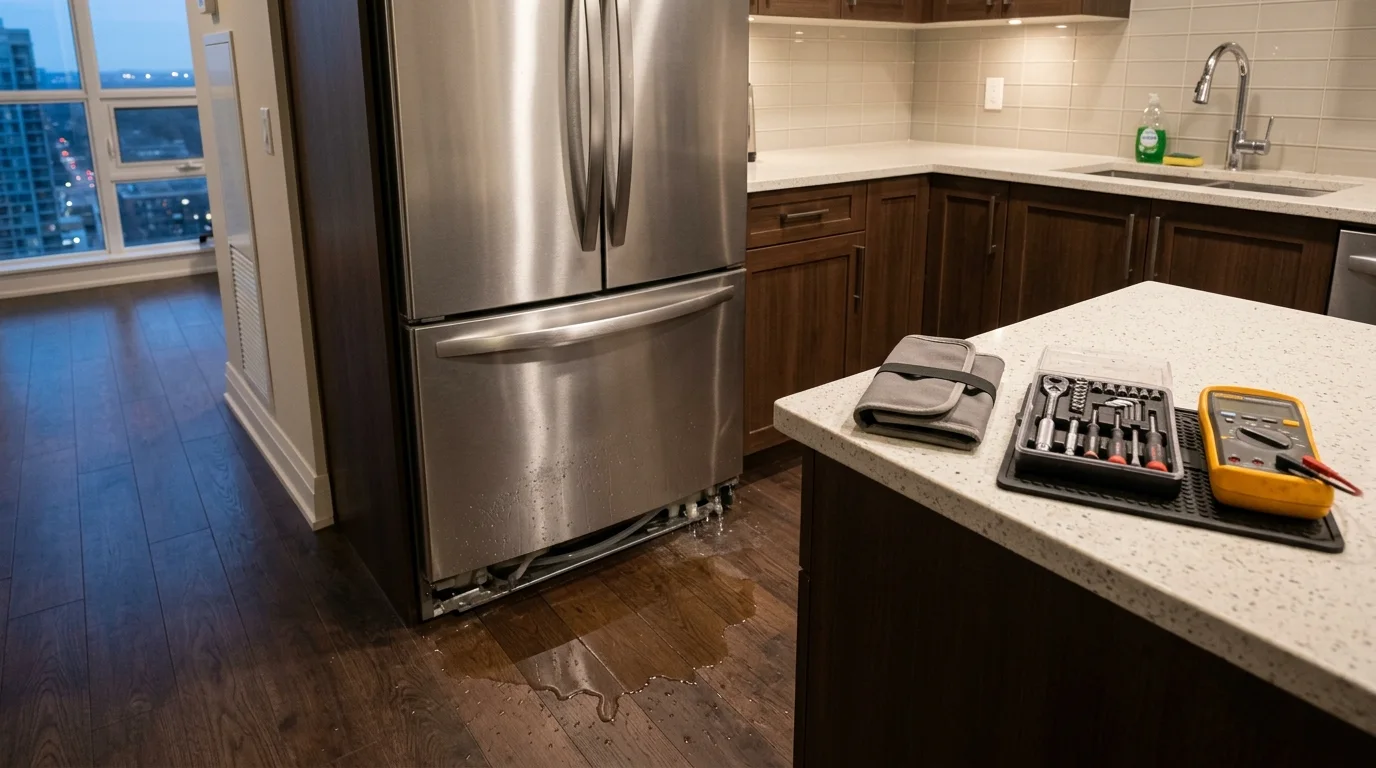
If you have a refrigerator leaking water, protect the floor first and look for the earliest place you can actually see moisture. Water behind the refrigerator often points toward the supply line or a connection. Water under drawers can fit a blocked defrost drain. Water near the front may have travelled from somewhere else. The location is a clue, not proof of one failed part.
Refrigerator Leaking Water: Start by Containing the Leak
Move anything that can be damaged by water and wipe up the visible puddle so you can tell whether fresh water returns. If water is near a receptacle, power cord, damaged plug, or other electrical area, do not stand in the water or reach through it to unplug the refrigerator. Turn power off from a safe, dry location if that is necessary and practical.
If the refrigerator has a household water connection and you can see water actively running from the supply line or a fitting, close the refrigerator’s water shutoff valve if you can reach it safely. A pressurized water leak can continue even when the appliance is not cooling, so stopping the water source matters more than continuing a diagnostic test.
Once the area is safe, dry the floor and watch where the next moisture appears. That simple reset gives you much better evidence than inspecting an old puddle that may have spread across grout lines, flooring seams, or the underside of the cabinet.
Use Where and When the Water Appears
The most useful description combines location with timing. “Water is at the front” is vague. “A small puddle appears under the front-left corner a few hours after the freezer defrosts” is much more diagnostic.
Water behind the refrigerator
Start with the household water supply if the model has an ice maker or dispenser. A damaged tube, loose connection, or leak near the inlet connection can put water behind the appliance. Current Whirlpool guidance specifically identifies water-line damage and connection points as areas to inspect when water appears around the refrigerator.
Water under the crisper drawers or inside the fresh-food section
This pattern can fit a defrost-drain problem on designs where defrost water is supposed to travel from the evaporator area to a drain pan below the appliance. If the drain path is blocked by ice or debris, water may back up and appear inside the cabinet instead.
That does not mean every puddle under a drawer is a clogged drain. Spilled containers, condensation, a dispenser leak, or water migrating from another area can look similar. Clean and dry the area first, then see whether the water returns without anyone using the dispenser.
Water at the front or under a door
Front-edge water is especially easy to misread. It may come from condensation related to a poor door seal, a blocked defrost path that overflows toward the front, a dispenser line, or water that started farther back and followed the floor. Inspect the gasket for debris, folding, or an obvious gap, but do not assume the gasket itself is leaking liquid water.
Water only after using the dispenser or making ice
Timing after a dispense or ice-fill event raises the importance of the filter, filter housing, supply tubing, valve connections, ice-maker fill path, or dispenser tubing. If the leak does not appear when those features are unused, tell the technician. That timing can narrow the water circuit substantially.
Water appears even when the water supply is shut off
If the refrigerator is connected to water but the leak continues after the supply has been safely shut off, the source may be retained water, condensation, a defrost drain, a drain pan, or another internal path. The result does not identify the part, but it moves a continuously pressurized supply leak lower on the list.
Safe Checks a Homeowner Can Make
Keep the first checks visual and external. Whirlpool’s current refrigerator leak guidance identifies the defrost drain, water line, installation, and levelling as relevant areas, but internal access varies by model.
- Dry the floor and cabinet edges. Fresh moisture is easier to trace than a puddle that has been sitting for hours.
- Check the visible water-supply line. Look for wet fittings, cracking, kinks, or a line that was pinched after the refrigerator was moved.
- Inspect around the water filter. If the filter was recently changed, check for moisture around the housing and confirm the filter is installed exactly as the model instructions require.
- Check the door gasket. Remove crumbs or sticky residue that can hold the gasket away from the cabinet. Look for a folded or damaged section.
- Look inside for the highest wet point. Water under drawers may have dripped from a higher shelf, vent, dispenser tube, or drain area.
- Notice whether the refrigerator is level and stable. Do not make random leg adjustments. Use the model instructions because some refrigerators are intentionally set with a slight cabinet angle for proper door operation.
- Record the timing. Note whether the leak follows defrost, ice production, dispenser use, door openings, or a recent filter change.
Common Leak Source Groups
Water supply line and connections
This group matters only on refrigerators connected to household water. A leak can occur at the wall connection, along the tube, at a fitting, or where water enters the appliance. Because the line is pressurized, a small defect can create repeated puddles without any relationship to the cooling cycle.
A visible wet connection is useful evidence. It still needs the correct repair. Do not wrap a damaged line with tape and treat that as a permanent fix, especially if the line can move when the refrigerator is pushed back into place.
Water filter or filter housing
A filter that is not seated correctly, a damaged seal, an incompatible filter, or a problem at the housing can leak when the water system is used. The strongest clue is moisture that appears around the filter area or immediately after dispensing water.
If the leak began directly after a filter change, that timing should be part of the service request. It does not prove the new filter is defective, but it gives the technician a logical starting point.
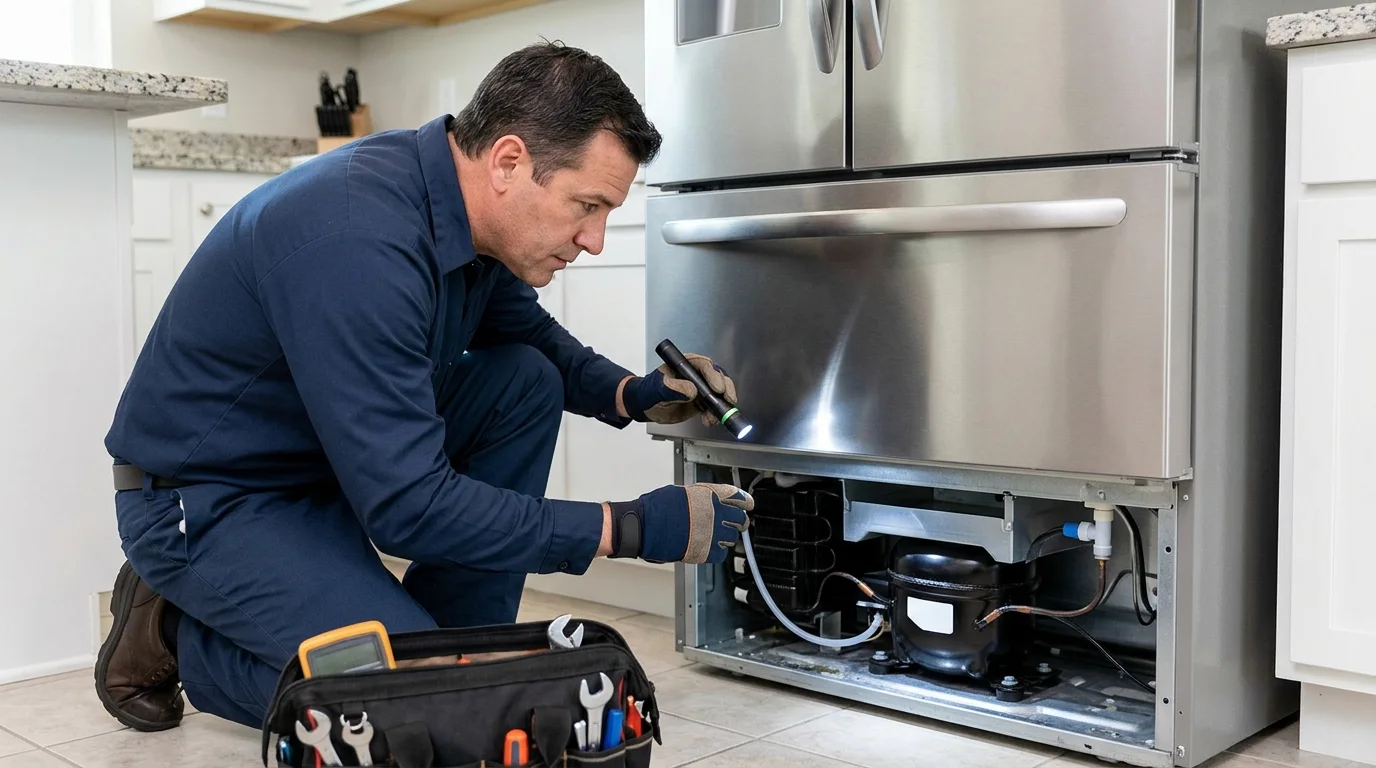
Defrost drain blockage
During normal defrost operation, meltwater needs a path out of the evaporator area. A blocked or frozen drain can allow water to collect where it should not. Depending on the design, the evidence can be water beneath drawers, ice on the freezer floor, or water eventually reaching the kitchen floor.
Drain access is highly model-specific. If the drain requires panel removal, working around wiring, or melting a large internal ice mass, that is beyond the simple external checks in this guide.
Drain pan, drainage path, or levelling issue
Defrost water typically ends up in a pan where it can evaporate. A displaced or damaged pan, an abnormal drainage path, or certain levelling problems can allow water to reach the floor. Some pans are not designed for routine homeowner removal, so do not force access just because water is visible underneath.
Door sealing and condensation
Warm humid air entering around a poor seal can create more condensation and frost. That moisture can eventually become visible water. A dirty gasket, an object preventing closure, a misaligned door, or a damaged seal can therefore contribute to a leak-like symptom even when no water tube is broken.
Ice maker or dispenser path
Water can also escape around the ice-maker fill path, dispenser tubing, or related connections. The most useful clue is event timing. If the floor stays dry until the ice maker fills or someone uses the dispenser, say that clearly in the repair request.
Common Mistakes That Make a Leak Harder to Diagnose
Do not keep wiping the water without noting where it reappears. Do not assume the wettest floor area is directly below the source. Do not push the refrigerator tightly back against the wall before inspecting the visible supply line. A line that is dry when pulled out can become pinched only after the appliance is returned to position.
Also avoid pouring hot water into a suspected internal drain unless the model instructions specifically describe a safe procedure. Internal drain layouts vary, and uncontrolled water can end up in places you did not intend.
What a Technician May Inspect or Test
A technician can trace the water path while distinguishing supplied water from defrost water. On a connected refrigerator, that can include the household line, inlet connection, filter housing, internal tubing, valves, dispenser path, and ice-maker fill components.
For a defrost-related leak, the technician may inspect the evaporator drain area, drain tube, collection path, and drain pan. The point is not only to clear water. It is to find out why the path became blocked or why water is leaving the intended route.
Door alignment and gasket contact can be checked separately. If condensation is the main source, repairing a water valve would not solve it. The diagnosis should follow the evidence rather than the first component that happens to be wet.
What to Check After the Leak Is Corrected
Dry the floor completely and monitor the same operating conditions that previously produced the leak. If the problem happened after ice production, allow the ice maker to operate. If it followed defrost, check again after the refrigerator has had time to cycle normally. If it started after a filter change, use the water system normally while watching the filter area.
The repair is not fully demonstrated by a dry floor for ten minutes. The relevant operating event needs to occur again without the leak returning.
How Leak Timing Changes the Diagnosis
A leak that appears on a schedule can be easier to narrow than one that is simply described as “random.” If the floor stays dry for hours and then water appears after the ice maker fills, the pressurized water path deserves attention. If moisture shows up after a cooling or defrost period even when nobody uses the dispenser, the defrost drain and internal drainage path move higher on the list.
Also notice whether the refrigerator leaks while it is unplugged. If a connected water line continues dripping with the appliance off, that points away from the cooling system and toward the supply tubing, valve connection, filter area, or another pressurized-water path. If the leak stops and later returns only as frost melts or the refrigerator resumes normal operation, the pattern is different.
This is why drying the area and observing one controlled cycle is more useful than guessing from the size of the puddle. The amount of water tells you how urgent the cleanup is. The timing tells you which system was active when the water appeared.
Refrigerator Leaking Water: Frequently Asked Questions
Why is there water under my crisper drawers?
A blocked defrost drain is one possible cause, but spilled liquid, condensation, or water travelling from another area can look similar. Dry the area and note whether water returns without dispenser use.
Can a refrigerator water filter cause a leak?
Yes. Incorrect installation, sealing problems, or a filter-housing issue can cause moisture around the filter area. A leak that began immediately after a filter change is useful timing information.
Does water behind the refrigerator mean the supply line is leaking?
It makes the supply line and connections important to inspect, especially on a refrigerator with an ice maker or dispenser. It still does not prove the line is the source because water can travel.
Can a bad door seal cause water on the floor?
A poor seal can admit warm humid air, increasing condensation and frost. That moisture can later become liquid water, but a door seal is not the only cause of front-edge water.
Should I unplug a leaking refrigerator?
If water is near electrical components or the cord, prioritize electrical safety. Do not stand in water to reach the plug. Turn power off only from a safe, dry location if needed.
Why does the leak happen only when the ice maker runs?
That timing makes the ice-maker fill path, water valve, tubing, and related connections more relevant. Tell the technician exactly when the water appears.
Is a leaking refrigerator worth repairing?
That depends on the confirmed source, the condition of the appliance, and the actual repair scope. A tubing or drain problem is a different decision from a leak combined with major cooling or structural problems.
When to Request Appliance Repair
Request professional assessment when the leak returns after the safe exterior checks, when water appears to come from inside the cabinet or under inaccessible panels, when a supply connection cannot be made reliably dry, or when leaking is combined with poor cooling, heavy internal ice, electrical symptoms, or repeated floor damage.
For broader refrigerator service information, see refrigerator repair Toronto. To submit the appliance details, Request Appliance Repair. Include where the water first appears, whether the refrigerator has a water connection, and what event seems to trigger the leak.
Need Appliance Repair?
Share the appliance, brand, address, symptoms and optional photos online. A contractor can review the request and contact you about availability and next steps.
Start Your Repair Request