
Refrigerator Running Constantly: Common Causes
Refrigerator Runs Constantly guide: learn the key details, compare options, check verified sources, and make a safer decision before you act.
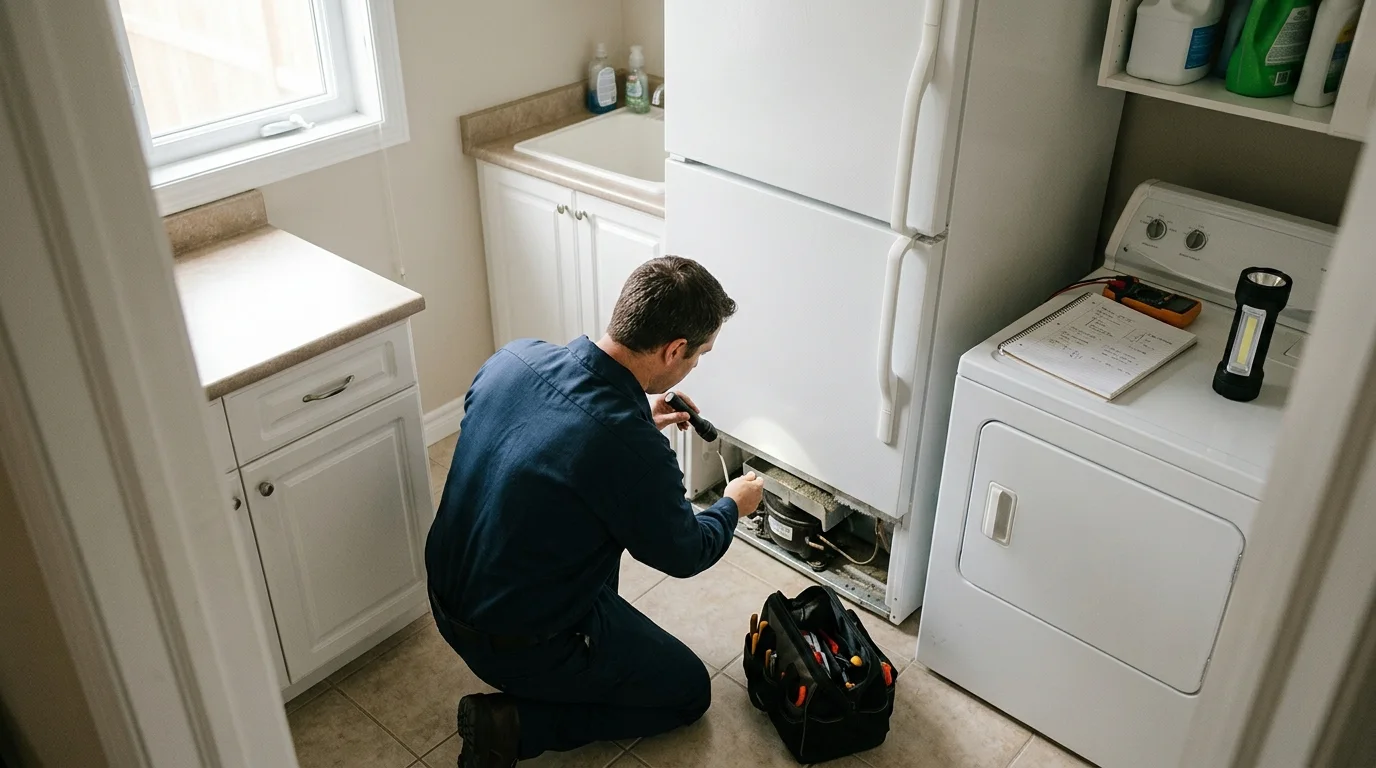
Before deciding that a refrigerator runs constantly, check two things: whether it ever becomes quiet during a longer observation period, and whether the refrigerator and freezer are actually holding normal temperatures. Long run time can be normal after door openings, warm groceries, or hot room conditions. Constant running becomes more concerning when the appliance cannot reach or maintain its target temperature.
Refrigerator Runs Constantly: Check Temperature Before Run Time
Run time by itself is a weak diagnosis. A refrigerator that is working hard after a large grocery load may sound almost continuous for a while and then return to its normal pattern. A refrigerator that runs continuously for many hours while both compartments become warmer is telling you something different: cooling demand is not being satisfied.
GE’s current refrigerator and freezer run-time guidance lists warm room conditions, large food loads, frequent door openings, gasket problems, blocked vents, and condenser condition among factors that can increase run time. That is why the first diagnosis should be demand versus cooling capacity, not “compressor runs a lot, therefore compressor is bad.”
Before You Start, Look for a Recent Change
Think about what happened in the last day or two. Was the refrigerator just installed or moved? Did you load a large amount of room-temperature food? Has the kitchen been unusually warm? Have the doors been opened repeatedly? Did someone change the temperature setting?
A recent change can explain high demand. If nothing changed and the refrigerator suddenly began running much longer than its normal pattern, a sealing, airflow, fan, sensor, defrost, heat-rejection, control, or refrigeration-system problem becomes more relevant.
Step 1: Check Whether the Refrigerator Is Actually Too Warm
Do not judge only by compressor sound. Check food temperature with an appliance thermometer if one is available, and compare the refrigerator and freezer sections separately. One warm compartment can suggest an airflow-distribution problem. Both compartments warming while the unit runs heavily moves the diagnosis toward a broader cooling-capacity problem.
If temperatures are normal and stable, the refrigerator may simply be in a high-demand period or may use a control strategy that produces long run cycles. The next checks should focus on what is increasing the cooling load.
Step 2: Check Door Closure and Gasket Contact
Every door opening replaces some cold cabinet air with warmer room air. A door that is not fully closing does the same thing continuously. Check for a package, drawer, shelf, or bin preventing closure. Wipe food residue from the gasket and cabinet contact area.
A damaged or folded gasket can let warm moist air enter. That increases the amount of heat the refrigerator has to remove and can also contribute to condensation or frost. Do not assume the gasket must be replaced because run time is long. Look for an actual sealing problem.
Step 3: Check Interior Airflow
Cold air has to move through the refrigerator and freezer compartments. Containers pushed against supply or return vents can create warm zones, frozen spots, slow recovery, and longer run time. Whirlpool notes that blocked air vents can lead to uneven temperatures and longer run times.
Move food away from obvious vents and leave room for circulation. Do not empty the refrigerator completely just to create airflow. The goal is to stop packages from sealing off the designed air path.
Step 4: Check the Heat-Rejection Area Only as Your Model Allows
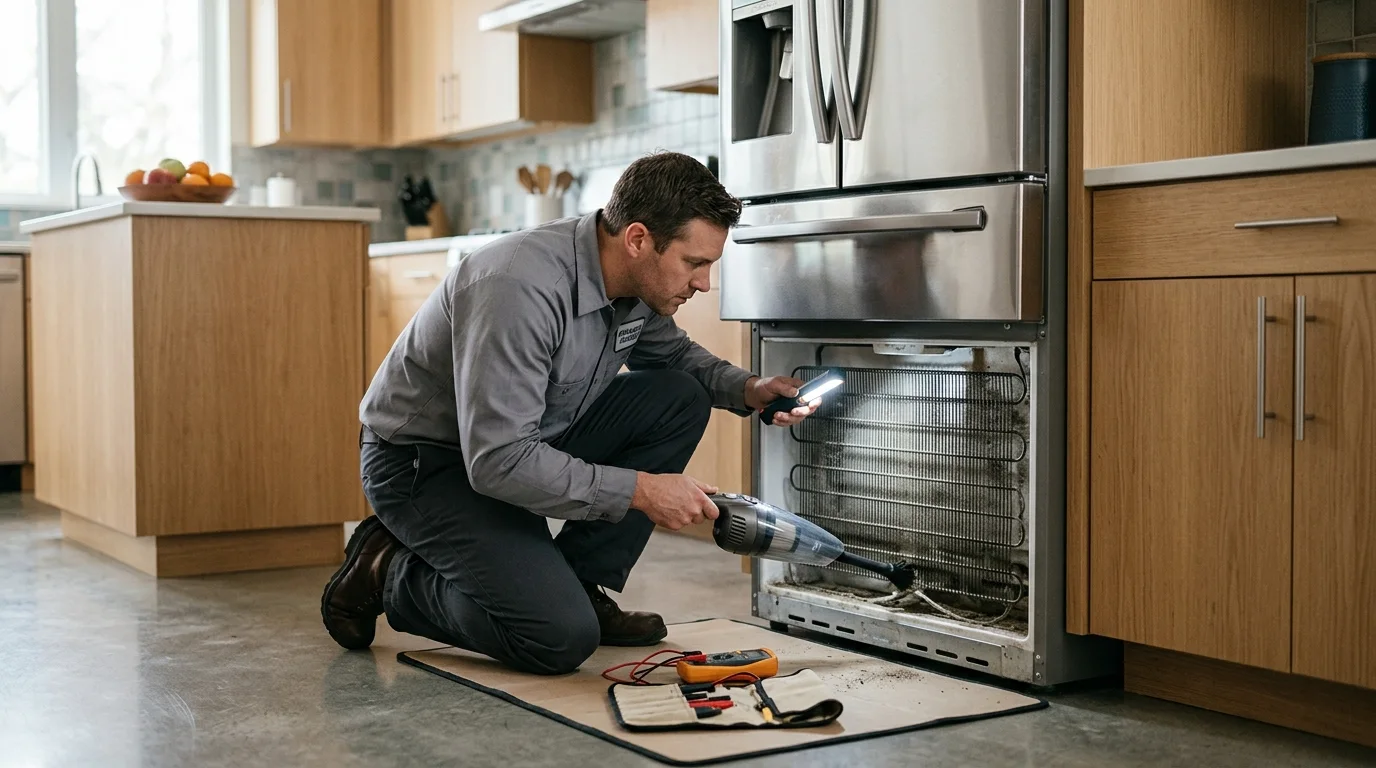
Some refrigerators have condenser areas that the owner manual instructs you to clean. Others use designs that are not intended for routine homeowner coil cleaning. If your manual identifies an accessible condenser, disconnect power as directed and remove dust using the approved method.
Heat has to leave the refrigerator somewhere. Dirt and restricted airflow around an accessible condenser can make that heat transfer less effective, causing the cooling system to work harder and longer.
What the Run Pattern Can Tell You
Runs for a long time but temperatures are normal
Look first at demand: room temperature, recent warm food loading, repeated door openings, and whether the appliance is recovering from a setting change or power interruption. This pattern is less alarming than constant operation with rising cabinet temperature.
Runs constantly and both refrigerator and freezer are warm
This means the cooling system is working for long periods without satisfying demand. Airflow, heat rejection, fans, controls, compressor operation, and sealed-system performance all become relevant. The symptom does not tell you which one failed.
Runs constantly, freezer is cold, refrigerator section is warm
A compartment-specific airflow problem becomes more important. Blocked vents, evaporator frost, fan performance, damper operation, or another distribution problem can prevent enough cold air from reaching the fresh-food section even while the freezer remains cold.
Runs constantly and frost is building heavily
Heavy frost can block evaporator airflow and make the refrigerator work harder while temperatures become uneven. Warm-air entry through a door problem can create frost, and a defrost-system fault can also allow frost to accumulate. The frost pattern and recurrence need to be diagnosed before a defrost component is blamed.
Runs constantly after the refrigerator was moved
Check whether the doors close correctly, whether the cabinet is stable, whether airflow clearance changed, and whether the water or power installation was disturbed. Also allow the appliance time to recover from being open and warm during the move.
Common Cause Groups
High cooling demand
Warm food, frequent door use, a hot room, or a recent temperature adjustment can all increase how much heat the appliance must remove. This group can produce long run time without a failed component.
Door sealing problem
A gasket or closure problem lets room air continuously enter. The refrigerator then has to remove both heat and moisture. Look for frost or condensation near the affected area as supporting evidence.
Blocked airflow or fan problem
Airflow problems can make one area warm while another remains cold, or can slow the entire system’s recovery. A fan that is obstructed, iced in, or not operating normally can create a similar pattern.
Defrost problem
On frost-free systems, excess frost around the evaporator can eventually restrict airflow. A defrost heater, sensor, control, wiring, or other part of the defrost system may be involved, but frost does not identify the failed component on its own.
Temperature sensing or control problem
If the control receives inaccurate temperature information or fails to respond correctly, it may keep demanding cooling when the compartment no longer needs it, or it may fail to manage fans and dampers correctly. Model-specific testing is required.
Compressor or sealed-system performance problem
A compressor can run for long periods because the sealed system is not moving enough heat. That can involve the compressor or another refrigeration-system condition. Constant run time is a reason to test the system, not a diagnosis of compressor failure.
Safe Checks a Homeowner Can Make
- Check actual refrigerator and freezer temperatures if you have a suitable thermometer.
- Confirm doors close fully and no package or drawer interferes.
- Clean visible gasket contact surfaces and inspect for obvious damage.
- Move food away from supply and return vents.
- Think about recent warm food loads, door use, room heat, a move, or a power interruption.
- Clean only the condenser areas your owner manual identifies as homeowner-accessible.
- Record whether the compressor and fans ever stop, and whether temperatures improve or continue to rise.
What a Technician May Inspect or Test
A technician can confirm actual compartment temperatures and compare them with sensor readings and control commands. Fan operation, damper movement, frost pattern, door sealing, and condenser airflow can be evaluated separately.
If the refrigerator is running constantly but cooling poorly, the technician may test compressor operation and sealed-system performance after simpler airflow and control causes have been checked. That order matters. A blocked air path can make a healthy compressor run for long periods.
If the appliance is overcooling while running continuously, temperature sensors, control logic, dampers, and other model-specific components become more important than a lack-of-capacity diagnosis.
Common Mistakes to Avoid
Do not repeatedly turn the temperature colder because the refrigerator seems to be running too much. A colder setting can increase run time further. Do not vacuum behind every refrigerator unless the manual shows an accessible condenser that should be cleaned. Do not assume a warm exterior cabinet means failure; some heat at the cabinet can be part of normal heat rejection.
Most importantly, do not replace a start device, sensor, fan, or compressor from run time alone. The same long-run symptom can be produced by several systems.
High Demand and Weak Cooling Can Look Similar at First
A refrigerator can run for a long time because the cooling demand is high, or because the system is struggling to satisfy normal demand. Those situations look similar if you only listen for the compressor. Temperature trend is what separates them.
After groceries are loaded, doors have been opened repeatedly, or the room becomes unusually warm, long run time can be expected while the appliance removes added heat. If measured temperatures steadily move toward normal and the run pattern later settles, the refrigerator may simply have been responding to a temporary load.
If the refrigerator runs continuously and temperatures stay too warm or keep getting warmer, the same run time means something different. Airflow, door sealing, defrost, fan operation, sensing, heat rejection, or refrigeration-system performance may be limiting the appliance’s capacity. Constant operation is then a symptom of unmet cooling demand rather than proof that the compressor itself is bad.
Why Door Openings Have a Bigger Effect Than They Seem To
Every door opening replaces some cold, dry cabinet air with warmer room air. The refrigerator then has to remove both the added heat and, in many conditions, moisture that entered with that air. A door that is slightly blocked by a package can create a nearly continuous load even though it appears closed from across the room.
Check the full perimeter rather than only the handle side. A tall container, crisper drawer, shelf, or food package can prevent complete closure. So can a refrigerator that is not positioned as the manufacturer requires. If the gasket is visibly damaged, folded, dirty, or not making consistent contact, record that condition before assuming an internal cooling fault.
Track One Temperature Trend Instead of Repeatedly Changing Settings
Changing the control every few hours makes diagnosis harder because the refrigerator never gets a stable period to respond. Choose the model-appropriate normal setting, keep the doors closed as much as practical, and observe the temperature trend with an appliance thermometer if one is available.
If temperature improves while the refrigerator runs, note how long recovery takes and whether the unit eventually cycles. If temperature does not improve, that is stronger evidence that additional diagnosis is needed. The trend is more useful than guessing how many minutes per hour a refrigerator “should” run because normal run time varies with design and conditions.
Refrigerator Running Constantly: Frequently Asked Questions
Can a refrigerator run almost all the time and still be normal?
It can during periods of high cooling demand or certain operating conditions. Temperature performance and recent use matter more than run time by itself.
Can a bad door gasket make the refrigerator run longer?
Yes. A sealing problem allows warm room air and moisture into the cabinet, increasing the cooling load.
Do blocked vents affect run time?
They can. Poor circulation can create warm zones, slow recovery, and cause the system to keep cooling longer while temperatures remain uneven.
Should I clean the condenser coils?
Only if your model’s owner instructions identify an accessible condenser that is intended for owner cleaning. Some designs do not require or allow the same access.
Does constant running mean the compressor is bad?
No. It can be caused by demand, door sealing, airflow, defrost, fan, sensor, control, compressor, or sealed-system conditions. Testing is needed to separate them.
Why is the freezer cold but the refrigerator warm?
That pattern often makes airflow distribution more important. Vents, frost, fans, and dampers may need to be checked before concluding there is a whole-system cooling failure.
When should I request service?
Arrange assessment when long run time persists without an obvious high-demand reason, temperatures are rising or uneven, heavy frost keeps returning, or the appliance has abnormal noise, start, or electrical symptoms.
When to Request Appliance Repair
If safe checks do not explain the long run time, or if the refrigerator runs continuously while temperatures move in the wrong direction, professional diagnosis is the sensible next step. The same applies when a fan is not operating normally, heavy frost returns, or a start or electrical symptom accompanies the run-time change.
For broader refrigerator service information, see refrigerator repair Toronto. To submit the model, temperatures, run pattern, and symptoms, Request Appliance Repair.
Need Appliance Repair?
Share the appliance, brand, address, symptoms and optional photos online. A contractor can review the request and contact you about availability and next steps.
Start Your Repair Request