
Refrigerator Ice Maker Not Working: Common Causes
Refrigerator Ice Maker Not Working guide: learn the key details, compare options, check verified sources, and make a safer decision before you act.
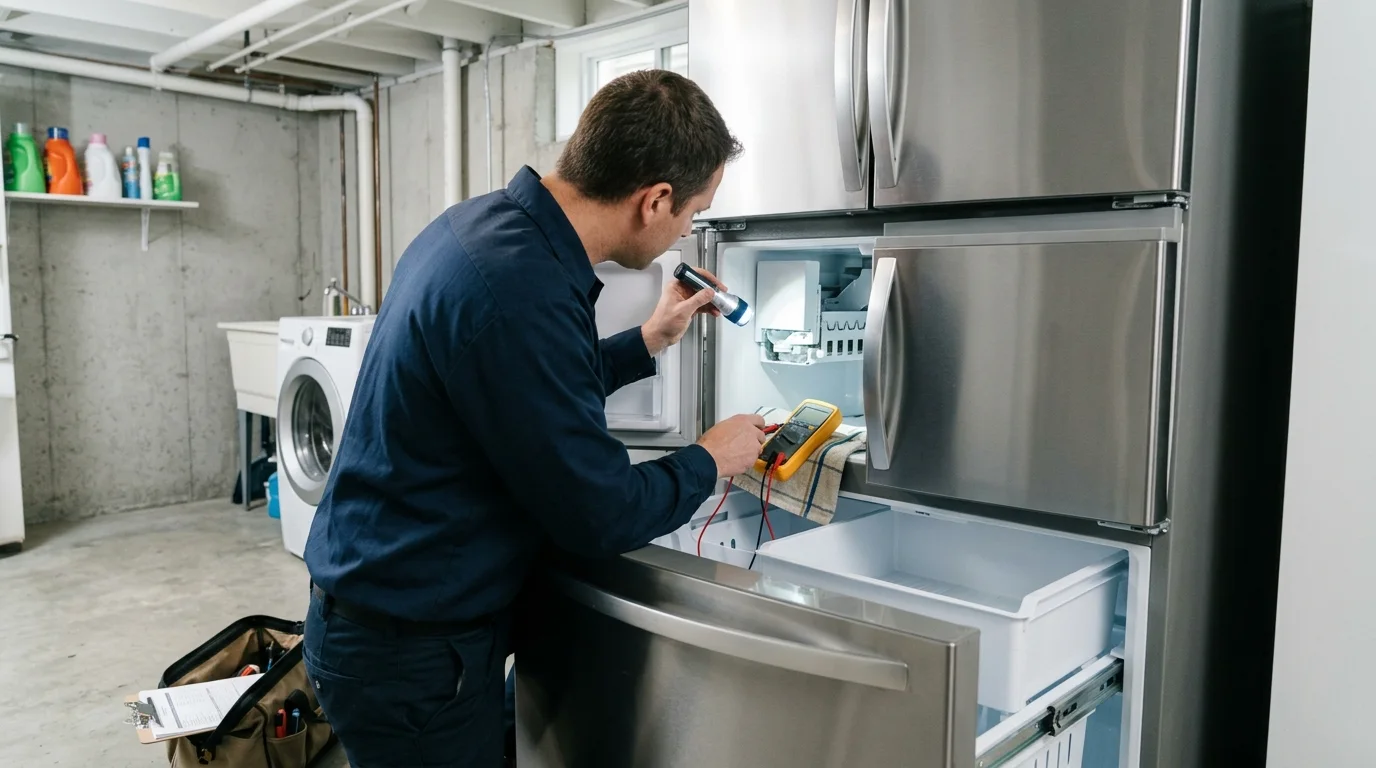
If your refrigerator ice maker not working problem means there is no new ice in the bucket, start by separating an ice-production problem from an ice-dispensing problem. No ice can come from a warm freezer, an ice maker that is turned off, restricted water flow, a filter or line issue, a frozen or blocked fill path, a control problem, or the ice-maker assembly itself. The symptom does not prove one failed part.
The most useful first questions are simple: Is there already ice in the bucket? Does the refrigerator still dispense water? Is the freezer actually maintaining a normal freezing temperature? Those three observations tell you more than replacing the first ice-maker part that appears in a search result.
Refrigerator Ice Maker Not Working: Start With the Exact Symptom
People often use “ice maker not working” for three different complaints. The refrigerator may make no ice at all. It may make ice slowly or produce unusually small cubes. Or it may make normal ice but fail to move that ice from the bucket through the dispenser. Those are different diagnostic paths.
If the bucket is full but pressing the dispenser does nothing, the ice maker has already completed its main job. The problem is more likely in the bucket, auger, dispenser controls, door conditions, or ice-delivery path. If the bucket stays empty, then freezer temperature, water supply, filter condition, ice-maker controls, fill operation, and harvest operation become more relevant.
Current Samsung Canada ice-maker guidance makes the same basic distinction by first checking whether ice is present and whether the ice maker is turned on. Whirlpool and GE also direct owners toward water, temperature, filter, and ice-maker checks rather than treating no ice as proof of a failed assembly.
Check Freezer Performance Before Blaming the Ice Maker
An ice maker depends on the freezer doing its job. If frozen food feels soft, ice cream is unusually soft, or a thermometer shows the compartment is too warm for normal frozen storage, the ice-maker symptom may be secondary to a cooling problem.
A warm freezer can slow or stop the freezing portion of the ice-making cycle. That matters because replacing an ice maker will not solve a refrigerator that cannot maintain the temperature the ice maker needs. Look at the broader appliance first: Is the freezer recovering normally after door openings? Is frost blocking vents? Is the door sealing? Are other frozen items staying properly frozen?
If the freezer is clearly too warm, focus on the cooling symptom and avoid repeated ice-maker resets. A professional may need to diagnose airflow, defrost, fan, sensing, control, or refrigeration-system performance before the ice maker can be judged fairly.
Use the Water Dispenser as a Clue, Not a Verdict
If the refrigerator has a water dispenser, test whether it still delivers a normal stream. No water at the dispenser and no ice production at the same time move the shared upstream water path higher on the list. The house shutoff, supply line, filter, filter installation, or inlet-water system may deserve attention.
If water dispenses normally but the ice bucket remains empty, that does not prove the ice maker is bad. The dispenser and ice maker can share part of the water system while using different valves, tubing paths, controls, and timing. Normal dispenser flow simply tells you that some of the upstream supply is working.
Likewise, slow dispenser flow plus small or reduced ice production can fit a restriction pattern. Whirlpool’s current ice maker troubleshooting guidance notes that a clogged or improperly installed filter can reduce flow to both the dispenser and ice maker.
Use a Three-Signal Check Before You Reset Anything
Before changing controls, capture three observations: freezer temperature, water-dispenser performance if the refrigerator has one, and the condition of the ice bucket. These three signals create a simple diagnostic map.
If the freezer is too warm and the bucket is empty, cooling performance comes first. If the freezer is cold, the dispenser is weak, and the bucket is empty, water delivery moves higher on the list. If the freezer is cold, the dispenser is strong, and the bucket is empty, the shared upstream water supply is less suspicious, although the ice-maker branch can still have a restriction or valve problem.
If the bucket contains ice but nothing comes through the door, stop calling it a no-production problem. The ice maker has made ice. That symptom belongs to the dispensing path. Separating those complaints prevents unnecessary resets and parts guesses.
What Small, Hollow, or Irregular Cubes Can Tell You
The ice bucket does not have to be completely empty to contain useful evidence. Small, hollow, or incomplete cubes can suggest that the mold is not receiving the expected amount of water or that freezing conditions are not stable. That can fit restricted flow, filter condition, supply pressure, fill timing, or temperature problems.
Do not use cube appearance to name the failed part. A restricted filter and a restricted line can look similar from the bucket. So can an ice maker that receives an incomplete fill command. The cube shape is evidence about the process, not a diagnosis.
If production is simply slower than before, note whether anything else changed at the same time. A new filter, plumbing work, a recent move, heavy freezer loading, repeated door openings, or a temperature problem may explain why the rate changed. If nothing changed and production steadily declines, a professional can test the water and harvest sequence.
What a Working Water Dispenser Does Not Prove
It is tempting to say, “The dispenser works, so the water system is fine.” That conclusion is too broad. The dispenser proves that the refrigerator has at least some water supply and that the dispenser branch can operate. It does not prove the ice-maker fill valve, tubing, fill tube, control signal, or ice-maker branch is open and functioning correctly.
The reverse is also true. If the dispenser has stopped and the ice maker still makes ice, the house water supply is not completely absent. That pattern pushes the diagnosis toward the dispenser-specific path. Using one feature as a comparison point is valuable only when the limits of that comparison are understood.
Ice Buildup Can Be a Symptom and a Cause
Ice around the ice-maker compartment can interfere with normal movement, sensing, air circulation, or fill paths. But the presence of ice does not explain why it formed. A door-sealing condition, warm-air entry, fill splash, overfill, drain issue, or another model-specific condition may be underneath the visible buildup.
If a model-approved defrost or thaw temporarily restores operation and the same buildup returns, record how quickly it returns and where it begins. Recurrence is more useful than repeatedly melting the symptom. Avoid concentrated heat, sharp tools, or prying on plastic housings.
Why Repeated Resets Can Hide the Pattern
A reset can be appropriate when the owner manual specifically calls for it, but repeated resets are not a diagnosis. If the refrigerator makes one batch after a reset and then stops again, that pattern is important. It suggests the system can perform at least part of the sequence under some conditions.
Write down what happens after the reset instead of resetting again immediately. Does the ice maker fill? Does it freeze but not harvest? Does it make one normal batch and then stop? Does the freezer temperature change? A technician can use that sequence to test the correct stage.
Common Cause Groups for No Ice Production
Ice maker turned off or control condition
Some refrigerators use a physical arm, switch, control-panel setting, or menu option to enable ice production. A control can be changed accidentally during cleaning, moving, or loading the freezer. Check the owner-facing control only. Do not assume a hidden service mode or test sequence applies to your model.
Restricted water supply
A closed or partly closed household supply valve, kinked line, restricted filter, incorrectly installed filter, or frozen fill path can prevent the ice maker from receiving the amount of water it expects. If the refrigerator was recently moved, had plumbing work, or had a filter replaced, the timing is useful evidence.
Freezer temperature too warm
If the compartment is not cold enough, the ice maker may not complete normal freezing and harvest. This cause group should be considered before internal ice-maker replacement, especially when food storage temperatures are also abnormal.
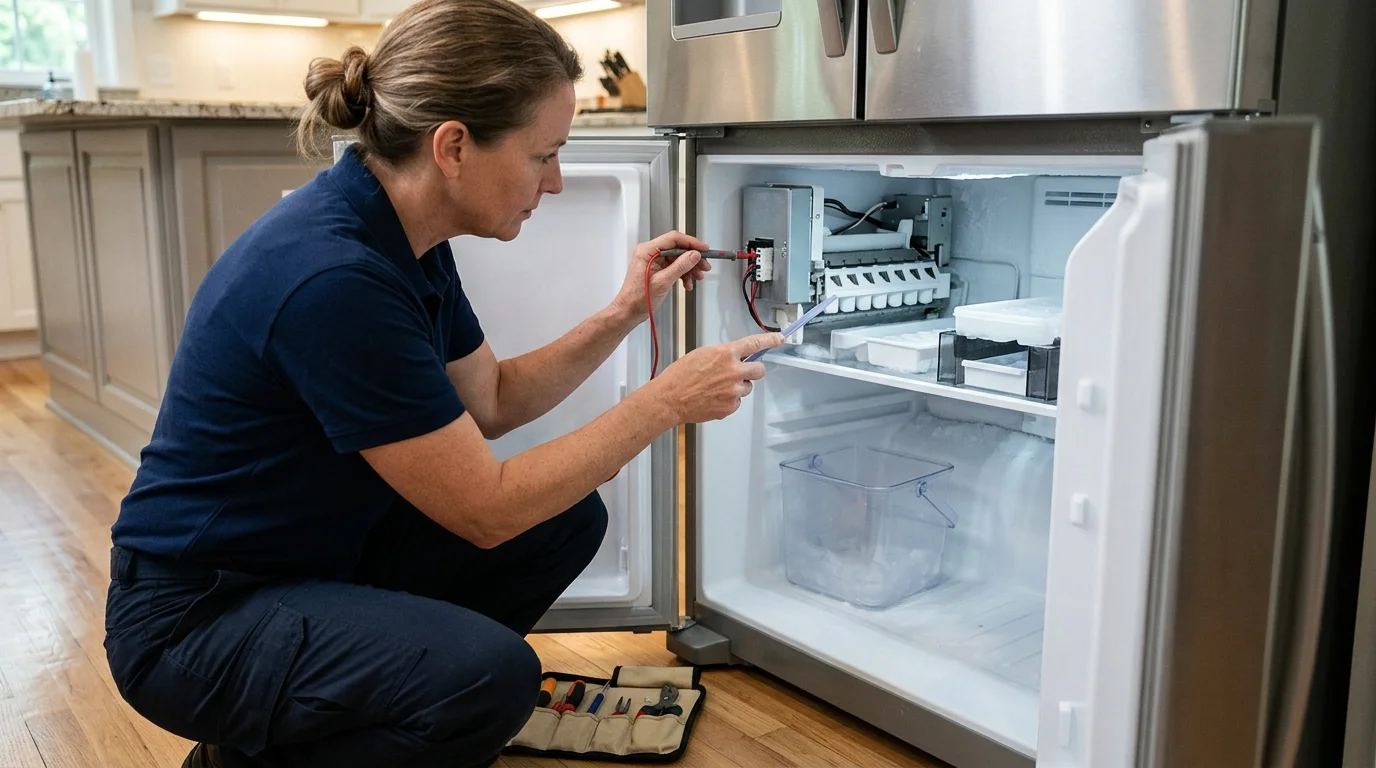
Ice blocked in the mold, bucket, or harvest path
Depending on the design, ice can jam a moving part or accumulate where cubes are expected to release. GE’s official ice-maker support guidance notes that cubes can block the mold or ejector area. Do not force mechanisms or use sharp tools around the assembly. Follow the model’s owner instructions if a simple visible obstruction is safely removable.
Control, sensor, valve, wiring, or ice-maker assembly fault
Once temperature and accessible water-supply conditions are reasonable, the remaining causes move inside the appliance. A technician may need to determine whether the ice maker is being told to cycle, whether the fill valve receives the correct command, whether water reaches the mold, whether a sensor is reporting the expected state, and whether the harvest mechanism can complete its cycle.
Safe Checks a Homeowner Can Make
Keep the checks external and model-appropriate. Verify that the ice maker is enabled using the normal user control. Look at the freezer temperature setting and, ideally, compare it with an appliance thermometer. Confirm that the household water supply to the refrigerator has not been shut off. Look for an obvious kink in an accessible supply line. If a filter was recently changed, confirm it is the correct type and fully seated according to the owner’s instructions.
Then look inside the ice bucket and around the visible ice-maker area without removing service panels. Note whether the bucket is empty, partly filled, frozen into one mass, or receiving tiny cubes. Those details help distinguish no production from poor production and from a dispenser problem.
If the freezer contains heavy frost, is too warm, or has another cooling symptom, record that too. The ice maker may be the first feature you noticed, but the root problem can be elsewhere in the refrigerator.
What Not to Do
Do not keep pressing undocumented test buttons, entering service menus found for a different model, forcing the ejector, applying high heat to plastic water tubing, or removing energized panels. Ice-maker assemblies combine water, electrical controls, moving parts, and very cold surfaces. A reset that is correct for one model may be wrong for another.
Also avoid replacing the water valve or ice-maker assembly solely because a search result calls it “common.” The word common does not tell you what has failed in your refrigerator. A technician should verify which part of the cycle stops first.
What a Technician May Inspect or Test
A useful professional diagnosis follows the ice-making sequence. First, confirm freezer temperature and cooling stability. Next, verify the water supply and filter condition. Then determine whether the refrigerator calls for water, whether the inlet valve responds, whether the fill tube is open, whether the ice mold fills, and whether the harvest mechanism completes its cycle.
That sequence matters because several failures produce the same empty bucket. If the valve never receives a command, replacing the valve may do nothing. If the valve opens but no water reaches the mold, the restriction may be downstream. If the mold fills and freezes but cubes never harvest, the problem lies later in the sequence.
A technician may also inspect wiring, connectors, door or bin sensors where applicable, control signals, and signs of recurring ice buildup. Model-specific service information determines the exact test method.
When to Stop Testing and Request Repair
Request professional assessment if the freezer is not maintaining temperature, if water leaks accompany the ice-maker problem, if the refrigerator repeatedly trips power, if there is damaged wiring, or if safe external checks do not restore normal production. A no-ice condition that returns repeatedly after temporary thawing also deserves diagnosis rather than repeated symptom removal.
For related service information, see refrigerator repair Toronto. To submit the model, freezer-temperature pattern, dispenser behaviour, and what you have already checked, Request Appliance Repair.
Why the Pattern Matters More Than the Part Name
Two refrigerators can both have an empty ice bucket for completely different reasons. One may have a warm freezer and no ability to freeze water. Another may be perfectly cold but have no water reaching the mold. A third may fill and freeze correctly but fail during the harvest step. The visible symptom is identical, but the repair path is not.
That is why the best pre-service note is not “ice maker broken.” Write down what the freezer temperature is doing, whether water dispenses, whether you hear a brief fill event, whether any cubes appear, and whether the symptom started after a filter change, move, power interruption, or heavy frost event. Those observations give the diagnosis somewhere useful to start.
Refrigerator Ice Maker Not Working: Practical Takeaway
A refrigerator ice maker not working usually needs a sequence, not a guess. Confirm the complaint is truly no ice production, check freezer performance, check the owner controls, compare water-dispenser flow where applicable, inspect the accessible filter and water-line conditions, and note any visible ice blockage. If those checks do not explain the symptom, professional testing can determine which stage of the ice-making cycle is failing.
Need Appliance Repair?
Share the appliance, brand, address, symptoms and optional photos online. A contractor can review the request and contact you about availability and next steps.
Start Your Repair Request