
AC Runs but Does Not Cool: What That Usually Means
Air Conditioner Not Cooling But Running guide: learn the key details, compare options, check verified sources, and make a safer decision before you act.
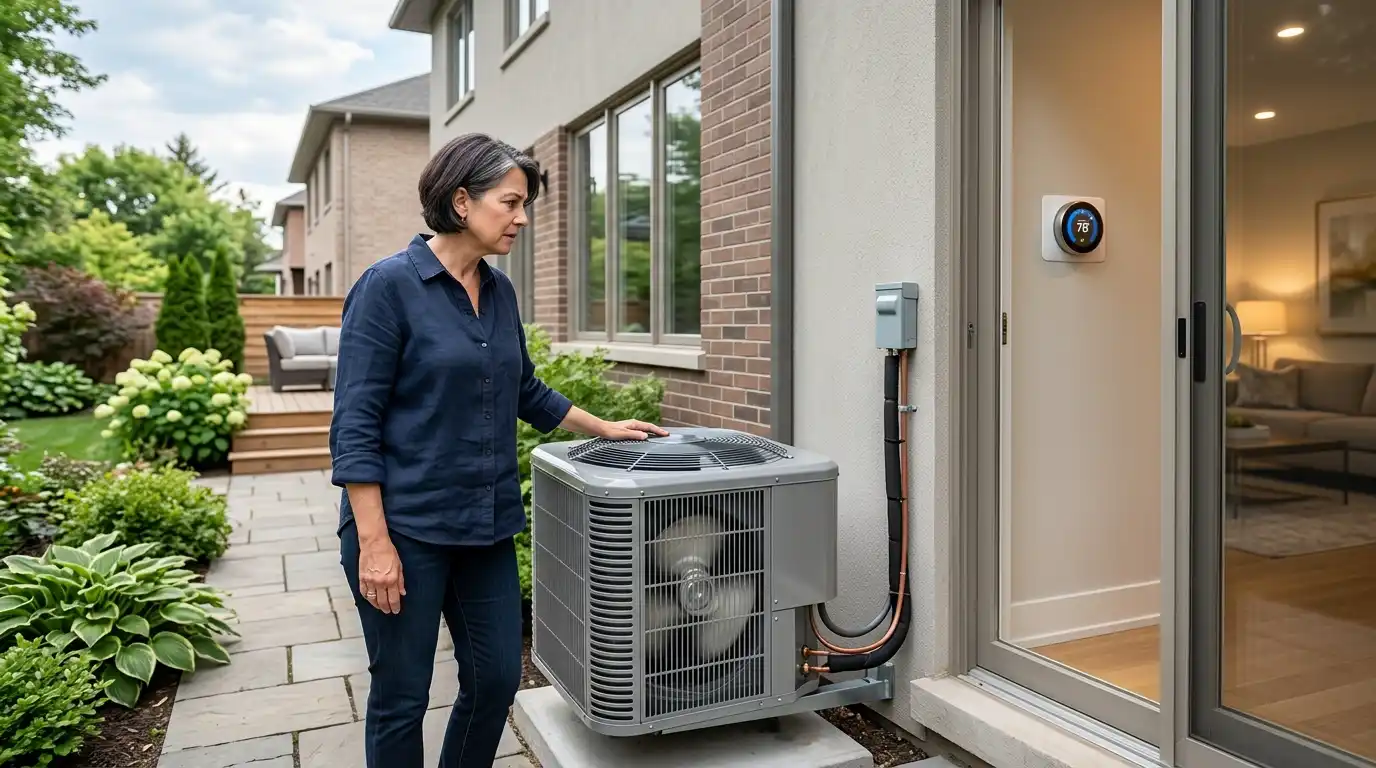
When an air conditioner not cooling but running symptom appears, the indoor blower may still be operating even though the system is no longer removing heat from the home. That can happen because the thermostat is not calling for cooling correctly, airflow is restricted, the indoor coil has frozen, the outdoor unit is obstructed or not operating properly, or a mechanical, electrical, ductwork, or refrigerant problem is preventing normal cooling.
The sound of air moving through the vents does not prove that the complete air-conditioning system is cooling. Central air conditioning depends on several parts working together. The thermostat sends a cooling request, the indoor blower moves air across the evaporator coil, the outdoor condenser rejects heat, and the refrigerant circuit transfers heat between the indoor and outdoor sections. A fault in any one of those areas can leave the fan running while the room temperature continues to rise.
Start with the observations that are safe to make from outside the equipment. Check the thermostat, airflow, filter, registers, visible ice, and obvious obstructions around the outdoor unit. Do not open electrical panels, handle refrigerant lines, bypass controls, or try to force a component to run. If the system is icing, making an electrical burning smell, repeatedly tripping a breaker, or producing unusual mechanical noise, switch it off and arrange professional diagnosis.
For a related next step, read fridge not cooling.
Why the Indoor Fan Can Run Without Cooling
The indoor blower and the outdoor cooling components do not perform the same job. The blower can receive power and circulate air even when the compressor, condenser fan, control circuit, or refrigerant system is not working as intended. This is why warm or room-temperature air from the vents does not identify one failed part by itself.
A thermostat may be set to run the fan continuously, for example, instead of using the automatic fan setting. In that situation, the blower can continue moving air even when there is no active cooling call. A cooling call can also be present while the outdoor unit remains silent or fails to produce cooled air. The distinction matters because replacing a filter will not solve an outdoor electrical fault, and resetting a thermostat will not repair a refrigerant leak.
Think of the symptom as a starting point rather than a diagnosis. The most useful clues are what the air feels like, how strong the airflow is, whether there is ice or water, what the outdoor unit is doing, and whether the system ever produces cooler air before the problem returns.
Clues That Help Narrow the Problem
Weak Airflow from the Vents
Weak airflow makes an airflow restriction more likely. A heavily loaded filter, closed or blocked registers, a blower problem, obstructed return air, or a restriction in the ductwork can reduce the amount of air passing over the indoor coil. Poor airflow can also allow the coil to become too cold and freeze, which reduces airflow even further.
Check whether the weakness affects the whole home or only certain rooms. A system-wide change points more toward the filter, return path, blower, or equipment. Airflow that is weak in one room may involve a closed register, a disconnected duct, a crushed flexible duct, or an issue affecting that branch of the distribution system. These clues help a technician decide where to begin, but they do not confirm a specific fault.
Normal Airflow That Feels Warm
Strong airflow with warm or barely cool air suggests that air is moving but the cooling process is not working effectively. Incorrect thermostat settings, an outdoor unit that is not operating, a compressor or electrical problem, refrigerant trouble, or a control issue can all create this pattern.
Listen and look from a safe distance when the thermostat is calling for cooling. The indoor blower may be audible while the outdoor unit is silent, or the outdoor fan may run without the system producing normal cooling. Neither observation proves which component has failed. Electrical and sealed-system diagnosis requires appropriate tools and training.
Ice on the Indoor Coil or Refrigerant Lines
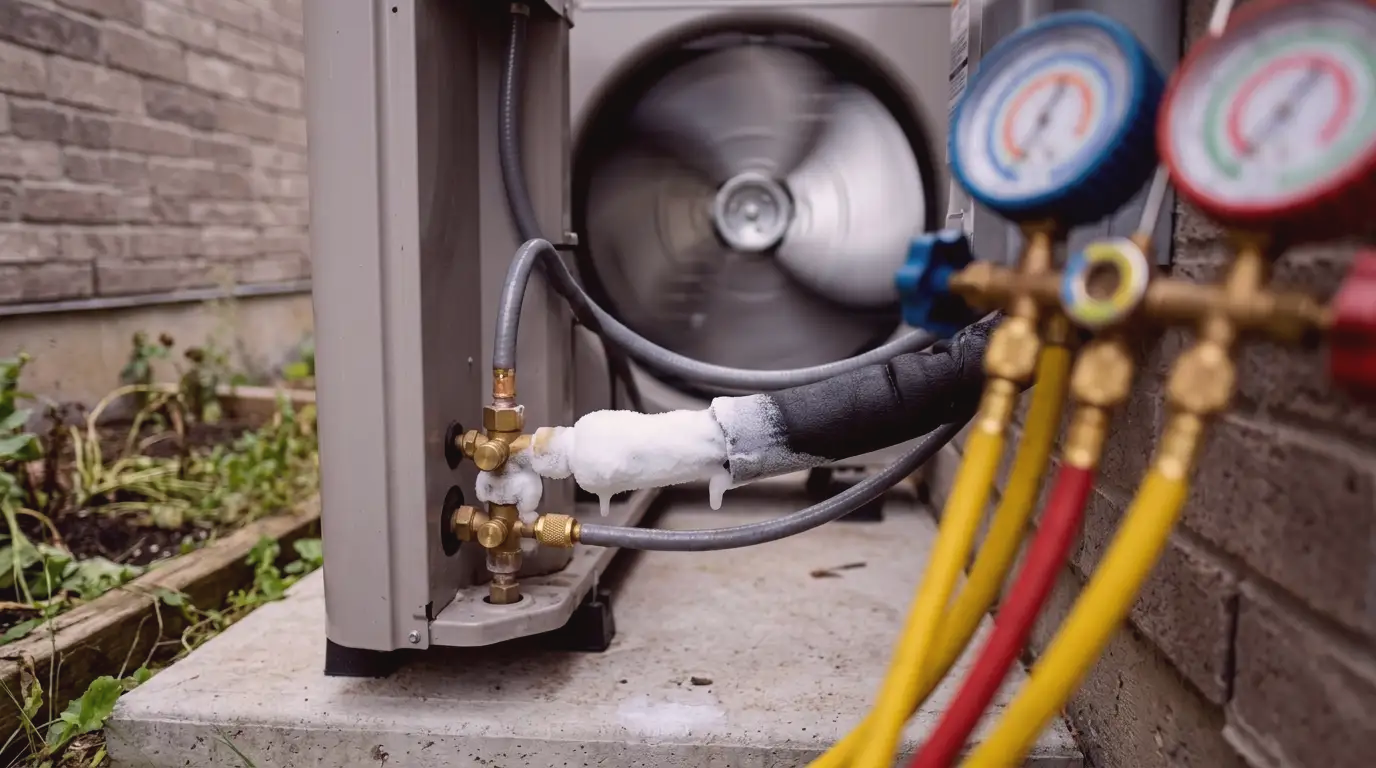
Ice is not evidence that the air conditioner is cooling especially well. It usually indicates that the system is operating outside normal conditions. Restricted airflow can reduce the warm air reaching the indoor coil, while a refrigerant-related problem can also produce abnormal coil temperatures. A malfunctioning blower or control issue may contribute as well.
Turn the cooling system off if you see ice on the accessible refrigerant line, indoor equipment, or nearby cabinet. If the thermostat allows it and the blower can run without cooling, using the fan-only setting may help move room-temperature air across the coil while it thaws. Do not scrape the ice, pour hot water onto the equipment, or keep running the compressor in an attempt to force the system to cool. Ice can conceal the original problem and continued operation may increase strain or water damage as the ice melts.
The Outdoor Unit Is Silent
If the indoor blower runs but the outdoor unit does not respond to a cooling call, the problem may involve the thermostat signal, disconnect, wiring, controls, capacitor, contactor, compressor, or another electrical or mechanical component. A tripped breaker can also interrupt part of the system, but repeatedly resetting a breaker is not a troubleshooting strategy.
Check the thermostat display and the home electrical panel only from the outside and only for an obvious tripped air-conditioning breaker. If it trips again, leave it off and request service. Do not remove the electrical panel cover or attempt to test live components. If there is smoke, arcing, a burning odour, or melted wiring visible from outside the cabinet, stop using the system.
The Outdoor Fan Runs but Cooling Is Still Poor
An outdoor fan turning does not establish that the compressor is operating correctly or that the refrigerant circuit is healthy. The system may have a compressor, control, airflow, or refrigerant problem even when the fan is spinning. A dirty or obstructed outdoor coil can also reduce heat transfer and make the system struggle to cool.
With power to the system off, a homeowner can remove loose leaves, grass, and other obvious debris from the area around the outdoor cabinet without opening the unit. Keep clearance around the equipment as recommended by the manufacturer and avoid bending coil fins or spraying water into electrical areas. Do not use a hose or cleaning chemical unless the applicable equipment instructions clearly support that procedure.
Water Around the Indoor Equipment
Water may appear when a frozen coil thaws, when a condensate drain is obstructed, or when the drain pan or related components have a problem. Water around an air handler or furnace cabinet should not be ignored, particularly if it is reaching flooring, walls, insulation, wiring, or other building materials.
Turn off cooling if ice is present or water is accumulating. Protect nearby belongings from additional water while arranging service, but avoid disassembling the drain system or inserting tools into equipment openings. The correct repair depends on why the condensate is not being removed and whether icing caused the overflow.
Unusual Noises or Nonstop Operation
Clicking, buzzing, grinding, rattling, squealing, or repeated starting and stopping can provide useful information, but a sound recording or description cannot confirm a failed component. Nonstop operation may occur when the outdoor temperature is high, the home has unusual heat gain, the filter is restricted, the system is undersized for the current conditions, or the equipment has developed a fault.
If the system runs continuously and the indoor temperature still rises, do not assume that leaving it on will eventually solve the problem. Check the safe items below, then arrange diagnosis if the temperature does not improve or if other warning signs appear.
Safe Checks for an Air Conditioner Not Cooling but Running
These checks are limited to user controls and visible conditions. They are intended to help identify useful information for a service call, not to replace a technical diagnosis.
Confirm the Thermostat Settings
Make sure the thermostat is set to Cool, the setpoint is below the current room temperature, and the fan is set to Auto unless continuous circulation is intentional. If the display is blank, shows a low-battery warning, or behaves inconsistently, replace batteries when the thermostat design permits it. Do not repeatedly change settings and wait indefinitely if the system is showing a clear fault.
Note whether the thermostat is calling for cooling and whether the symptom changes after a normal setting adjustment. The exact delay before an outdoor unit starts can vary by control system, so avoid rapidly switching the system on and off. A short delay may be a built-in protection feature, but a persistent failure to cool needs further assessment.
Inspect the Filter
Turn the system off before removing the filter. If it is visibly dirty, collapsed, wet, or installed in the wrong direction, replace it with the correct size and type specified for the equipment. A filter should not be omitted as a temporary fix, and a more restrictive filter is not automatically better if the system is not designed to handle it.
After replacing the filter, observe airflow and cooling without opening the cabinet. If the system has already iced, allow the ice to thaw with cooling off. A new filter may improve airflow, but it will not repair a blower, coil, duct, control, or refrigerant problem.
Check Registers and Return Air Paths
Make sure supply registers are open and not covered by furniture, rugs, curtains, or storage. Check that return grilles are not blocked. Closing several registers can reduce system airflow and may contribute to uneven temperatures or icing. If only one room is uncomfortable, compare the airflow there with a nearby room and record the difference.
Look at the Outdoor Area
From outside the cabinet, check for leaves, grass, plastic, snow, or other material blocking the surrounding airflow. Keep people, pets, and objects away from the fan opening. Do not remove panels, reach through the grille, or attempt to start the fan manually. The unit can contain hazardous electrical components even when it appears inactive.
Record What You Observe
Useful observations include whether the indoor fan runs, whether the outdoor fan runs, whether the air is weak or strong, whether ice is visible, whether water is present, whether the problem affects the entire home, and whether the system makes an unusual sound. Note when the symptom began and whether it follows a filter change, power interruption, severe weather, or another event. This information can make professional diagnosis more efficient.
What Not to Reset, Open, Clean, or Alter
A homeowner should not remove electrical access covers, bridge a contactor, handle capacitors, test live wiring, disconnect safety controls, or alter thermostat wiring to force cooling. These actions can cause injury, equipment damage, or an unsafe operating condition. A system that starts after a control is bypassed is not necessarily repaired.
Do not cut, loosen, or disconnect refrigerant lines. Do not add refrigerant based only on a warm-air symptom or a gauge reading from an unqualified source. Refrigerant problems require diagnosis, leak evaluation, and service by an appropriately qualified professional. Repeatedly topping off a leaking system does not address the underlying failure. The United States Environmental Protection Agency explains requirements related to refrigerant handling and stationary air-conditioning equipment in its Section 608 guidance.
Do not treat ice with a scraper, heat gun, hair dryer, or hot water. Do not wash an outdoor coil in a way that sends water into electrical components. Do not continue operating the system when there is a burning smell, visible smoke, electrical arcing, repeated breaker trips, severe vibration, or a rapidly worsening leak.
When Professional Diagnosis Is Needed
Arrange service when the safe checks do not restore cooling, when the outdoor unit does not operate, when ice returns, or when the system runs for long periods without lowering the temperature. Professional diagnosis may include checking airflow, electrical operation, controls, coil condition, temperature behaviour, ductwork, compressor operation, and the refrigerant circuit. A technician may need to distinguish between several faults that create the same homeowner-visible symptom.
Refrigerant loss deserves particular attention. A system that is low on refrigerant may have a leak or another problem that must be addressed. The appropriate response is to locate and repair the leak where possible, confirm system operation, and use the correct refrigerant and service procedure for the equipment. The symptom alone does not identify the refrigerant type or prove that adding refrigerant is the correct repair.
Electrical and compressor-related symptoms also require caution. A silent outdoor unit, repeated clicking, buzzing, a hot electrical odour, or a breaker that trips again after reset can involve components that are unsafe to access without suitable training and equipment. Leave the power off when the warning sign is serious and provide the observations to the service professional.
Repair or Replacement Review?
An air conditioner that runs without cooling does not automatically need replacement. Some causes are associated with settings, airflow, controls, drainage, or a serviceable component. Replacement may become part of the discussion when the equipment has repeated failures, has a major sealed-system or compressor problem, has extensive corrosion or damage, or no longer meets the home’s cooling needs. The right decision depends on the equipment’s condition and the confirmed diagnosis, not on the symptom by itself.
Ask for a clear explanation of what was found, what was tested, which repair is being recommended, and whether the proposal addresses the underlying cause. If refrigerant is involved, ask whether a leak was found or whether further testing is needed. If the outdoor unit failed to run, ask whether the issue was traced to a control, electrical component, motor, compressor, or another cause. Specific answers are more useful than replacing parts based only on a general symptom.
A replacement review can also make sense when the system has difficulty maintaining comfort even after confirmed repairs, although no universal age or cost threshold applies to every home and system. Equipment condition, installation quality, ductwork, insulation, control compatibility, and future service considerations all affect the decision. Avoid choosing a new system solely because the indoor blower still runs or because one component has failed.
For additional primary-source details, see the checked official guidance.
Frequently Asked Questions
What does an air conditioner not cooling but running symptom usually mean?
It usually means that the indoor blower is operating while another part of the cooling process is restricted, misconfigured, obstructed, frozen, or malfunctioning. Common possibilities include a thermostat setting, dirty filter, blocked airflow, outdoor-unit problem, icing, ductwork issue, refrigerant problem, or electrical or mechanical fault. The symptom does not confirm one failed part.
Can a dirty filter make an air conditioner run without cooling?
Yes. A severely restricted filter can reduce airflow across the indoor coil, lower cooling performance, and contribute to icing. Replace a dirty filter with the correct approved type, then keep cooling off if ice is present until it thaws. If cooling remains poor or the coil freezes again, professional diagnosis is needed.
Should I keep running the air conditioner if I see ice?
No. Turn cooling off and allow the system to thaw without scraping or applying direct heat. Ice can result from restricted airflow, refrigerant-related trouble, or another fault, so thawing alone does not repair the cause. Repeated icing should be diagnosed before normal cooling continues.
Why is the outdoor unit not running when the indoor fan is on?
The thermostat may not be sending a cooling call, or the outdoor section may have a control, electrical, motor, compressor, or power problem. Check the thermostat and look for an obvious tripped breaker, but do not repeatedly reset it or open the outdoor cabinet. A breaker that trips again should remain off until the system is inspected.
Can I add refrigerant myself?
Refrigerant service is not a suitable homeowner troubleshooting step. The system may have the wrong charge because of a leak, a restriction, airflow trouble, or another fault, and the correct refrigerant and service requirements depend on the equipment. Have the system assessed by an appropriately qualified professional who can diagnose the cause rather than repeatedly topping off the charge.
When is warm air from the vents an emergency?
Warm air alone is usually a service issue, but stop using the system promptly if it is accompanied by burning odours, smoke, electrical arcing, repeated breaker trips, severe vibration, refrigerant concerns, substantial water, or other signs of damage. Keep clear of exposed equipment and arrange appropriate professional help.
How can I help the technician diagnose the problem?
Record the thermostat settings, whether airflow is weak or strong, whether the outdoor unit runs, whether ice or water is visible, what noises occur, and when the problem began. Mention any recent filter change, power interruption, or unusual event. Do not perform invasive tests to gather more information. Safe observations are enough to provide a useful starting point.
An air conditioner not cooling but running can be caused by a relatively simple airflow or control issue, but it can also signal a problem involving electrical components, the compressor, ductwork, or refrigerant circuit. Begin with the thermostat, filter, registers, visible ice, and outdoor obstructions. Once those observations are complete, avoid opening the equipment or altering the system. A qualified diagnosis can separate a correctable airflow problem from a repair or replacement decision and prevent continued operation from making the original fault worse.
Need Appliance Repair?
Share the appliance, brand, address, symptoms and optional photos online. A contractor can review the request and contact you about availability and next steps.
Start Your Repair Request