
Dryer Overheating: Airflow, Thermostat and Sensor Clues
Dryer Overheating guide: learn the key details, compare options, check verified sources, and make a safer decision before you act.
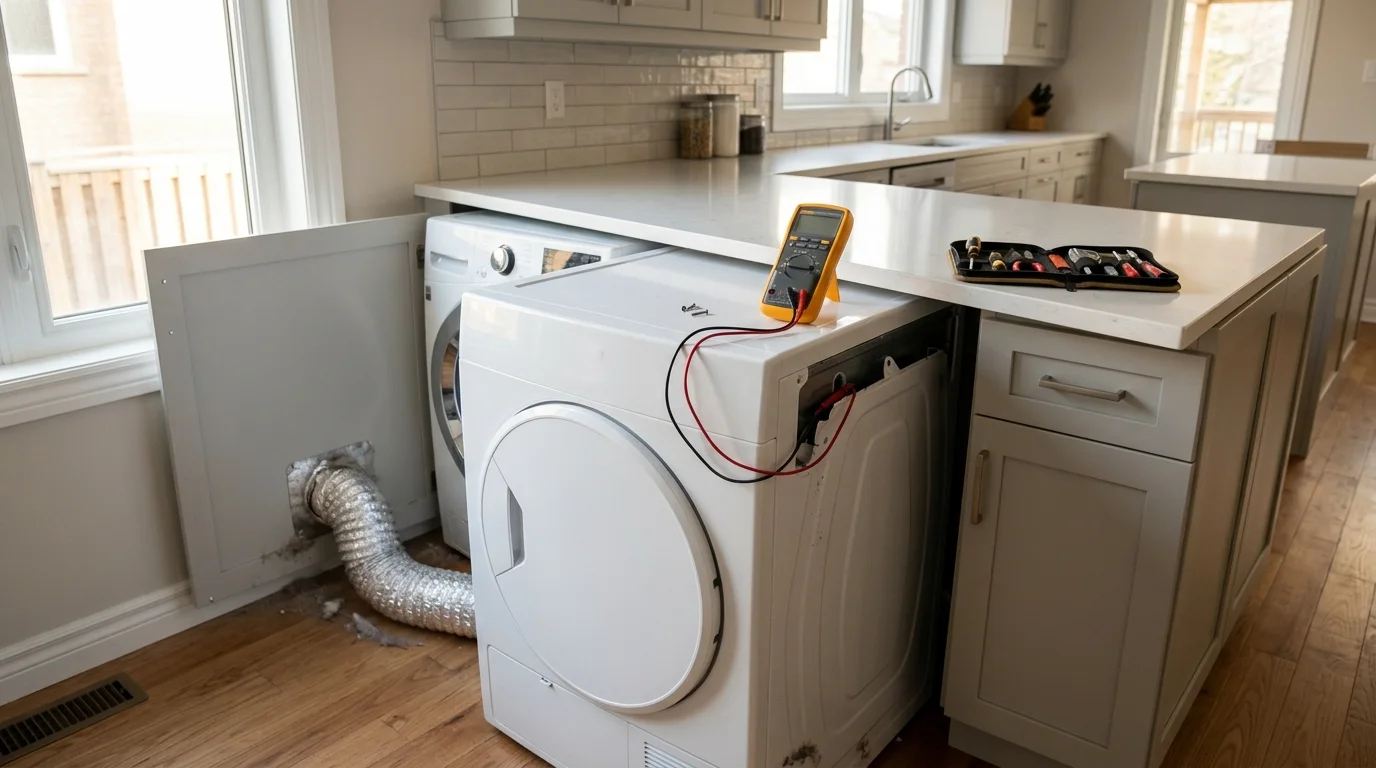
If your dryer is overheating, with an unusually hot cabinet, scorched clothes, or excessive heat in the laundry area, treat it as a safety issue rather than only a slow-drying complaint. Restricted airflow is an important first cause group to evaluate, while thermostat, thermistor, heater-control, or installation problems can also produce excess heat. The symptom does not prove the thermostat has failed.
Start with safety. A burning odour, smoke, sparking, scorched plug, repeated breaker trip, or a dryer that is too hot to touch normally is a reason to stop using the appliance and investigate the cause before another cycle.
Dryer Overheating: Airflow Comes Before Parts
Dryers need a continuous path for air to enter, move through the drum, pick up moisture, and leave through the exhaust. Whirlpool’s current dryer too hot guidance specifically directs attention to restricted airflow, including the lint screen and exhaust vent.
That makes airflow the first cause group to evaluate because it is both common and externally observable. If hot, moist air cannot leave efficiently, the dryer can run hotter, take longer to dry, and place more stress on temperature-control components.
What “Too Hot” Actually Looks Like
A dryer is designed to produce heat, so warmth alone is not evidence of overheating. More concerning patterns include clothes that are unusually hot at the end of a normal cycle, a cabinet that becomes much hotter than its previous normal behaviour, repeated high-temperature error codes, a burning smell, or the dryer shutting down and restarting only after cooling.
Compare the symptom with the dryer’s normal history. A new vent configuration, a recently moved appliance, or a load that suddenly takes much longer to dry can be important context.
Check the Lint Screen Before Anything Else
A heavily loaded lint screen can reduce airflow. Clean it before the next safe test. If the screen is coated with residue from fabric products, follow the manufacturer instructions for cleaning it rather than scraping or damaging the mesh.
Also inspect the lint-screen housing opening for visible lint that can be removed without opening the cabinet. Do not push tools deep into inaccessible passages.
The Exhaust Path Matters From Dryer to Exterior Hood
Look behind the dryer for a crushed, kinked, or sharply bent transition duct. Outside, confirm the exhaust hood is not blocked by lint, debris, or a stuck flap. Weak airflow at the exterior while the dryer runs can support a restriction concern.
Do not confuse an accessible vent check with internal appliance disassembly. The vent system may need professional cleaning if it cannot be safely accessed through normal service points.
Long Dry Times Plus High Heat Is a Stronger Pattern
If the dryer is both very hot and taking longer than normal to dry, airflow restriction becomes more plausible because heat and moisture are not leaving efficiently. If the dryer is very hot but dry time is normal or unusually short, temperature control, sensing, heater operation, or cycle selection may deserve more attention.
Use both axes together: temperature and drying performance. One symptom by itself is less informative.
Temperature Sensors and Thermostats Control Cycling, but They Are Not the First Guess
Dryers use model-specific combinations of thermostats, thermistors, thermal cutoffs, and control logic to regulate heat. If a sensing component reports the wrong temperature, or if a heating-control component does not cycle as intended, the dryer can overheat.
Those parts usually require electrical testing and model-specific service information. A homeowner should not bypass a thermostat, thermal fuse, or sensor to see whether the dryer runs.
A Thermal Fuse Is a Safety Result, Not the Root Cause
If a thermal fuse opens, the important question is why the dryer became hot enough to trigger protection. Replacing a protective device without correcting restricted airflow, heater problems, or another overheating cause can lead to repeat failure.
This is why a professional diagnosis should include the vent and operating temperature rather than treating the fuse as an isolated part.
Samsung Heating Errors Reinforce the Airflow Check
Samsung’s current dryer error-code guidance states that its heating error family can indicate the dryer is getting too hot and identifies a clogged lint screen or vent system trapping heat as a common cause. Model-specific codes vary, but the diagnostic principle is useful across brands: heat errors should trigger airflow and installation checks before part guessing.
If your dryer displays a code, use the exact model documentation. Do not assume a code from another brand or series has the same meaning.
Load and Cycle Choice Can Change Dryer Temperature
Heavy fabrics, large loads, very wet items, and high-heat cycles can create different temperatures than a small normal load. Overloading can also reduce tumbling and airflow through the clothes.
Use the cycle recommended for the fabric and load. If overheating appears only on one cycle, record that. If it happens on every heated cycle, the scope is broader.
Installation Can Create an Overheating Problem
A dryer pushed too close to the wall can crush the vent. A long or poorly routed exhaust path can increase resistance. An exterior hood that does not open freely can restrict airflow. These conditions may appear after moving the dryer, renovating, or replacing the vent connection.
If overheating began right after installation or repositioning, inspect the accessible exhaust route before assuming an internal failure.
Separate Normal Exhaust Heat From Abnormal Overheating
The exhaust air from a working dryer can feel hot, especially on a high-heat cycle, and the cabinet can become warm. The concern is a clear change from normal operation or a combination of symptoms: hotter clothes, longer dry times, heat-related codes, repeated shutdown, burning odour, or poor exterior airflow.
Do not use a guessed surface-temperature number from the internet as a universal limit. Dryer designs and test points differ. Compare against model guidance and the appliance’s established behaviour.
Why Airflow Restriction Raises Temperature
The heater adds energy to moving air. That air should pass through the load, carry moisture away, and exit the home. When the exhaust path is restricted, heat and humidity remain in the system longer. Temperature controls may cycle more aggressively, dry times can stretch, and protective devices may eventually react.
This cause-and-effect sequence is why lint-screen and vent checks belong before thermostat replacement. A thermostat can be functioning correctly while the system around it is operating under poor airflow conditions.
Thermostat, Thermistor, and Heater-Control Clues Are Different
A thermostat is a switching device that responds to temperature. A thermistor changes electrical characteristics as temperature changes so the control can interpret heat. A relay or control can determine when the heater is energized. Depending on the dryer, several of these work together.
If the sensor reports the wrong temperature, the control may make poor heat decisions. If a heater-control contact remains energized when it should not, temperature can rise even if the sensor is accurate. If airflow is restricted, both sensor and control may be responding to a real high-temperature condition. Testing is what separates those paths.
Cool-Down Behaviour Can Be a Clue
Many dryer cycles include a cool-down period near the end. If clothes consistently emerge extremely hot with no apparent cool-down, note the selected cycle and whether the drum stopped normally. That can help a technician evaluate cycle control and temperature sensing.
Do not assume every hot load means cool-down failed. A blocked vent or an interrupted cycle can also leave the load hotter than expected.
Repeated Thermal-Fuse Failure Is a Diagnostic Red Flag
If a dryer has already had a thermal fuse replaced and the same failure returns, the repair history is important. A repeat protective-device failure strongly supports looking for the condition that caused excessive heat or abnormal current rather than replacing the same part again without further diagnosis.
Provide the technician with the previous repair date and any change in dry time, vent routing, or noise since then.
What Not to Do With an Overheating Dryer
Do not bypass a thermal fuse, thermostat, thermistor, door switch, or other safety device. Do not cover the exterior vent to “test pressure.” Do not run the dryer empty for a long period simply to see how hot it gets. Do not continue using it because the clothes still dry.
Overheating is one symptom where a successful drying result does not mean the machine is safe to keep operating.
What to Record Before Service
Note the cycle, load type, whether the dryer is gas or electric, approximate time until it feels too hot, whether dry time is longer than before, whether the exterior vent has strong airflow, whether the dryer shuts down, and any error code. If a burning odour occurs, record when it began but do not reproduce it for a video.
Safe Checks a Homeowner Can Make
Stop the dryer and let it cool. Clean the lint screen. Check the accessible vent hose for crushing or sharp bends. Confirm the exterior vent hood is not blocked. Make sure the dryer is not overloaded and the correct cycle is selected.
If there is no burning odour, electrical damage, severe noise, or repeated shutdown, one brief test with a normal load may help confirm whether airflow at the exterior improves after clearing an obvious restriction. Do not keep running the dryer simply to measure how hot it becomes.
Record whether the dryer is hot immediately or only after several minutes, whether dry time has increased, whether a code appears, and whether the machine stops and later restarts after cooling.
When Overheating Becomes a Fire-Safety Concern
The U.S. Fire Administration’s current appliance and electrical fire-safety guidance identifies clogged lint screens and dryer vents as a leading cause of residential appliance fires. In condos, townhomes, and stacked laundry spaces, the exhaust route may be longer or less accessible than the short connection behind the dryer. When that applies, downstream vent restriction deserves attention.
Stop using the dryer if you see smoke, sparks, melted or scorched electrical parts, or if a burning smell persists. If there is an active fire, leave the area and contact emergency services rather than trying to continue appliance troubleshooting.
What a Technician May Inspect or Test
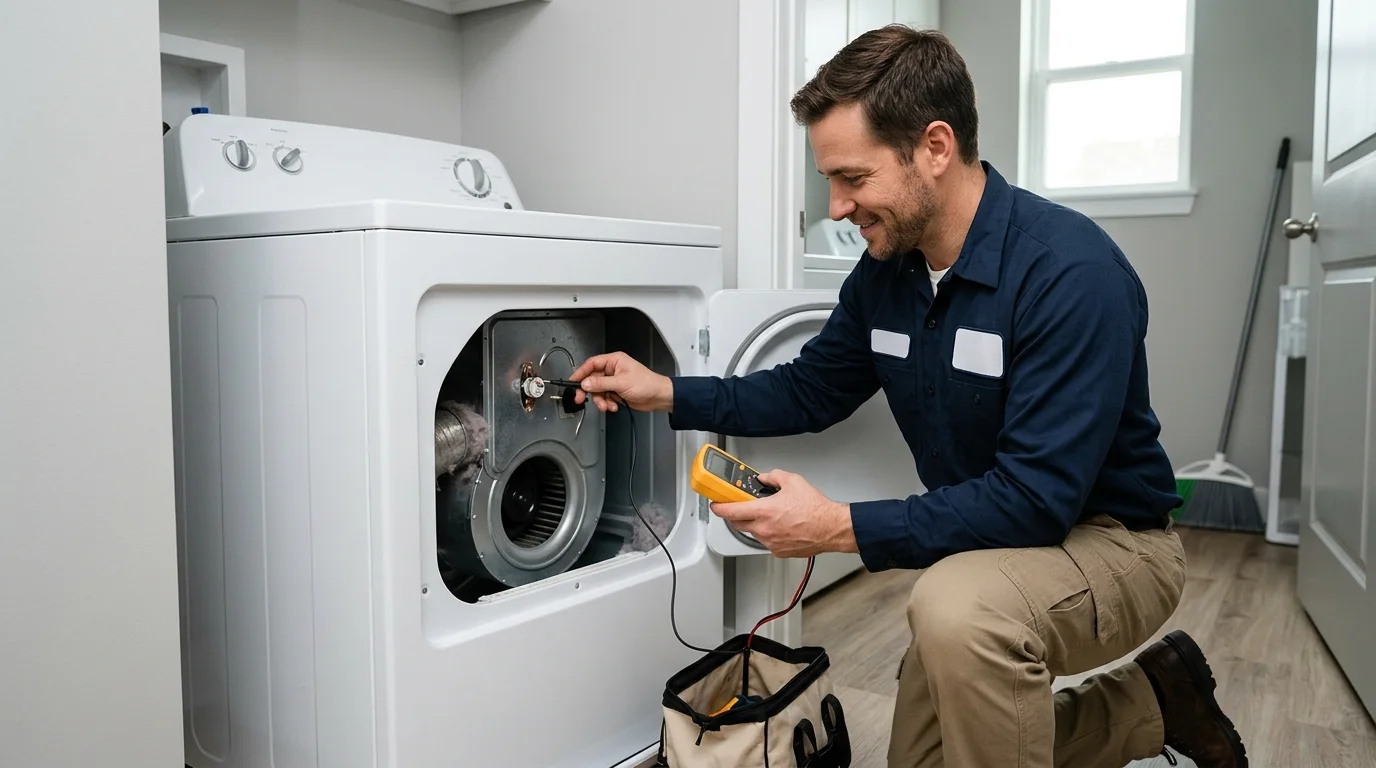
A technician may measure airflow and operating temperature, inspect the exhaust path, test thermostats or thermistors, check heater cycling, inspect wiring and connectors, verify control outputs, and look for internal lint accumulation or mechanical conditions that contribute to heat.
The goal is to identify the reason for the temperature rise, not simply replace the first safety device found open.
What the Symptom Does Not Prove
High cabinet temperature does not prove a bad thermostat. A thermal fuse failure does not prove the fuse was defective. A long dry time does not prove the heater is too hot. An error code does not identify the exact failed part unless the model documentation specifically says so.
Airflow, temperature, cycle, load, and restart behaviour should be considered together.
Check the Vent After Moving or Renovating
If overheating began after the dryer was moved, stacked, reinstalled, or the laundry area was renovated, inspect the vent connection closely. A dryer can be mechanically healthy and still overheat because the transition duct was crushed behind it or the exhaust route changed.
This is especially important when the dryer also became slower at the same time. A timeline that begins with installation work is useful evidence and should be shared with the technician.
One more useful clue: note whether the dryer is hottest near the end of every cycle or becomes abnormally hot very early. Early excessive heat can point the diagnosis in a different direction from heat that builds only after a long, poorly vented cycle.
If the dryer has a removable exterior lint screen or accessible duct connection, clean only the areas intended for routine owner maintenance. Internal cabinet lint, heater housing, and live electrical areas are service territory.
Repair or Replacement?
Overheating can come from a vent restriction, thermostat, wiring fault, heater-control issue, or another confirmed condition. The repair-or-replace decision should follow the diagnosis. If the same thermal device has failed more than once, the original overheating cause still needs to be investigated rather than assuming the repeated part failure is the whole problem.
When to Request Dryer Repair
If the dryer continues to run unusually hot after the lint screen and accessible vent path are checked, or if it shuts down from heat, displays a recurring heating code, or has a burning odour, professional assessment is appropriate. The dryer repair service page covers the broader service category.
Provide the technician with the cycle used, load type, whether dry times have changed, whether the dryer stopped on its own, and any displayed code. That history helps separate airflow from temperature-control and electrical causes.
Request Appliance Repair if overheating persists or any heat-related warning sign makes continued use unsafe.
Need Appliance Repair?
Share the appliance, brand, address, symptoms and optional photos online. A contractor can review the request and contact you about availability and next steps.
Start Your Repair Request