Dryer Stops Mid-Cycle: Common Causes
Dryer Stopping Mid Cycle guide: learn the key details, compare options, check verified sources, and make a safer decision before you act.
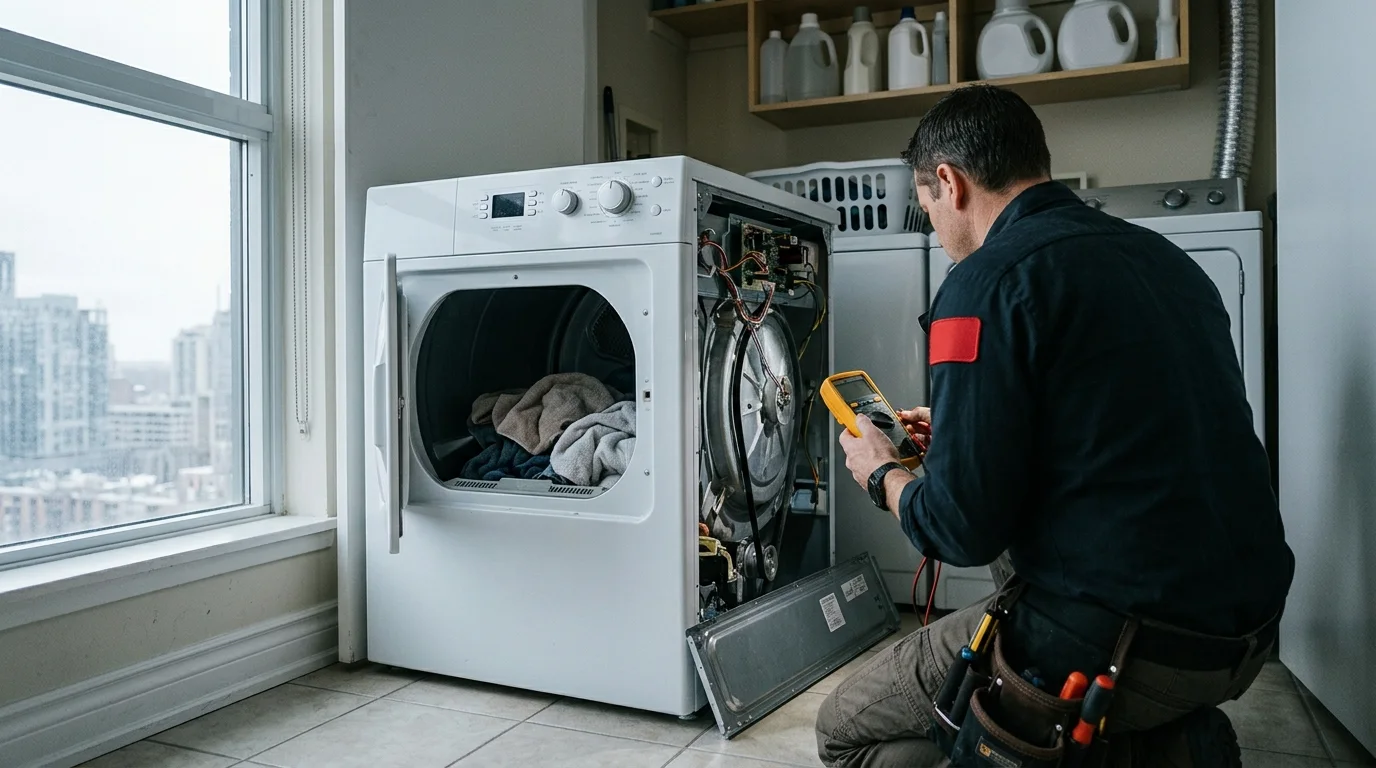
When a dryer stops mid-cycle with damp clothes still inside, the first question is whether it ended a sensor cycle early or actually lost operation. Automatic cycles can stop because the machine believes dryness has been reached. That is not a fault. A true interruption looks different: the panel goes dark, the drum stops unexpectedly while heat was still active, or the machine only restarts after cooling down.
The most useful question is not simply “Why did it stop?” It is “What remained on when it stopped?” A lit control panel, a blank panel, a hot drum, a cool drum, or a dryer that restarts after cooling all point in different directions.
Dryer Stopping Mid Cycle: Was It an Early Finish or an Interruption?
Start with the cycle type. Whirlpool’s current mid-cycle guidance notes that automatic cycles use humidity sensing and turn off when the desired dryness is reached. That means an early stop is not automatically a mechanical shutdown.
If the clothes are actually dry, the dryer may have completed the selected sensor cycle normally. If the clothes are still wet, especially if the cycle ends after only a few minutes, the sensor, load size, cycle choice, airflow, or another operating problem deserves more attention.
Look at the Panel the Moment the Dryer Stops
If the panel stays lit and the dryer indicates the cycle is complete, think first about sensing and cycle selection. If the display goes completely dark, think about power supply, breaker, connection, or an internal protection event. If the panel stays on but the drum stops unexpectedly, the drive, door signal, motor, or controls move higher on the list.
Do not repeatedly restart a dryer that loses power, smells hot, trips a breaker, or only runs for a short time before shutting down. Repetition can hide the pattern and may increase risk.
Does the Dryer Restart Immediately or Only After Cooling?
This timing clue is especially useful. A dryer that stops after several minutes and will not restart until it cools can be responding to excess heat or a motor that is protecting itself. Restricted airflow can increase operating temperature, and mechanical drag can increase motor load.
Whirlpool’s current dryer stopping guide includes overheating, power issues, drive-belt problems, heating issues, door-switch problems, motor problems, and control issues among possible cause groups. The overlap means cooling-off behaviour narrows the system but still does not identify one failed part.
Sensor Cycles Can End Early When the Load Does Not Contact the Sensor Well
Small loads, mixed fabrics, unusual load placement, or dirty moisture-sensing surfaces can affect how some dryers judge dryness. Samsung’s current dryer support explains that Sensor Dry cycles rely on a sensor to determine when laundry is dry and that dirty moisture sensors can contribute to cycles ending too quickly.
If a small load ends early while still damp, compare it with an appropriate timed cycle according to the owner manual. A timed cycle that runs normally while an automatic cycle consistently ends early is a much stronger clue toward sensing or cycle-selection behaviour than toward a motor failure.
Airflow Restriction Can Cause More Than Long Drying
A restricted lint screen or exhaust path traps heat and moisture. Most people notice longer drying first, but excessive heat can also contribute to protective shutdowns or abnormal cycle behaviour. Check the lint screen and accessible exhaust path before assuming an electronic fault.
Look for a crushed or sharply kinked transition duct behind the dryer and confirm the exterior vent hood can open when the dryer operates. Do not remove dryer panels to clean internal ducts unless the manufacturer specifically describes that as an owner procedure.
Use Temperature as a Clue, Not a Diagnosis
After a safe interruption, note whether the dryer cabinet and load feel unusually hot, normal, or cool. A very hot dryer that stops and later restarts after cooling raises different concerns from a cool dryer that instantly loses all power.
Do not use your hand to reach into inaccessible areas or touch electrical connections. Temperature observations should be limited to normal surfaces and the clothes after the dryer is safely stopped.
Power Problems Can Look Exactly Like a Dryer Fault
If the display goes blank, inspect the plug and accessible cord for visible damage and check the breaker. A loose or heat-damaged connection can interrupt the dryer under load. If the breaker has tripped once, reset it only if there is no visible damage and the owner manual allows it. If it trips again, stop testing.
Repeated breaker trips, scorched plugs, buzzing outlets, or a hot receptacle need electrical attention. Do not keep cycling the breaker to see whether the dryer will finish.
The Door Switch Can Interrupt a Running Cycle
The dryer must know that the door is closed. A worn latch, misalignment, vibration, or a failing door switch can make the machine behave as if the door opened. Notice whether the drum stops when the door is touched lightly from the outside or whether the latch feels loose.
Do not bypass the switch or hold it closed by hand while the dryer operates. That safety interlock is part of the machine’s intended operation.
Drive Problems Can Stop the Cycle After It Starts
A damaged belt, binding drum support, idler, motor, or blower can allow the dryer to begin and then stop when mechanical load rises. Listen for squealing, scraping, grinding, a slowing drum, or a motor hum before shutdown.
If the dryer had been getting noisier before the mid-cycle stopping began, tell the technician. That history can be more useful than the final shutdown itself.
Does It Stop at About the Same Time Every Cycle?
Consistency is useful. A dryer that stops at nearly the same elapsed time every run may be responding to a repeatable thermal, control, or mechanical condition. A dryer that stops at very different times depending on load size or fabric type may be reacting more to moisture sensing, airflow demand, or load behaviour.
Do not treat the clock as proof. Use it with panel status and temperature. “Stops after ten minutes, panel blank, restarts after cooling” is a much stronger diagnostic description than “stops randomly.”
Automatic Cycles Versus Timed Cycles
This comparison can separate two very different complaints. If only automatic cycles stop early while an appropriate timed cycle runs normally, sensing, load contact, and cycle logic deserve attention. If both timed and automatic cycles stop unexpectedly, the problem is less likely to be only moisture sensing.
Use only cycles described in the owner manual. Do not run repeated long tests if the dryer becomes abnormally hot or loses power.
What the Clothes Tell You at the Stop Point
Check the whole load, not just the top shirt. Uniformly dry clothes suggest a normal sensor finish. Warm but damp clothes show that some heat is present and make airflow, load moisture, and sensing more relevant. Cool and damp clothes shift the focus to heating and cycle operation. Heavy fabrics, waistbands, and towel centres hold more moisture than light synthetics, so check those specifically before concluding the dryer failed.
Why a Dryer Can Stop Only With Heavy Loads
Heavy loads increase both mechanical and drying demand. If the dryer runs normally empty or with a small load but stops with towels or bedding, note whether the shutdown is accompanied by motor strain, unusual noise, or excessive heat. Mechanical resistance, motor protection, overloading, or restricted airflow can become more relevant.
Do not use an oversized load as a stress test. The diagnostic value comes from the fact that the pattern already exists.
Electrical Supply Can Fail Under Load
A connection can appear normal when the dryer is idle and fail once current demand rises. Signs such as a hot plug, discolouration, intermittent panel power, buzzing at the receptacle, or breaker trips need electrical attention. Do not remove the outlet cover or dryer terminal connection to inspect live wiring.
If the dryer consistently goes completely dark rather than simply ending a cycle, tell the technician or electrician that distinction.
What Not to Do
Do not bypass the door switch, tape interlocks closed, repeatedly reset a tripping breaker, or continue running a dryer that stops from heat. Do not replace the motor, sensor, or control board based only on an online symptom match. The same stopping pattern can come from different systems.
Useful Notes for a Service Call
Record the selected cycle, load type, approximate stop time, panel status, drum temperature, whether the clothes are dry, whether the dryer restarts immediately, and any code or unusual sound. Those details let the diagnosis start with evidence instead of repeating the whole problem from zero.
Safe Checks a Homeowner Can Make
Clean the lint screen. Check the selected cycle and options. Make sure the door closes firmly and the dryer is not overloaded. Inspect the accessible vent for crushing or kinks. Observe the control panel when the dryer stops and note whether it shows “complete,” an error code, or nothing at all.
If the dryer is cool and safe to operate, compare one appropriate timed cycle with the automatic cycle that has been stopping early. Do not do this if there is a burning odour, repeated breaker trip, severe mechanical noise, visible electrical damage, or signs of overheating.
Write down the run time before the stop and whether the dryer restarts immediately. A consistent five-minute shutdown that requires cooling is a different diagnostic pattern from a sensor cycle that ends at different times depending on the load.
What a Technician May Inspect or Test
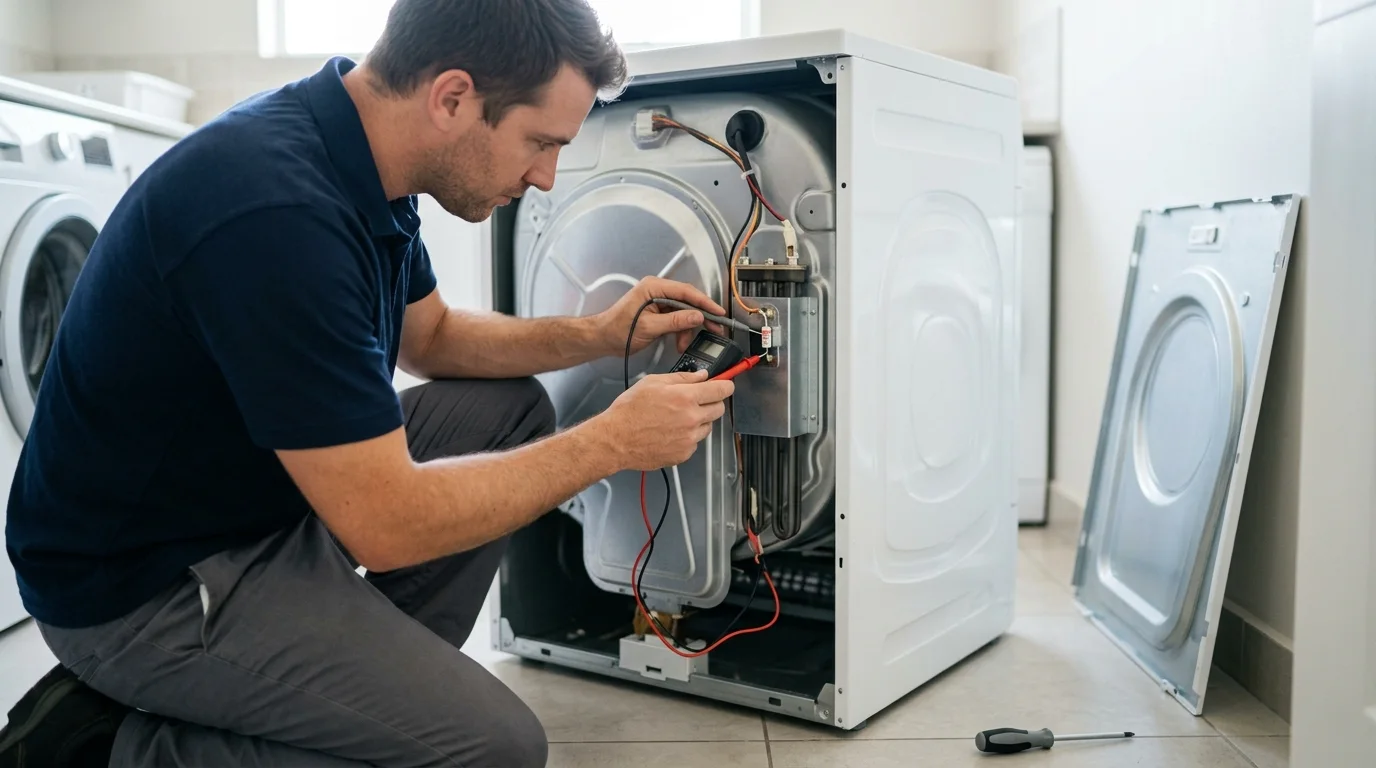
A technician can evaluate airflow, operating temperature, moisture-sensor response, door-switch continuity, motor behaviour, drum resistance, belt and support condition, power delivery, and control outputs. The exact order depends on the symptom pattern you observed.
If the dryer becomes excessively hot before it stops, airflow and temperature control deserve early attention. If the panel dies, power and electrical supply come first. If the drum stops while the panel stays active, the drive and motor path become more important.
When to Stop Using the Dryer
Stop using the dryer if it smells like burning, gets abnormally hot, produces smoke or sparking, repeatedly trips the breaker, loses power at a damaged plug or outlet, makes severe grinding sounds, or will run only after cooling down. Those are not conditions for repeated homeowner testing.
A gas odour from a gas dryer is a separate emergency issue. Follow Enbridge Gas suspected-leak safety guidance rather than continuing appliance troubleshooting.
What Mid-Cycle Stopping Does Not Prove
It does not prove the motor is overheating. It does not prove the moisture sensor is dirty. It does not prove the vent is blocked. It does not prove the control board is bad. Each of those can fit some versions of the symptom, but the pattern of panel power, heat, restart timing, load dryness, and cycle type is what narrows the cause.
Check Whether the Stop Follows One Cycle or Every Cycle
If the problem appears only on one specialty cycle, review that cycle’s intended behaviour before treating it as a hardware fault. Temperature limits, dryness targets, and sensing rules can differ by cycle. A dryer that completes Timed Dry normally but ends a Sensor Dry cycle early is giving a much narrower clue than a dryer that shuts off on every selection.
If every cycle stops after similar running time, the cause is less likely to be only a cycle preference. Keep the test history simple and consistent so the pattern is not hidden by changing several settings at once.
If the dryer records a model-specific error code, keep the code before resetting power. A code can add context to the same timing observations, but it should be interpreted only with the exact model documentation rather than a generic internet code list.
Repair or Replacement?
A dryer that stops mid-cycle can have a relatively simple door or interlock issue, or it can involve a motor, thermal, power, or control fault. Those can have very different repair scopes. Do not make a replacement decision from one interrupted cycle. Wait for the diagnosis, then weigh the confirmed repair scope against the dryer’s age, repair history, and overall condition.
When to Request Dryer Repair
If the dryer consistently stops before the load is dry after the safe checks above, or if it shuts down hot, loses panel power, will not restart until cooling, or shows a recurring error, professional diagnosis is reasonable. The dryer repair service page covers the broader service category.
Include the selected cycle, approximate time before shutdown, whether the panel stayed on, whether the dryer was hot, and whether it restarted immediately. Those details make a service assessment much more efficient.
Request Appliance Repair if the mid-cycle stopping is repeatable or accompanied by heat, power, or mechanical warning signs.
Need Appliance Repair?
Share the appliance, brand, address, symptoms and optional photos online. A contractor can review the request and contact you about availability and next steps.
Start Your Repair Request