
Refrigerator Clicking: Start Relay, Fan or Compressor Clues
Fridge making clicking noise? Location, timing, and whether cooling has changed all matter more than the sound alone. Learn what to check and when to call.
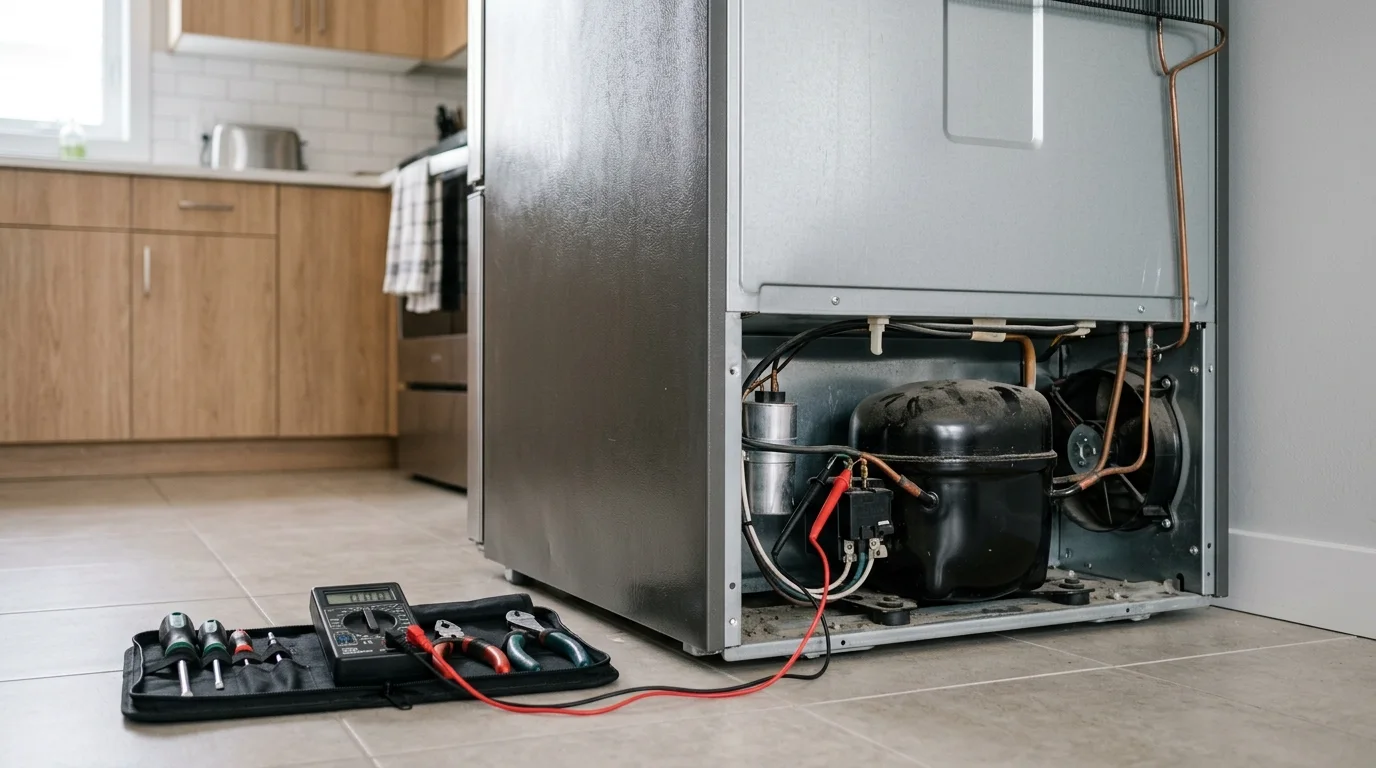
A fridge making clicking noise is not automatically a broken refrigerator. Some clicks are normal control, valve, ice-maker, or defrost sounds. The noise becomes more useful diagnostically when you pair it with two other observations: where the click seems to come from and whether the refrigerator is still cooling normally. Repeated clicking from the lower rear of the appliance while temperatures rise deserves a different response from an occasional click during normal cooling.
Not Every Refrigerator Click Means Something Has Failed
Refrigerators switch components on and off throughout the day. Valves move, controls change states, fans start and stop, defrost cycles begin and end, and the compressor cycles according to temperature demand. Some of those transitions make audible clicks.
Whirlpool’s current refrigerator clicking guidance notes that clicking can come from an ice-maker water valve, and that some dual-evaporator models can make repetitive clicking as a valve regulates cooling between compartments. GE also lists clicking from defrost timers and temperature controls among normal refrigerator sounds.
That matters because clicking alone is weak evidence. A sound that is new, frequent, and paired with poor cooling is much more meaningful than an occasional click from a refrigerator that is holding temperature normally.
Use Two Clues Together: Sound Pattern and Cooling Performance
Occasional click, refrigerator still cooling normally. This often fits normal control or valve operation. Note when it occurs. If it coincides with ice-maker activity, dispenser use, or a normal cooling-cycle transition, the sound may not need repair at all.
Repeated click every so often, followed by a brief hum, then silence, while the fridge warms up. That pattern raises concern around the compressor start circuit. A start device may be unable to start the compressor, or the compressor itself may be struggling. The sound does not tell you which one.
Clicking or tapping from inside the freezer with scraping or fan noise. Ice, a loose obstruction, or a fan-related problem may be involved. A fan blade contacting frost can sound rhythmic rather than like one isolated electrical click.
Clicking started after a power outage. GE notes that clicking can occur for several minutes after an outage while the compressor attempts to restart. If normal cooling returns, that temporary behaviour may not represent a lasting fault.
Clicking near the ice-maker or water-valve area. If the refrigerator has an ice maker but no water supply, the valve can make a buzzing or clicking sound as the system tries to fill. Turning off an unused ice maker can be a relevant model-approved check.
Where the Click Comes From Can Narrow the System
Sound travels through a refrigerator cabinet, so location is not perfect evidence. Still, a rough location helps.
A click from the upper interior or ice-maker area may relate to ice production, dispensing, or a valve. A click from inside the fresh-food or freezer compartment may involve dampers, valves, fans, or defrost-related components depending on the design. A repeated click from the lower rear deserves more attention if the compressor is not staying on and the temperature is rising.
The best observation is location plus timing. “It clicks from the lower rear every few minutes and the freezer is getting softer” is useful. “It clicks sometimes” is much harder to interpret.
Common Cause Groups
Normal Control, Defrost, and Valve Operation
Mechanical and electronic controls can click when they change states. Defrost timers on applicable models can make a click as they switch the system into or out of defrost. Temperature controls can click as cooling demand changes. Water valves and dual-evaporator valves can also create clicking sounds.
If temperatures remain stable and the sound has always been part of the refrigerator’s normal operation, this group should stay high on the list before any repair is considered.
Ice Maker or Water-Supply Related Clicking
An ice maker can call for water even when the household water supply is not connected or turned on. Whirlpool notes that the water valve can buzz or click in this condition. If the refrigerator is intentionally operating without a water connection, check the owner manual for turning the ice maker off.
This is a good example of why the sound does not prove a cooling-system failure. A click near the ice maker can exist while the compressor and refrigeration system are completely healthy.
Start Device or Compressor Start-Circuit Clues
The compressor does not simply run continuously. It starts when cooling is needed and stops when the set temperature has been satisfied. A start device helps that process on many designs. If the start sequence fails, you may hear a click, a short hum or attempt to start, and then another click as protective devices react.
That pattern can point toward the start device, a supply problem, wiring, or the compressor itself. It does not prove that a cheap relay will fix the refrigerator, and it does not prove the compressor is condemned. Both conclusions require testing.
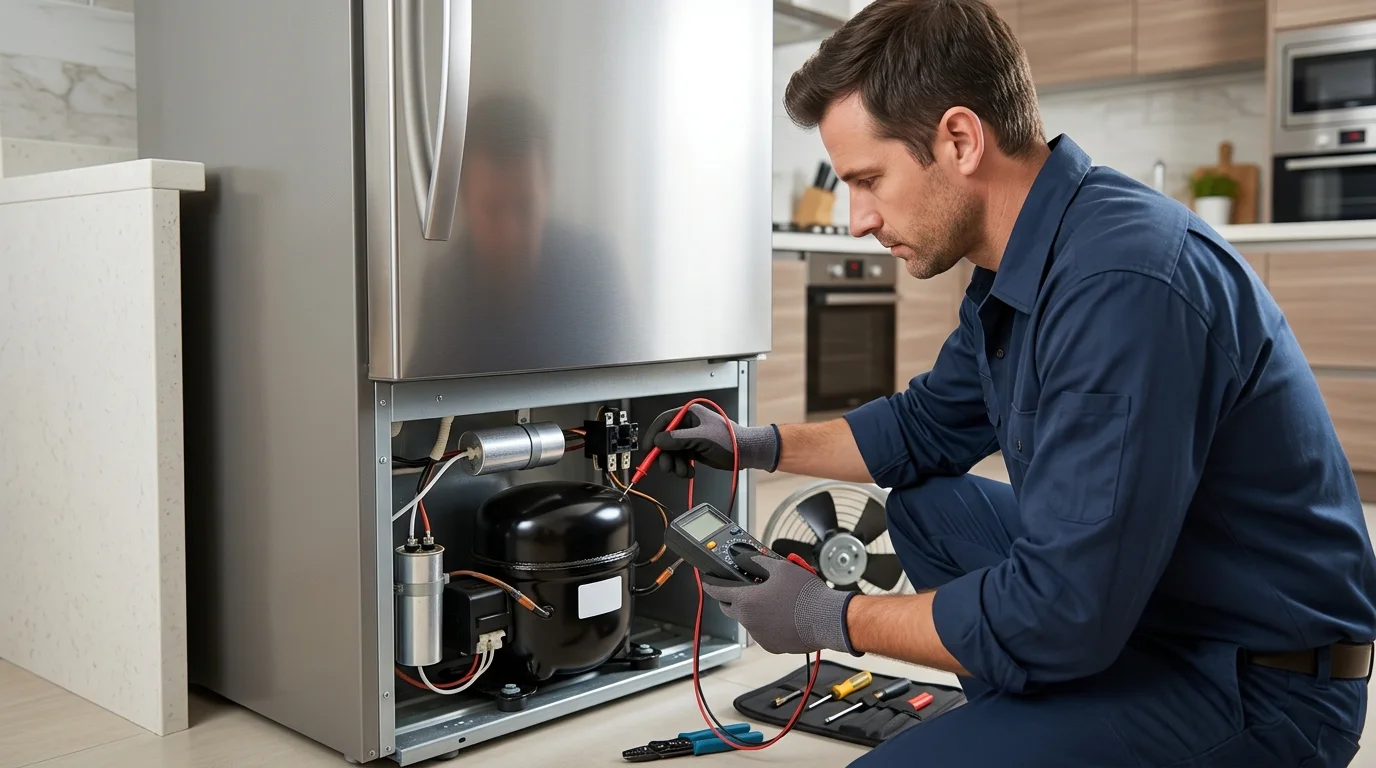
The strongest reason to arrange service is repeated start-attempt clicking combined with a compressor that never settles into a normal run and refrigerator temperatures that continue to rise.
Fan or Ice-Contact Noise
Fans can make rhythmic tapping or clicking if a blade is contacting frost, a wire, a cover, or another obstruction. Evaporator-fan noise is usually easier to hear from inside the freezer area, while condenser-fan noise is more likely near the lower rear on models that use that fan.
Fan noise often changes when a door is opened, when the fan turns on or off, or when frost conditions change. That timing can separate it from a compressor start click.
Control or Electrical Switching Faults
Relays on an electronic control can click as they switch loads. An occasional click can be normal. Repeated clicking combined with lights flickering, controls resetting, erratic fan operation, or loss of cooling may point toward a control or power problem that deserves diagnosis.
Safe Checks a Homeowner Can Make
You do not need to remove the rear panel to collect useful information.
- Check actual cooling performance. Is food staying cold and is frozen food remaining solid? The sound matters more when temperature performance has changed.
- Listen for location. Note whether the click seems to come from the ice-maker area, inside a compartment, or the lower rear.
- Notice the pattern. Is it one click when cooling starts, a short cluster, or a repeated click-hum-stop sequence?
- Consider recent events. A power outage, refrigerator move, new water-line connection, or ice-maker change can explain a new sound.
- Turn off an unused ice maker if the model instructions allow it. This is particularly relevant when no water supply is connected.
- Check that the refrigerator is level and stable. Vibration can make ordinary component sounds seem louder.
- Look for visible frost around accessible air openings. Heavy frost plus fan-related clicking or scraping is useful information for the technician.
Do not remove sealed-system tubing, open electrical enclosures while powered, or assume that shaking or tapping a start device is a reliable diagnosis. Those shortcuts can damage components and still do not tell you whether the compressor can start properly under load.
What the Clicking Does Not Prove
A repeated lower-rear click is often discussed online as a “bad start relay.” That is possible, but the sound is not a parts test. A compressor that is mechanically or electrically unable to start can produce a similar start-and-protect cycle. So can certain supply, connection, or control faults.
The reverse is also important. A normal click from a control, valve, or defrost system should not be turned into a compressor diagnosis simply because the refrigerator contains a compressor.
Good troubleshooting narrows the system first: where is the sound, when does it happen, what happens immediately afterward, and is cooling affected?
What a Technician May Inspect or Test
If the click is paired with poor cooling, the technician can observe whether the compressor actually starts and stays running. The start device, compressor electrical condition, supply voltage, wiring, protective components, and control outputs can then be evaluated according to the model.
Fan operation can be checked separately. A technician can determine whether an evaporator or condenser fan is starting, whether a blade is contacting frost or another object, and whether airflow problems are contributing to temperature loss.
If the compressor runs but cooling remains poor, the diagnosis moves beyond a simple clicking-noise article into refrigeration-system performance. Sealed-system concerns require specialized tools and should not be inferred from the sound alone.
This system-by-system approach avoids two expensive mistakes: replacing a start device when the compressor is the underlying problem, or condemning a compressor when the noise is coming from a normal valve or a fan contacting ice.
How to Separate a Fan Click From a Compressor-Start Click
A fan-related noise often has a faster, more mechanical rhythm. It may scrape, tick, or tap continuously while the fan is spinning, then stop when the fan stops. On some refrigerators, opening a door changes fan operation, which can make the sound stop temporarily. Frost contacting an evaporator fan can also make the noise change as ice builds or melts.
A compressor-start pattern is usually different. The sound tends to come from the lower rear and is often tied to a start attempt: a click, possibly a short hum or vibration, then another stop or protective click. If that pattern repeats while the refrigerator warms, the start circuit becomes more important to investigate.
These are clues, not definitive tests. Cabinet panels transmit sound, and some electronically controlled valves can also click from areas that are difficult to locate by ear. The technician still has to confirm which component is operating at the moment the sound occurs.
Temperature Change Is the Most Important Companion Symptom
Noise alone can be harmless. Noise plus a measurable loss of cooling is much more useful. If the refrigerator section is warming but the freezer remains normal, the problem may be in airflow or compartment-specific components rather than the compressor start system. If both sections warm together while repeated lower-rear clicking continues, a whole-system cooling problem becomes more plausible.
Use an appliance thermometer if one is already available, or at minimum note obvious changes such as softening frozen food, warm beverages, or a compressor that never seems to settle into a normal run. Avoid opening the doors repeatedly to check, because every opening adds warm room air and makes the cooling problem harder to evaluate.
What to Record Before the Technician Arrives
Write down the approximate click interval, the area where it seems loudest, and what follows the click. Does a fan start? Does the compressor hum? Do the interior lights dim or flicker? Does the sound happen only during ice-maker operation or after the refrigerator has been unplugged and restarted?
If cooling is affected, note which compartment changed first. These observations give the technician a sequence to reproduce instead of a vague noise complaint, which is especially useful when the refrigerator happens to be quiet during the service visit.
Repair or Replace: Wait for the Click to Be Diagnosed
A refrigerator noise is not enough information for a repair-or-replace decision. A normal valve click may require no repair. A fan obstruction or start-device fault may be a targeted repair. A confirmed compressor or sealed-system problem changes the financial comparison substantially.
Consider the confirmed fault, the appliance’s overall condition, temperature performance, repair history, and the actual estimate. Avoid using a fixed age rule before you know which system is involved.
When to Request Appliance Repair
Request professional assessment if the clicking is new and repetitive, the compressor appears to attempt starting but does not stay on, refrigerator or freezer temperatures are rising, the sound is accompanied by electrical odour or repeated power problems, or a fan is making persistent contact noise.
For service information, see refrigerator repair Toronto. To arrange an assessment, Request Appliance Repair. Before the visit, note where the click seems loudest, how often it repeats, whether the compressor hums afterward, and whether cooling has changed. Those observations can narrow the diagnosis before a single part is removed.
Need Appliance Repair?
Share the appliance, brand, address, symptoms and optional photos online. A contractor can review the request and contact you about availability and next steps.
Start Your Repair Request