
Refrigerator Humming or Buzzing: What the Sound Can Mean
Refrigerator Humming Noise guide: learn the key details, compare options, check verified sources, and make a safer decision before you act.

The most common mistake with a refrigerator humming noise is assuming the compressor is failing simply because the sound is noticeable. A low steady hum can be normal compressor or fan operation. A brief buzz can come from the water system. The sound becomes more useful when you add four details: where it is loudest, when it happens, what starts or stops with it, and whether cooling has changed.
Refrigerator Humming Noise: Start by Deciding Whether It Is New
Refrigerators are not silent appliances. Fans move air, a compressor circulates refrigerant, water valves open, and controls switch loads on and off. Many of those normal operations create humming, buzzing, vibration, clicking, or airflow sounds.
If the refrigerator has always made a soft hum and temperatures are normal, that is a very different complaint from a new loud hum that started yesterday while the freezer began warming. The change from the appliance’s own normal sound is often more useful than comparing it with someone else’s refrigerator.
Whirlpool’s current refrigerator sound guidance describes a low steady hum from the compressor and fans as common. It also identifies buzzing from the ice-maker or water valve as a normal sound in the right operating context.
Use Four Clues to Describe the Sound
1. Where is the sound loudest?
A hum near the lower rear can come from the compressor area, a condenser fan on models that use one, tubing vibration, or nearby cabinet parts. A buzz near the top or ice-maker area can relate to the water valve or ice system. A hum or rubbing noise inside the freezer can point more toward an evaporator fan or airflow area.
Sound travels through metal and plastic panels, so location is not perfect proof. Still, “lower rear” is far more useful than “somewhere in the fridge.”
2. When does it happen?
A steady hum while the refrigerator is actively cooling can be normal. A brief buzz during ice filling or water dispensing can also be normal. A hum that starts, stops abruptly, then repeats with clicking is a different pattern and may belong to a start or protection sequence.
3. What changes when the sound starts?
Listen for airflow, cabinet vibration, water movement, or a fan starting. If opening a door changes the sound, a compartment fan becomes more relevant on models that stop or alter fan operation when the door state changes. If using the dispenser triggers the buzz, the water system moves higher on the list.
4. Is the refrigerator still cooling normally?
This is the most important companion clue. A noticeable hum with normal temperatures often has a very different meaning from a hum paired with rising temperatures. Sound plus performance narrows the diagnosis. Sound alone usually does not.
Normal Humming and Buzzing Patterns
Compressor and fan operation
The compressor and fans can produce a low mechanical or electrical hum while the refrigerator is cooling. The sound may be more noticeable after the doors have been open, after groceries are loaded, or while the refrigerator is recovering from a temperature change.
On some appliances, fan speed changes with cooling demand. A sound that rises and falls smoothly can therefore be normal. The key is whether the noise remains within the appliance’s usual character and whether temperatures stay stable.
Water-valve or ice-maker buzz
A water valve can buzz briefly when the ice maker fills or when water is dispensed. GE also documents humming and buzzing from ice-maker or dispenser valve operation. If the ice maker is turned on but no water supply is connected, some models can buzz when the system attempts to fill.
That is an important example of what the sound does not prove. A brief buzz from the water valve does not mean the compressor has a problem.
Vibration against the floor, wall, cabinet, or stored items
Normal component vibration can become much louder when the refrigerator is not stable or when an object touches the cabinet. A container on top, a loose cover, a water line against the wall, or the refrigerator touching nearby cabinetry can turn a normal hum into a rattle or buzz.
When a Hum Deserves More Attention
The sound is new and cooling is getting worse
If the refrigerator is humming more loudly than usual while both compartments become warmer, the noise belongs in a cooling diagnosis. The cause could involve airflow, a fan, a start circuit, the compressor, controls, or the sealed system. The hum tells you when the system is trying to operate. It does not identify which component is unable to do its job.
There is a hum, then a click, then silence
This pattern can be associated with a failed start attempt in the compressor circuit, but it still does not prove the start device or compressor has failed. The same visible symptom can come from different electrical and mechanical conditions. A technician needs to test the start circuit and compressor rather than choosing a part from the sound.
The hum is actually a fan rubbing or struggling
A fan noise may be more like a hum, buzz, scrape, or rapid contact sound. Frost near an evaporator fan, debris, a loose part, or a failing fan motor can change the sound. If the noise changes when a door is opened or when the cooling cycle changes, tell the technician.
The water system buzz repeats but no water is connected
If the refrigerator has an ice maker that is turned on but the household water supply is intentionally disconnected, check the owner manual for the proper way to turn the ice maker off. Do not treat repeated valve buzzing as a compressor problem.
Safe Checks a Homeowner Can Make
- Check temperatures. Normal cooling makes a normal operating sound more likely. Rising temperatures change the priority of the diagnosis.
- Listen for location. Note whether the sound is inside the freezer, near the ice maker, at the lower rear, or transmitted through a side panel.
- Remove vibration sources. Take objects off the top and make sure nothing is pressed tightly against the refrigerator cabinet.
- Check that the refrigerator is stable. A cabinet that rocks can amplify vibration. Use the model’s levelling instructions rather than guessing at leg positions.
- Notice dispenser and ice-maker timing. If the buzz occurs only when water is used or ice is filling, record that.
- Look for visible frost near accessible fan vents. Do not remove internal panels. Heavy frost plus a changed fan sound is useful evidence.
- Record a short sound sample. A phone recording can help describe an intermittent noise that may not occur during the service visit.
What the Sound Does Not Prove
A humming refrigerator does not automatically need a compressor. A buzzing refrigerator does not automatically need a water valve. A noisy freezer fan does not automatically mean the fan motor is defective. Each sound can be produced by normal operation or by more than one abnormal condition.
The useful sequence is observation first, system identification second, testing third. That is why a technician will care about cooling performance, timing, and location as much as the sound itself.
What a Technician May Inspect or Test
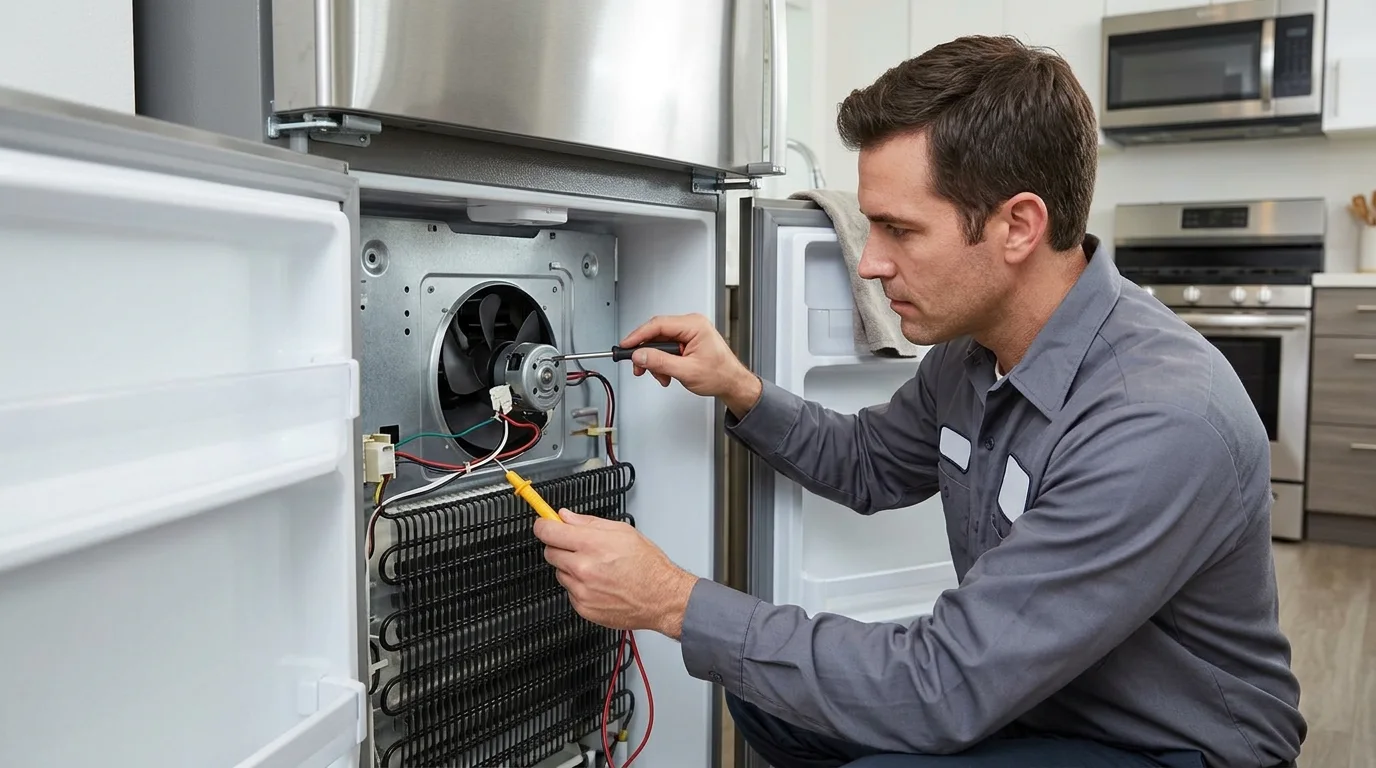
If the noise appears to come from a fan, the technician can inspect the fan area for frost contact, obstructions, bearing or motor condition, mounting, and whether the fan is receiving the correct command. If the sound is from the lower rear, the compressor mounting, start components, condenser fan where applicable, wiring, and cabinet vibration can be separated from each other.
If cooling is poor, the diagnosis expands beyond noise. Airflow, frost pattern, temperature sensing, control outputs, compressor operation, and sealed-system performance may all matter. A compressor that hums is not automatically producing normal refrigeration performance.
For water-related buzzing, the technician can evaluate the valve, water pressure conditions, tubing, ice-maker demand, and whether the feature is configured correctly for the installation.
What to Check After a Noise Correction
If the issue was cabinet vibration, confirm the refrigerator is stable and that the same cooling cycle no longer creates the amplified sound. If the ice maker was turned off because no water supply is connected, confirm the periodic buzz stops. If frost was affecting a fan, monitor whether the frost returns, because recurring frost may point to a separate sealing, airflow, or defrost problem.
Most importantly, confirm temperature performance. A quieter refrigerator that is warming up is not a successful repair.
Use the Sound Cycle, Not Just the Volume
A refrigerator can sound louder at some moments without anything being wrong. The compressor may be more noticeable when it starts, a fan may change speed as cooling demand changes, and a water valve can buzz briefly when the ice maker calls for water. What matters is whether the sound follows a normal operating event and then ends as expected.
A hum that starts with cooling, continues steadily, and stops when the cooling cycle ends is different from a hum that repeatedly starts, strains, clicks off, and begins again while temperatures rise. The second pattern gives a technician a reason to investigate the start sequence, supply, control, or compressor load. It still does not identify the failed part from sound alone.
Duration matters too. A brief valve buzz is different from a continuous vibration. A fan-related hum may change when a door opens on models that pause the evaporator fan. A cabinet vibration may change when the refrigerator is gently steadied from the outside. Each change helps locate the sound before any panel is removed.
Why New Refrigerators Can Sound Different From Older Ones
Owners sometimes compare a current refrigerator with an older appliance and assume a different sound means a defect. Modern designs may use variable-speed fans, electronically controlled valves, inverter-driven compressors, or different cabinet insulation. Those design choices can create tones or operating patterns that are unfamiliar even when the refrigerator is working normally.
The useful comparison is not simply “my old refrigerator was quieter.” Compare the sound with cooling performance and with the appliance’s own recent behaviour. A sound that has been present since installation while temperatures remain stable is less concerning than a new buzz that appears at the same time as weak cooling, repeated stopping, electrical odour, or visible fan interference.
Record the Sound Before Service
If the noise is intermittent, a short recording can be useful because the refrigerator may be quiet when a technician arrives. Record from a safe position without moving panels. Note the time, the compartment temperatures, whether the ice maker or dispenser had just operated, and whether opening a door changed the sound.
Those details turn “the fridge is buzzing” into a reproducible symptom. A location, timing pattern, and companion behaviour often narrow the system faster than volume alone.
A useful final clue is whether the sound can be reproduced by one normal event. If it appears only when the ice maker fills, only while a fan is running, or only during compressor operation, tell the technician that exact trigger. Reproducibility helps separate a harmless operating sound from a mechanical or electrical condition that needs testing.
Refrigerator Humming or Buzzing: Frequently Asked Questions
Is a steady refrigerator hum normal?
It can be. Compressors and fans commonly create a low steady hum during cooling. Compare the sound with the refrigerator’s normal history and check whether temperatures are stable.
Why does my refrigerator buzz only when making ice?
The water valve can make a brief buzzing or humming sound during an ice-maker fill. That timing points toward the water system rather than the compressor.
Does a loud hum mean the compressor is failing?
No. A loud or changed hum deserves investigation, especially with poor cooling, but sound alone cannot confirm compressor failure.
Can a refrigerator being out of level make it louder?
Yes. An unstable cabinet can transmit and amplify vibration. Objects touching the refrigerator or sitting on top can do the same.
Why does the hum change when I open the freezer door?
On some designs, opening the door changes fan operation. A sound that changes with door position can make the evaporator-fan area more relevant, but model behaviour varies.
When should humming be professionally diagnosed?
Arrange assessment when the sound is new and persistent, unusually loud, paired with poor cooling, accompanied by repeated clicking or failed starts, or clearly linked to a fan contact or electrical problem.
When to Request Appliance Repair
Request service when the sound changed suddenly and does not match a normal ice, water, fan, or cooling event, or when humming is paired with warming food, recurring start attempts, heavy frost, a fan contact sound, electrical odour, or repeated power problems.
For related service information, see refrigerator repair Toronto. To submit the appliance details, Request Appliance Repair. A short description of where the sound is loudest, what triggers it, and whether cooling is normal is more useful than simply writing “fridge is noisy.”
Need Appliance Repair?
Share the appliance, brand, address, symptoms and optional photos online. A contractor can review the request and contact you about availability and next steps.
Start Your Repair Request