
Washer Door Locked: Why It Will Not Open
Washer door won't open? Remaining water, control state or a lock problem may be involved. Learn what to check safely before forcing the door.
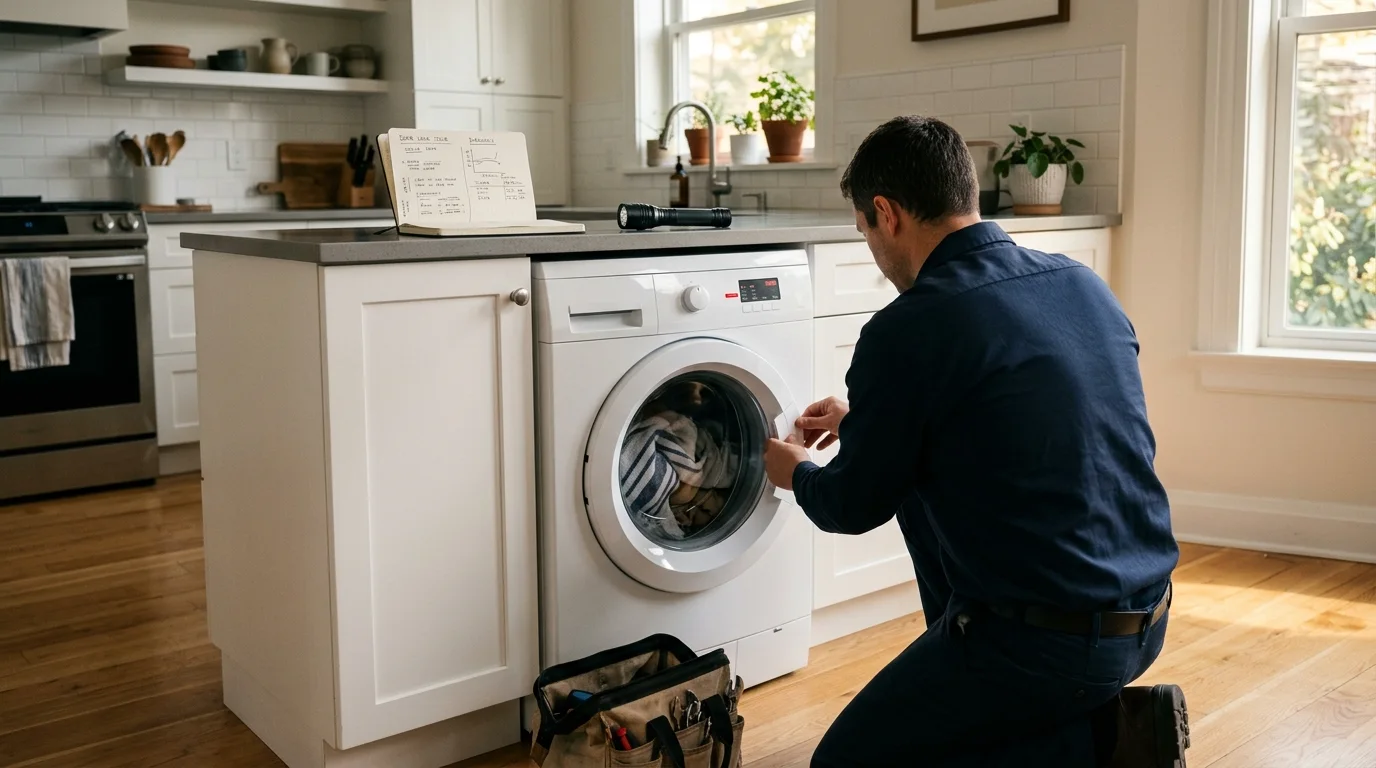
The most common mistake when a washer door won’t open is pulling harder on the handle before checking whether the machine is intentionally keeping the door locked. A front-load washer may remain locked because the cycle is still active, water is still in the drum, the water is hot, or the machine has not completed its drain routine. Start with the display, water level and drain behaviour before assuming the latch itself has failed.
Washer Door Won’t Open: Start With What the Machine Is Protecting Against
A front-load washer door is part of the appliance’s safety system. It is designed to stay locked while the drum is moving and, on many models, while conditions inside the machine could allow water to spill or hot water to contact the user.
Whirlpool’s current door-unlock guidance specifically notes high water level, high water temperature, tumbling and spinning as reasons the door may not release immediately. LG and Samsung provide similar guidance when water remains in the drum.
For a related next step, read washer dryer repair Toronto.
That means a locked door is often the result of another condition, not the original failure. A washer that cannot drain may keep the door locked even though the latch is functioning exactly as designed.
Before You Try Anything Else
Look through the door and at the control panel. Is there visible water? Is the cycle still counting down? Is the drum moving? Is the display showing a drain, door, water-level or control-lock message?
If the drum is moving, wait. Do not attempt any manual release. If the water appears unusually hot after a sanitize or high-temperature cycle, give the machine time to cool. If the tub is full of water, focus on draining the washer before trying to open the door.
Do not pry the door with a tool or pull the handle repeatedly. The handle can break even when the lock is functioning normally, turning one problem into two.
Step 1: Give the Cycle Time to Finish and Unlock
Some washers do not release the door the instant the timer reaches zero. The drum may still be coasting, the pump may still be clearing water, or the control may be completing a short safety delay.
Wait for all drum movement to stop and listen for the lock to click. If the machine has a Pause or Cancel function, use the model’s normal control sequence rather than unplugging it immediately. Manufacturer instructions vary, so the owner manual is the best source for the exact button sequence.
If the door opens after the normal delay, no repair may be needed. If it stays locked, move to the water-level question.
Step 2: Check for Water Left in the Drum
Visible water changes the diagnosis. LG states that when water level remains high, a drain-only function should be used before the door is expected to unlock. Samsung also ties locked-door behaviour to water remaining in the washer.
Run the normal Drain, Drain and Spin, or model-approved drain-only cycle if the controls respond. Listen for the pump and watch whether the water level drops.
If the water drains and the door unlocks: the lock may be fine. The underlying issue may have been a paused cycle, load problem or temporary drain condition.
If the pump runs but water barely moves: a restriction in the drain path becomes more plausible.
If there is no obvious drain attempt: the pump, control, wiring, or a condition preventing the drain command may need diagnosis.
Do not open a pump filter just because the door is locked. Filter access is model-specific, and a washer full of water can release a large amount onto the floor. If the machine has an approved emergency drain hose or accessible filter, follow the exact model instructions and prepare for retained water.
Step 3: Rule Out Control Lock or Child Lock
Control-lock features can make the panel appear unresponsive, but they do not all behave the same way. Some models lock the controls, some affect door behaviour, and the display may show a lock icon or a code such as LoC or LC.
Use the owner manual to deactivate the feature. Do not assume that holding any lock symbol for three seconds works on every machine.
A useful clue is whether the washer completed the cycle normally and drained fully. If the tub is empty and the controls show a lock feature, that is a very different situation from a washer that stopped with water inside.
Step 4: Consider a Temporary Control Reset
If the tub is empty, the drum is stopped, there is no high-temperature condition and the controls appear stuck, a model-approved power reset can sometimes clear a temporary control state. Whirlpool currently advises a power reset for certain locked-lid conditions and provides a separate reset path for front-load controls.
Follow the owner’s manual where possible. If you unplug the washer, do it only when the floor and plug area are dry and the plug is safely accessible. A reset is not a repair for a repeated drain fault or a damaged lock.
Common Cause Groups
Water Has Not Drained
This is one of the most important cause groups because the door may be staying locked for safety. A kinked drain hose, clogged accessible filter, pump restriction, failing pump or household drain problem can leave water in the machine.
If the washer also had a no-drain symptom before the door became stuck, diagnose those two symptoms together rather than treating them as unrelated failures.
Door Lock or Latch Mechanism
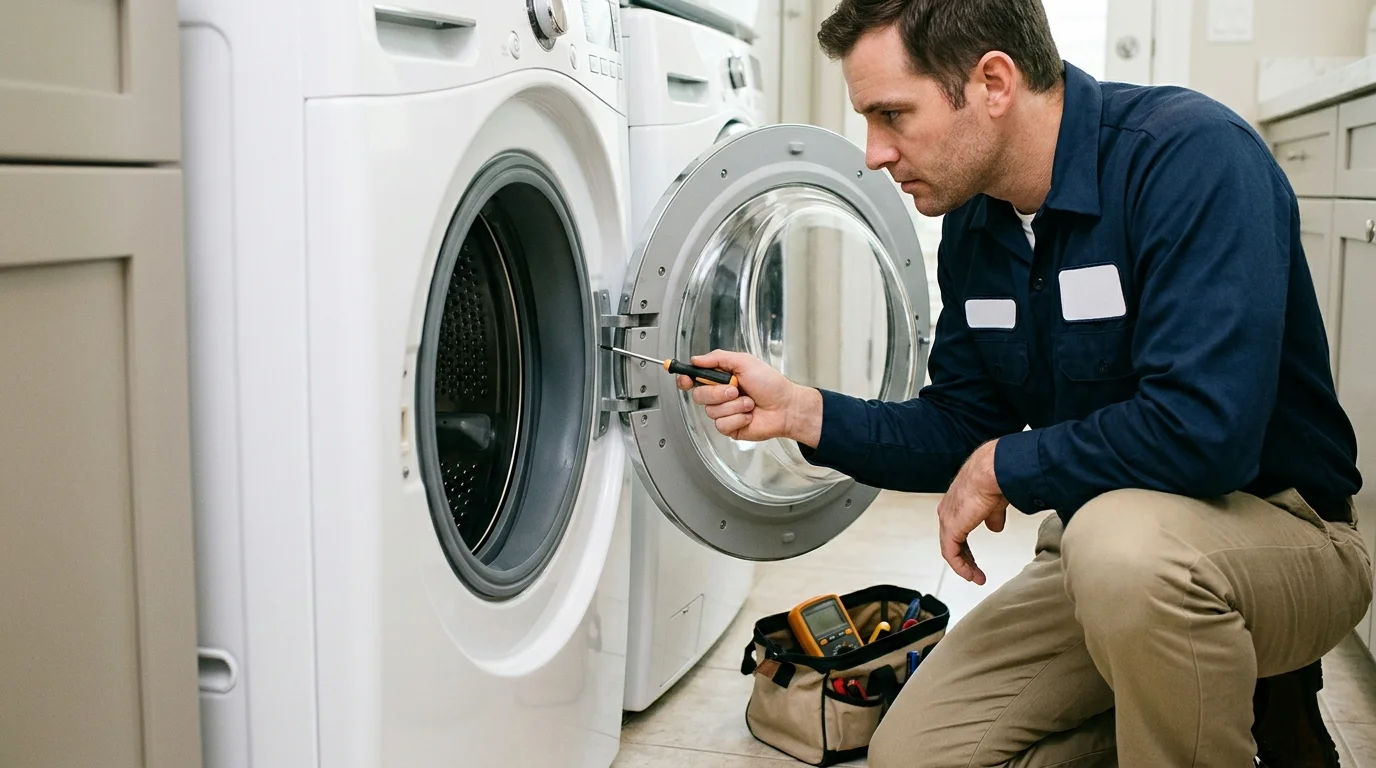
The door strike, latch and lock assembly have to align and report the correct state to the control. A worn handle, damaged strike, misaligned door, foreign material around the latch, or failed lock mechanism can prevent normal release.
A clicking lock does not prove the lock assembly is good, and silence does not prove it is bad. The control must also be commanding the correct action.
Water-Level or Temperature Condition
The washer can keep the door locked if it believes conditions are unsafe for opening. That can be appropriate when the water is high or hot. It can also occur if a sensor or control is reporting the wrong condition.
This is why forcing the latch is risky. The door may be doing exactly what the control is telling it to do.
Control or Wiring Fault
If the washer is empty and cool but the lock never releases, the problem can involve the lock circuit, wiring or control. Model-specific diagnosis is needed because the logic and test points vary by machine.
Safe Checks a Homeowner Can Make
- Wait for all drum movement to stop.
- Look for visible water. If water remains, use the normal drain function before expecting the door to open.
- Check the display. Record any lock, drain or water-level code.
- Check for Control Lock or Child Lock. Follow the model instructions to disable it.
- Inspect the visible door area. Look for clothing trapped in the seal or latch area without pulling the door apart.
- Use a model-approved reset only after the tub is empty and safe.
- Use an emergency drain or manual-release procedure only when the owner’s manual explicitly provides one.
After each step, check whether the water level, display message or lock behaviour changed. That sequence helps identify the system at fault instead of randomly trying multiple resets.
Common Mistakes to Avoid
Forcing the handle. A locked door can be stronger than the plastic handle. Pulling harder can break the handle without releasing the lock.
Opening a filter with a full tub. Retained water can flood the room. Drain safely according to the model instructions first.
Assuming the lock is bad because the door is locked. A drain failure can make a healthy lock stay engaged.
Repeatedly unplugging and reconnecting the washer. A power reset may clear a temporary state, but repeated resets can hide the sequence that would help diagnose the real fault.
Using an online manual-release method for a different model. Emergency releases are not located or operated the same way on every washer.
What a Technician May Inspect or Test
A technician first confirms whether the machine is actually safe to unlock. That includes water level, temperature, drum motion and whether the cycle is complete.
If water is present, the drain system becomes part of the door diagnosis. The technician may check the drain hose, filter where applicable, pump path, pump operation and the water-level information being reported to the control.
If the tub is empty, attention can shift to the door strike, latch, lock mechanism, wiring and control commands. The technician can determine whether the lock is mechanically jammed, electrically unresponsive, or being held on because the control believes another condition is still active.
This is a good example of why visible evidence and failure origin are not always the same. The place where you see the problem is the door. The actual fault may be in the drain system.
What to Check After the Door Opens
Opening the door is not the end of the diagnosis if the problem happened because water would not drain. Before running another full load, confirm the washer can fill, drain and complete a short cycle normally.
Inspect the door strike and handle for damage caused by repeated pulling. Make sure clothing was not trapped in the seal. If the lock releases only after repeated resets or the same condition returns, service is sensible even if the washer currently opens.
If the Door Locked After a Power Interruption
A power interruption can leave the washer in the middle of a cycle with water still inside. When power returns, the machine may need to finish a drain routine or re-establish the door-lock state before it will release. Do not assume the outage mechanically jammed the latch.
Check the water level first. If the tub contains water, use the normal drain function after power is stable. If the tub is empty and the controls have restarted normally, give the washer time to complete its reset and unlock sequence. A door that remains locked after power has returned, the tub is empty and the control has completed its normal routine deserves further diagnosis.
Front-Load Door Problems and Top-Load Lid Problems Are Not Identical
Front-load washers need a sealed door because water sits against the front opening during the cycle. That makes water level, temperature and drain status especially important to unlocking. Top-load washers use lid-lock systems mainly to control access while the basket is moving and during specific parts of the cycle.
The symptom can sound similar, but the diagnostic path is not identical. A front-loader with water visible through the glass points strongly toward drain status before latch replacement. A top-loader with an empty basket and a lid that remains locked may put more attention on the lid-lock mechanism, control state or model-specific reset procedure.
Do not apply a front-load emergency drain or manual-release procedure to a top-load machine simply because both use the word “lock.” The owner’s manual should decide which steps are appropriate.
Washer Door Locked: Frequently Asked Questions
How long should I wait for a washer door to unlock?
The delay varies by model and by what the washer is doing. Wait until spinning and draining are fully complete. Some manufacturer guidance notes that unlocking can take several minutes.
Can water in the drum keep the door locked?
Yes. Front-load washers commonly keep the door locked when the water level is too high to open safely.
Can I manually release the door?
Only use a manual-release method if the owner’s manual for your exact model provides one, and only after the drum has stopped and retained water has been safely drained.
Does a locked door mean the latch is broken?
No. Drain, water-level, temperature, control and latch issues can all produce a locked-door complaint.
What if the washer is empty but the door still will not open?
After checking control-lock settings and a model-approved reset, a door-lock, wiring or control fault becomes more plausible and professional diagnosis may be needed.
A repeatable sequence is the key: note the water level, drain behaviour, display status and lock response before changing anything else. Those observations preserve evidence that can otherwise disappear after a reset.
When to Request Appliance Repair
Request service if the washer repeatedly finishes with water inside, the drain cycle will not clear the tub, the lock stays engaged when the washer is empty and cool, the handle or strike is damaged, or the same lock problem returns after a model-approved reset.
For broader service information, see washer repair Toronto. If you want the appliance assessed, Request Appliance Repair. Before the visit, note whether water remained in the drum, whether the pump ran, which code appeared, and whether the door eventually opened after draining. Those details help separate a lock fault from a drain-related lockout.
Need Appliance Repair?
Share the appliance, brand, address, symptoms and optional photos online. A contractor can review the request and contact you about availability and next steps.
Start Your Repair Request